REVIEW · SINGAPORE
Splendour of Colonial Singapore Walking Tour with Lunch
Book on GetYourGuide →Operated by On-A-Roll-Tours · Bookable on GetYourGuide
Colonial Singapore feels close up. This walking tour stitches together the Civic District and Old European core, then breaks for a 3-course lunch by the Singapore River. The route tracks the city’s story from the 1819 British trading post era to the mid-1900s, so you’re not just looking at buildings.
I really like the way the tour frames architecture as a living timeline. You’ll see Georgian, Victorian, and Edwardian-era structures alongside restored colonial-era planning around law, education, and infrastructure. Ping, the guide noted in many 5-star comments, is also repeatedly praised for staying friendly and easy to follow.
One consideration: you’re walking for about 3.5 hours rain or shine, so wear comfortable shoes and bring water. The schedule moves with short guided segments and photo stops, so if you hate moving quickly, you may want to pace yourself mentally.
In This Review
- Key highlights worth marking on your map
- The big idea: colonial planning you can still walk through
- Meeting at City Hall: a clean start point for the Civic District story
- St Andrew’s Cathedral: a short stop with real atmosphere
- National Gallery Singapore: learning how art and empire share the frame
- The Arts House: where you’ll spot the shift from government to culture
- Victoria Theatre and Concert Hall: one quick photo, but a big statement
- Asian Civilisations Museum: a micro-stop that still changes how you see the area
- Cavenagh Bridge: the river becomes part of the story
- Fullerton Hotel Singapore: architecture with presence
- Boat Quay lunch: the 3-course reset by the river
- Old Hill Street Police Station: law and order on display
- Central Fire Station: another quick stop, same big message
- St Gregory the Illuminator: religion, community, and city planning
- How the 3.5 hours really feels (and who it suits best)
- Value check: is $49 fair for what you get?
- Rain, photos, and the practical stuff you’ll care about
- Should you book Splendour of Colonial Singapore with lunch?
- FAQ
- Where is the meeting point?
- What time does the tour start and how long is it?
- Is lunch included, and where is it?
- Does the tour run in rain or only when the weather is good?
- What should I bring?
- Is hotel pickup and drop-off included?
- What language is the tour guide?
- How does cancellation work?
Key highlights worth marking on your map
- City Hall MRT start: easy to reach, and the history lesson begins right away.
- Civic District and Old European Town mix: cathedrals, theatres, museums, and government-style buildings in one loop.
- Frequent guided time inside major landmarks: photo stops are brief, but key stops get actual explanations.
- Boat Quay lunch by the river: you get a proper sit-down break around midday.
- Poncho included: you’re set for Singapore rain without scrambling.
- Ping’s group-friendly style: many people single out her pacing, Q&A, and practical attention to comfort.
The big idea: colonial planning you can still walk through
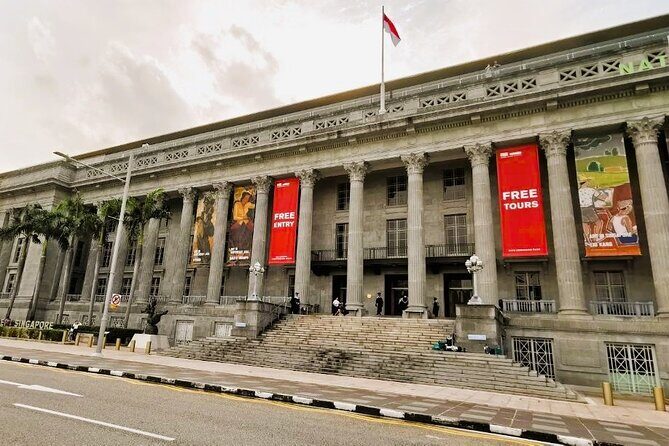
Singapore’s colonial story can sound like a textbook chapter. This tour turns it into sidewalks.
You’ll start with the British East India Company era and the early trading post connection linked to Sir Thomas Stamford Bingley Raffles in 1819. Then you’ll connect the dots through the Straits Settlements period in 1826, and later the shift to a British Crown colony around four decades after that early foothold. The point isn’t just dates. It’s how a foreign administration shaped street layout, civic priorities, and the kinds of buildings that still define this area today.
That’s why the tour works. You aren’t only sightseeing. You’re learning how a city’s institutions get built into its streets—and how those streets still steer your eyes even now.
You can also read our reviews of more walking tours in Singapore
Meeting at City Hall: a clean start point for the Civic District story
You meet at City Hall MRT Station, Exit B (street level) at 09:55. No hotel pickup is included, so this start makes sense: you can get there fast using the train network, then begin walking immediately.
City Hall is also a smart place to begin because it anchors the civic theme. From here, the tour heads toward the heart of Singapore’s colonial-era civic identity: government, major institutions, and landmark architecture designed to project order.
If you’re the kind of traveler who likes to orient quickly, this start helps. You’ll feel like you’re building a mental map step by step, instead of collecting random photos.
St Andrew’s Cathedral: a short stop with real atmosphere
The tour hits St. Andrew’s Cathedral early. Expect a photo stop plus a guided visit of about 15 minutes.
What makes this stop useful is the context. Churches and civic buildings weren’t just places of worship or administration. In colonial planning, they signaled community structure and authority. In this part of the city, that message is written in the architecture and in how the building sits in relation to the surrounding civic spaces.
If you want a quick win—something that feels instantly “Singapore colonial”—this is one of your first.
National Gallery Singapore: learning how art and empire share the frame
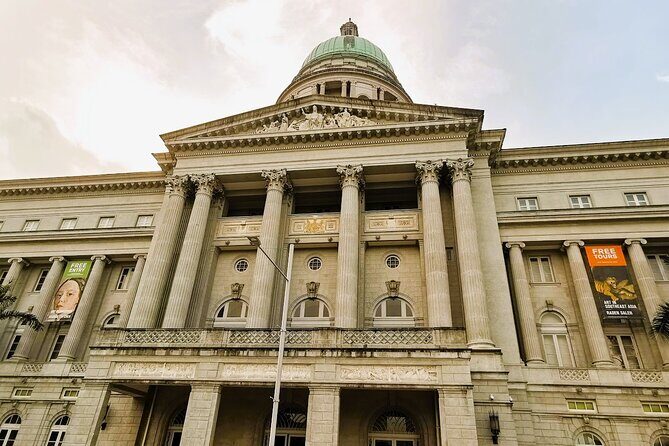
Next up: National Gallery Singapore with a guided segment of about 40 minutes.
This is where the tour starts to feel less like a stroll and more like a walking lecture. You’ll get explanations that help you look past the look. The way colonial-era buildings were adapted for later uses is a big theme around here, and the gallery is an obvious place to see that.
Practical note: this is a stop where you’ll likely get a lot from listening. If you’re someone who tends to skim when you see crowds, slow down here. You’ll also get built-in breaks from the hottest outdoor stretches.
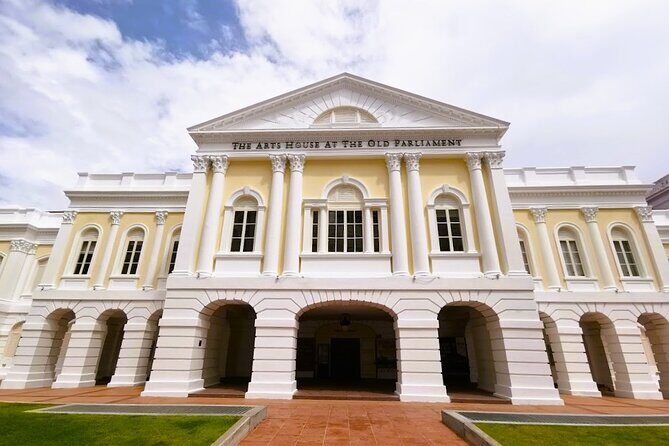
The Arts House: where you’ll spot the shift from government to culture
Then comes The Arts House, a shorter guided segment around 20 minutes.
This stop matters because it bridges eras. As Singapore modernized, the same “civic” idea didn’t disappear—it just migrated. You go from institutional authority to public-facing culture. The building becomes a reminder that the city keeps using strong architecture, even as its purpose evolves.
If you love seeing how cities reuse space instead of bulldozing it, you’ll like this.
You can also read our reviews of more tours and experiences in Singapore
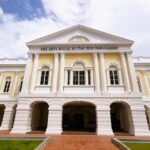

Victoria Theatre and Concert Hall: one quick photo, but a big statement
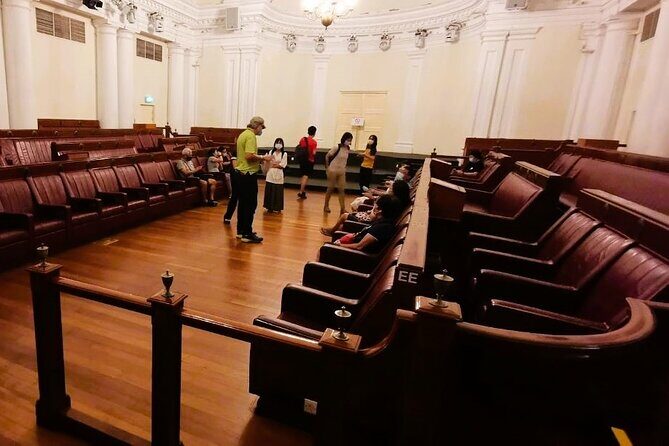
At Victoria Theatre and Concert Hall, you get a photo stop and about 10 minutes guided.
This is a classic photo moment, but it’s also a good chance to pay attention to scale. Buildings like this aren’t shy. In colonial city planning, they were designed to be seen from multiple angles—proof of “this is the center now.”
If your goal is to understand how Singapore’s Old European Town and Civic District visually dominate the area, this stop delivers fast.
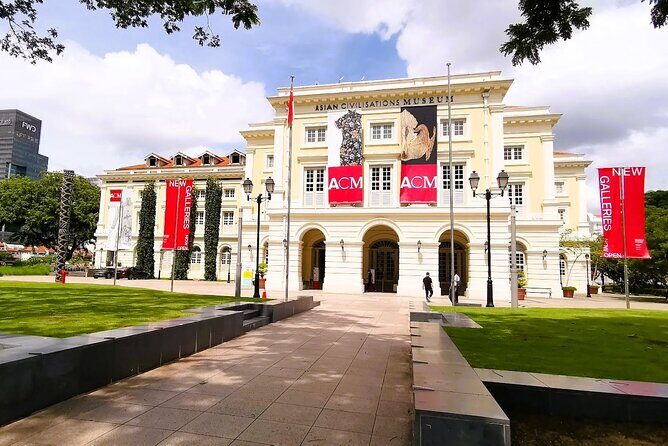
Asian Civilisations Museum: a micro-stop that still changes how you see the area
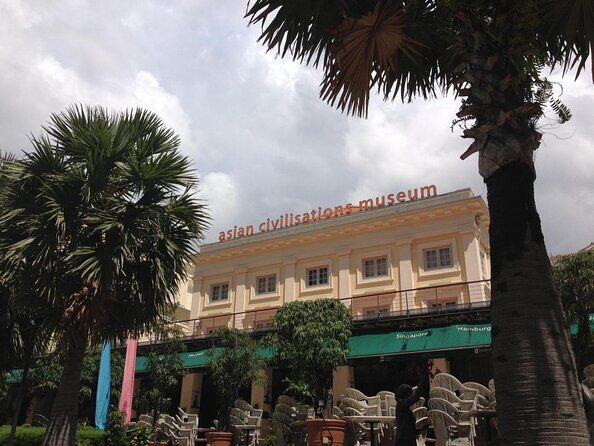
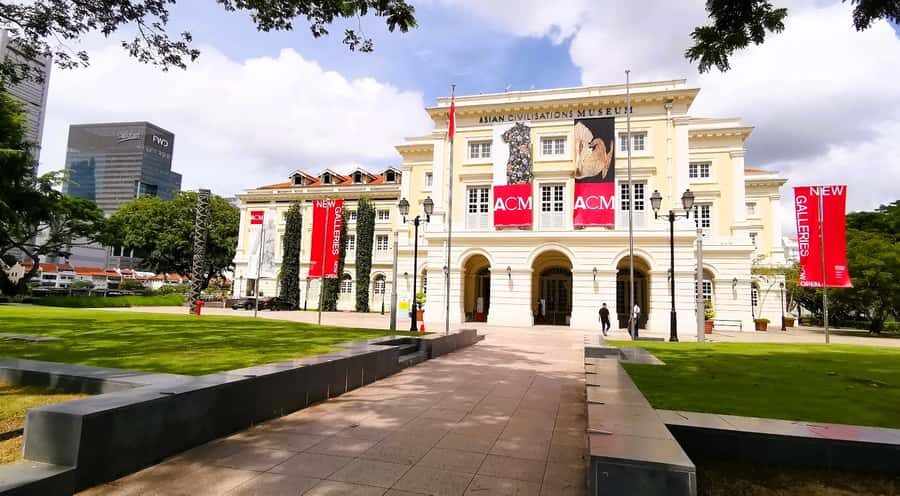
Next is Asian Civilisations Museum with a very short 1-minute guided/photo pause.
One minute sounds tiny, but here’s why it still works in the tour logic: the tour is training you to notice. You’re learning where institutions were placed and what role they played. Even a brief stop nudges you to look at how the museum fits into the civic corridor you’ve been walking.
If you want more time inside, you could always return later on your own. But as part of a 3.5-hour structure, it’s a useful checkpoint.
Cavenagh Bridge: the river becomes part of the story
Then you’ll cross toward Cavenagh Bridge with about 10 minutes guided.
This is one of those Singapore moments that’s easy to overlook if you’re rushing: bridges aren’t just shortcuts. They’re viewpoints, and they shape movement between land and the riverfront.
The tour uses this stop to connect the city’s colonial-era rhythm to the water network that supported trade and shipping. In other words: the bridge is a “how the city worked” stop, not just a “look at this bridge” stop.
Fullerton Hotel Singapore: architecture with presence
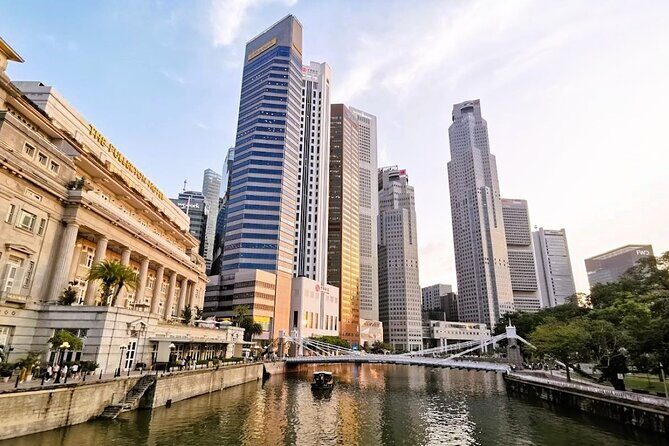
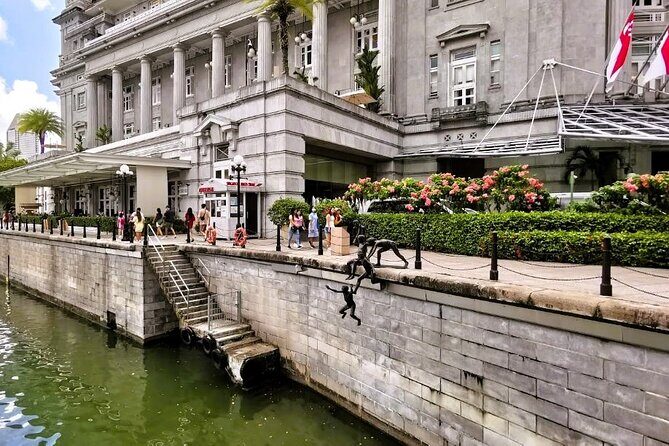
Next: The Fullerton Hotel Singapore for about 15 minutes guided/photo time.
Expect to get commentary that links architecture to civic pride. This is also a helpful moment to slow down a little mentally, because it sets up the lunch break that comes right after.
If you’re the kind of visitor who likes the “before the meal” photos, this is where you’ll probably start taking more than one.
Boat Quay lunch: the 3-course reset by the river
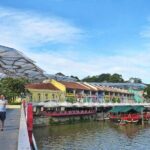
Around midday, the tour shifts gears to lunch at Boat Quay for about 40 minutes.
This is the break you’ll be grateful for. After multiple landmark stops, lunch by the river gives you two things at once:
1) a real pause, and
2) a chance to look at the Singapore River as a living part of the city, not just a backdrop.
The tour is described as a 3-course lunch, so you’re not stuck with a quick snack. You can also treat lunch as your “re-enter the story” moment—because Boat Quay sits right where trade and colonial-era commerce would have mattered.
Practical advice: hydrate before you go if you’re sensitive to heat. Even with indoor stops sprinkled into the schedule, Singapore weather can still catch you.
Old Hill Street Police Station: law and order on display
After lunch, the tour heads to Old Hill Street Police Station with a very short 2-minute guided/photo stop.
This stop is quick, but it fits the theme perfectly: colonial-era cities organized themselves through institutions—policing, firefighting, courts, and administration. When you connect these buildings into a sequence on foot, it’s easier to understand how “order” was built into daily life.
If you like history that feels concrete, police stations and fire stations often do that better than museums.
Central Fire Station: another quick stop, same big message
Next is Central Fire Station, with about 20 minutes guided/photo time.
This one usually lands because it’s both civic and practical. Fire prevention and emergency response weren’t abstract in a port city. In a humid climate with dense urban activity, firefighting mattered fast.
You’ll also see the value of pacing here. A guided segment of this length means you’ll spend less time just snapping photos and more time learning why the building matters.
St Gregory the Illuminator: religion, community, and city planning
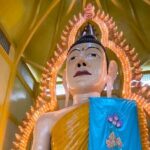
The tour ends with St. Gregory the Illuminator for about 15 minutes guided/photo time.
This final stop rounds out the picture. You’ve seen civic and cultural institutions. Ending with a religious landmark helps tie together how colonial planning wasn’t only about governance. It also involved community identity and public life.
It’s also a good closing note because the area around the cathedral gives you that “all these structures are part of the same urban grammar” feeling.
How the 3.5 hours really feels (and who it suits best)
This is a tight, well-structured loop. You’ll spend much of the time in short guided blocks, photo stops, and a longer lunch.
Based on the guide style described in the feedback, the walk is kept at a pace that’s manageable for average fitness, with chances to step into air-conditioned buildings along the way (especially around the museum/gallery-type stops). If you’re traveling with kids, this kind of pacing can work well because the tour keeps points moving without dragging.
Who this is best for:
- First-timers who want colonial Singapore in one compact circuit
- People who like architecture with context, not just pretty façades
- Anyone who wants a structured, no-planning-needed start (you show up and follow the guide)
Who might not love it:
- Travelers who want long, free-roaming time inside every building
- Anyone who hates walking in rain, even with a poncho included
- People who want a slow pace for lingering and sketching
Value check: is $49 fair for what you get?
At $49 per person, you’re paying for three things that most solo travelers would otherwise piece together:
- a licensed tourist guide (so you’re not guessing at what you’re looking at),
- lunch at Boat Quay (including a 3-course meal),
- and small “make it survivable” extras like a disposable poncho for rain.
The guide time matters here because the tour isn’t only about landmarks. It’s about interpreting planning decisions: why these institutions were where they were, how styles like Georgian, Victorian, and Edwardian show up, and how restored colonial buildings help you read the past in the present.
If you were planning to visit the major sites on your own plus eat riverside lunch anyway, the math often works in the tour’s favor. You also avoid the mental overhead of timing everything and figuring out which stops are worth your attention.
Rain, photos, and the practical stuff you’ll care about
Singapore rain is real, and the tour runs rain or shine. The good part: a disposable poncho is included, so you’re not stuck buying one last second.
Bring:
- comfortable shoes
- water
Photo logic: you’ll have multiple photo stops, and some guided moments inside big landmarks. If you like photos, arrive with a quick mindset: take your main shots quickly at photo stops, then slow down during the guided parts where the story makes the building feel meaningful.
There’s also a recurring comment that the guide helps people feel looked after and may provide photos after the tour. Even if you’re traveling solo, that’s a nice bonus because you don’t have to rely on strangers for every shot.
Should you book Splendour of Colonial Singapore with lunch?
I’d book it if you want a fast path to understanding colonial Singapore without wasting a day piecing things together. You get a guided route through the Civic District and Old European Town, clear interpretive context for the architecture, and a real midday meal by the river.
I’d skip—or at least think twice—if you want long museum time at a leisurely pace. This is structured for walking efficiency, not slow wandering.
If your top priority is getting the big picture (and the details that make the buildings click), this tour is a strong, good-value choice.
FAQ
Where is the meeting point?
Meet at City Hall MRT Station Exit B (street level) at 09:55.
What time does the tour start and how long is it?
The tour lasts 3.5 hours. Starting times depend on availability.
Is lunch included, and where is it?
Yes. Lunch is included at a riverside restaurant by Boat Quay and is described as a 3-course lunch.
Does the tour run in rain or only when the weather is good?
The tour runs rain or shine. A disposable poncho is provided.
What should I bring?
Bring comfortable shoes and water.
Is hotel pickup and drop-off included?
No. There is no hotel pickup or drop-off.
What language is the tour guide?
The tour is guided in English.
How does cancellation work?
You can cancel up to 24 hours in advance for a full refund.