REVIEW · SINGAPORE
Singapore’s Historic Chinatown Walking Tour with Lunch
Book on Viator →Operated by On-A-Roll-Tours · Bookable on Viator
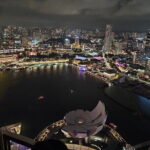
Chinatown tells its story on foot. This 3.5-hour walk blends temple architecture, old club buildings, and street-level history, then finishes with a proper local lunch. You also start with a high view from Sky Garden at CapitaSpring so you quickly understand where Chinatown sits inside Singapore.
What I like most is the way the route layers big landmarks with everyday side streets, so you’re not just passing sights—you’re learning how the neighborhood worked. I also really appreciate that lunch isn’t an afterthought: you stop at Chiew Kee Noodle House, known for its traditional soya sauce chicken rice or noodles, and the snacks keep energy steady.
One thing to watch: the schedule packs a lot into a short window, so the pace can feel quick. If you love long photo breaks and slow wandering, plan to move fast and zoom in later.
In This Review
- Key highlights you’ll feel right away
- Sky Garden at CapitaSpring: a smart start above Chinatown
- Yueh Hai Ching Temple to Pekin Street: serenity, then schoolyard reality
- Fuk Tak Chi Museum and Thian Hock Keng Temple: how faith and prosperity shaped daily life
- Ann Siang Hill and Club Street corners: names, water, and power
- Lunch at Chiew Kee Noodle House: soya sauce chicken that grounds the walk
- The Chinatown shop stretch: Yue Hwa, The Majestic, and 1900s-era names
- Lau Choy Seng, Smith Street, and the Opera House stretch
- Sago Street (Street of the Dead): how place names carry stories
- Fong Moon Kee: a traditional ointment shop to end on a real-world note
- Price and logistics: is $55.51 worth it?
- Who this tour fits best (and who should think twice)
- Should you book this Chinatown walking tour with lunch?
- FAQ
- How long is the Singapore Historic Chinatown walking tour with lunch?
- What is included in the tour price?
- Is lunch provided, and what do you eat?
- Are admission tickets included for the attractions?
- Where is the meeting point and where does the tour end?
- What time does the tour start?
- Do I need a printed ticket?
- Is there anything included for rain?
- Are gratuities included?
- Is free cancellation available?
Key highlights you’ll feel right away
- Sky Garden at CapitaSpring first: get the bird’s-eye view before you walk the streets of Chinatown
- Older-than-you-think temples: Yueh Hai Ching Temple and Thian Hock Keng Temple anchor the story
- Clubs and courtyards, not just shopping streets: you’ll see school courtyards, millionaire clubs, and memorial names tied to place
- Street art with context: Mohamed Ali Lane plus more mural stops linked to Yip Yew Chong
- Lunch that tastes like Chinatown: soya sauce chicken noodles or rice at Chiew Kee Noodle House
- A “last stop” shop that makes the walk feel complete: Fong Moon Kee ends with traditional ointment culture
Sky Garden at CapitaSpring: a smart start above Chinatown
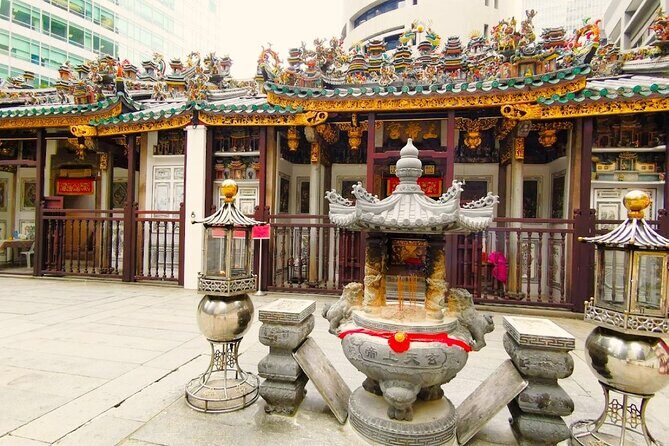
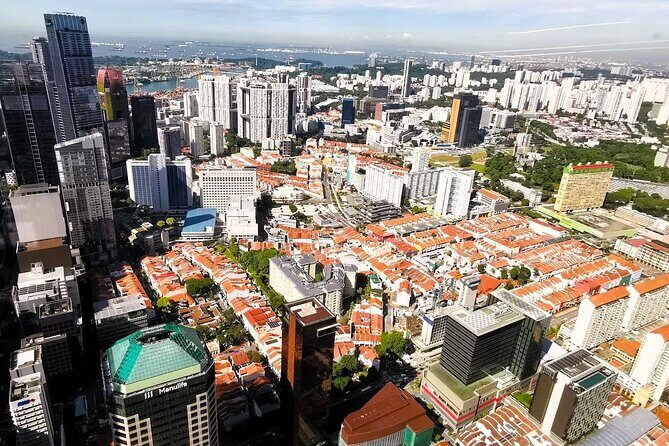
The tour begins with a viewpoint, and it’s a very practical move. From Sky Garden at CapitaSpring, you get a panoramic look out over Singapore’s core, then your guide points out the historic district of Chinatown below.
That first “big picture” moment matters because the rest of the walk is packed with smaller places—temple gates, side alleys, and long-narrow streets. Once you see where everything sits, the route feels less random and more like a story you can follow.
Also, the entry there is listed as free, so you’re not paying extra at the door.
You can also read our reviews of more walking tours in Singapore
Yueh Hai Ching Temple to Pekin Street: serenity, then schoolyard reality
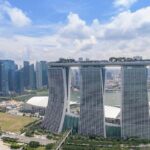
Right after the skyline view, you head to Yueh Hai Ching Temple, a quieter stop that’s easy to overlook. It’s often described as possibly established as early as 1819, which makes it older than Thian Hock Keng Temple. You’ll step inside and get that calm, candle-and-stone feeling that’s totally different from street life outside.
Then the walk shifts gears at Pekin Street. You’re guided through the courtyard of a Chinese boys’ school dating from 1854. It’s not a museum display—it’s a place that helps you imagine how boys learned to read and write, and what they played after classes (including traditional games like chapteh).
If you’re the type who likes history that feels human, this pairing works well: temple calm, then school-day bustle—both tied to the same Chinatown community.
Fuk Tak Chi Museum and Thian Hock Keng Temple: how faith and prosperity shaped daily life
At Fuk Tak Chi Museum, you’re not just looking at old walls. The building has roots as a temple built by Cantonese and Hakka worshippers of Tua Pek Kong (God of Prosperity) in the 1820s. Now it functions as a museum, and you’ll get displays that connect local beliefs to what life looked like in the area.
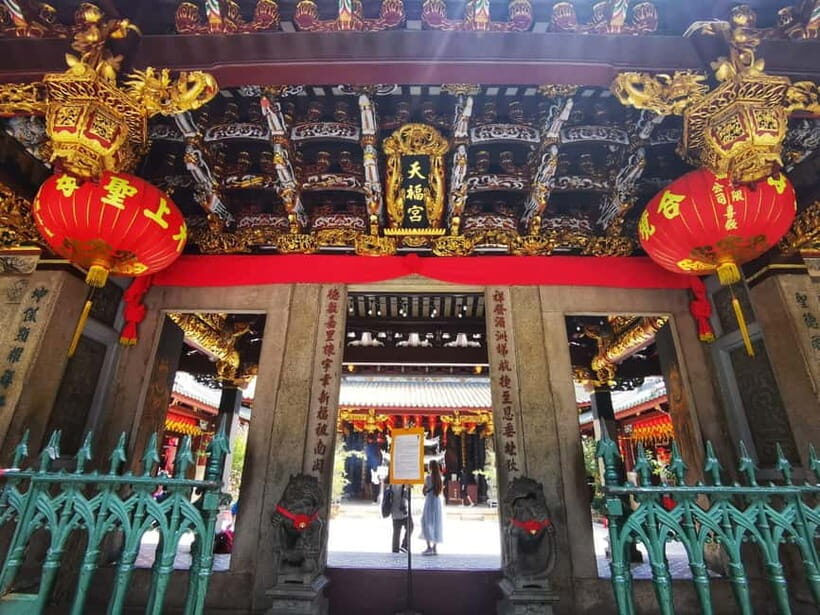
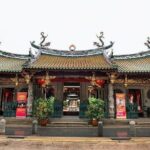
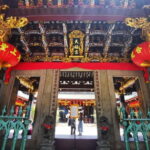
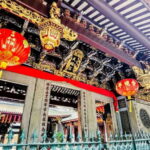
Then comes Thian Hock Keng Temple (established in 1821). This is one of the most important stops on the route. It’s described as the oldest Hokkien temple and likely the second oldest Chinese temple in Singapore. One standout detail: it’s built without a nail being used.
Why this matters on a walking tour: it gives you something concrete to watch for while you move—patterns, symbols, and the way architecture signals the seriousness of the community that built it.
Also, entry here is free, so you’ll spend your time looking, not hunting for tickets.
Ann Siang Hill and Club Street corners: names, water, and power

After the temples, you move into Chinatown’s physical geography at Ann Siang Hill. Your guide will point out how you might spot the last water well in Chinatown, and explain that hills and plantations used to exist in the area. You’ll also learn where the name Ann Siang Hill came from.
From there, you’ll get a very Chinatown-specific kind of history at the social clubs. At the Chinese Weekly Entertainment Club, the focus is on the truth behind how Club Street got its name, plus stories about high society parties held at this millionaire’s club. Next you’ll stop at Goh Loo Club, where the guide explains the story behind the club’s interesting window grills.
These stops help you understand something most people miss: Chinatown wasn’t only merchants and workers. There were layers of wealth, status, and private social life—played out in buildings you can still see today.
Lunch at Chiew Kee Noodle House: soya sauce chicken that grounds the walk
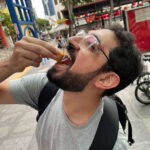
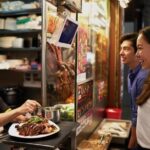
At Chiew Kee Noodle House, you’ll enjoy a traditional soya sauce chicken noodle or rice lunch. The place dates back to 1949, which gives the stop real weight. It’s the kind of meal that feels simple, but right for a walking day: you get fuel without turning the afternoon into a food tour detour.
This lunch is a big part of the tour’s value. You’re not choosing between sightseeing and eating; the schedule builds eating right into the route. Snacks are included too, which helps if your walking pace is faster than you expected (common in a tour that has many stops).
If you’re picky about chicken-based dishes, you should still be fine because the menu style here is clearly framed as soya sauce chicken noodles or rice.
You can also read our reviews of more historical tours in Singapore
The Chinatown shop stretch: Yue Hwa, The Majestic, and 1900s-era names
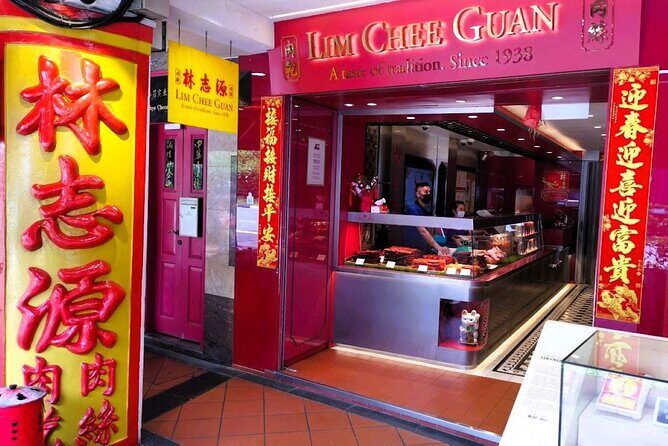
After lunch, the walk turns into a “shopfront history” section where you see how old buildings kept adapting.
You’ll stop at Yue Hwa Chinese Products, once described as the Raffles Hotel of Chinatown, and now a Chinese emporium in a building from 1927. Then you’ll visit The Majestic, where you learn how the theatre came into being and the wealthy Chinese merchant behind it.
Next come a series of brand and food-adjacent stops that feel like Chinatown’s memory bank:
- Lim Chee Guan New Bridge Road Store (established 1938; described as surviving World War II and still running after 85 years)
- Pek Sin Choon Pte Ltd (tea shop from 1925, with Nanyang-style blends)
- Tai Thong Cake Shop (a bakery dating to 1950, known for Cantonese mooncakes and sweet treats)
This part of the tour is where you get a sense of continuity. Places endure, and the neighborhood identity stays recognizable even as the city changes around it.
A practical note: these stops can be “look and learn” rather than “big ticket sightseeing,” so it’s worth keeping your energy up and paying attention to what your guide points out—signboards, building stories, and product heritage.
Lau Choy Seng, Smith Street, and the Opera House stretch
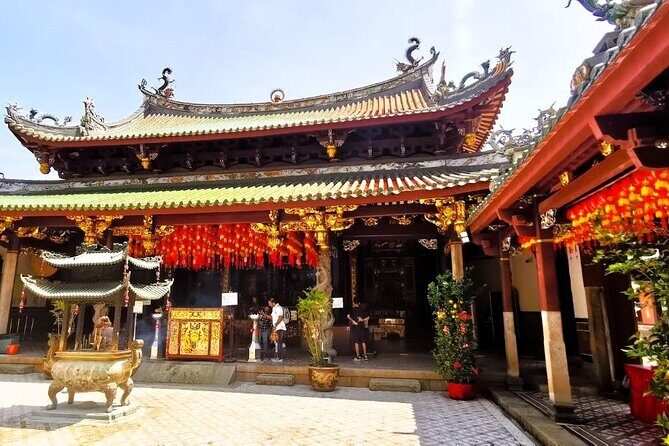
Then the tour shifts into a more hands-on feeling via Lau Choy Seng Pte Ltd along Temple Street. The store is described as a treasure trove of kitchenware, and it’s also tied to the route’s street art. You’ll see more of Yip Yew Chong’s murals nearby.
At Smith Street, you’ll spot another mural that depicts Yip Yew Chong’s own home in Sago Lane more than 5 decades ago. Your guide also points out Lai Chun Yuen Opera House along Smith Street area.
Why I like this sequence: it gives you a bridge between old Chinatown commerce and old Chinatown entertainment. If you’ve ever wondered how neighborhoods supported art and performance beyond theatres, these visual clues help.
Sago Street (Street of the Dead): how place names carry stories
At Sago Street, the tour tackles a heavy-sounding name: Street of the Dead. You’ll learn how Sago Lane became known that way and what it is today.
This is one of those history stops that works best if you listen closely. Names like this don’t come from nowhere—they reflect community memory, fear, hardship, and change. The physical streets make it easier to connect the label to the people who would have lived there.
Fong Moon Kee: a traditional ointment shop to end on a real-world note
The walk ends at Fong Moon Kee (冯满记), an ointment shop established in 1908. The tour frames it as a place you might think of for aches and pains, and that it has kept its identity for 115 years.
Ending here is smart because it closes the loop back to daily life. Temples and clubs show values and social structure; shopfronts show survival and continuity; the ointment shop shows a practical, everyday use case that feels authentically Chinatown.
Price and logistics: is $55.51 worth it?
For $55.51 per person, you’re paying for a licensed guide, a 3 hours 30 minutes walking route, plus lunch and snacks. Many of the sights along the way list admission as free, including Sky Garden at CapitaSpring and multiple temples and heritage stops.
That combination is what makes the price feel reasonable: you’re not just buying commentary. You’re paying for time management—someone else handles the sequencing of places you’d otherwise need to research—and for included food so you don’t lose the pace.
It also helps that the group size is capped at 15 travelers. Smaller groups usually mean you can ask questions without turning the walk into a traffic jam.
One more practical point: start is listed as 10:00 am, with the meeting point at the Whisky Distillery, 1 Raffles Pl, #01-07/08 and the finish at Fong Moon Kee, 16 Sago St. It’s a walk, and the ending point matters—so plan to keep your next appointment flexible.
Who this tour fits best (and who should think twice)
This tour is a strong fit if you:
- want a high-to-low view of Chinatown, starting with Sky Garden then moving street by street
- enjoy temples plus everyday places (schools, shops, clubs, and side streets)
- like your lunch included so you can focus on sightseeing
It might feel less ideal if you:
- need lots of photo time at each stop
- hate quick-paced schedules
- want more time sitting down rather than walking
Also, it’s a walking tour, so I’d treat it as active. Plan on comfortable shoes and bring water, especially since you’ll be outdoors for most of the route. A disposable poncho is included in case of rain, which is helpful.
Should you book this Chinatown walking tour with lunch?
I’d book it if you want an efficient, story-driven way to understand Historic Chinatown in one morning-and-lunch block. The mix of temples, club buildings, and old shop names gives you more than a list of famous sites—it teaches how the neighborhood worked socially, spiritually, and economically.
If you’re the type who loves slow wandering and lingering at photo angles, consider that the route covers a lot in 3.5 hours. But if you can handle a brisk pace, this is one of the better ways to get oriented fast, eat well, and leave Chinatown with more than postcard memories.
FAQ
How long is the Singapore Historic Chinatown walking tour with lunch?
It runs for about 3 hours 30 minutes.
What is included in the tour price?
The tour includes a licensed tourist guide, lunch (traditional soya sauce chicken noodle/rice) and snacks, plus a disposable poncho in case of rain.
Is lunch provided, and what do you eat?
Yes. You get a traditional soya sauce chicken noodle or rice lunch at Chiew Kee Noodle House.
Are admission tickets included for the attractions?
The stops listed on the route show admission as free, including the Sky Garden at CapitaSpring and the temples and heritage sites.
Where is the meeting point and where does the tour end?
You meet at Whisky Distillery, 1 Raffles Pl, #01-07/08, Singapore 048616 and end at Fong Moon Kee (冯满记), 16 Sago St, Singapore 059016.
What time does the tour start?
The start time is 10:00 am.
Do I need a printed ticket?
No. The tour uses a mobile ticket.
Is there anything included for rain?
Yes. A disposable poncho is included in the event of rain.
Are gratuities included?
No. Gratuities are not included.
Is free cancellation available?
Yes. You can cancel for a full refund up to 24 hours in advance of the experience start time.