REVIEW · SINGAPORE
Guided Walking Tour to the Historical Attractions in Farrer Park
Book on Viator →Operated by On-A-Roll-Tours · Bookable on Viator
Farrer Park’s stories are on your route. This guided walk through Singapore’s Farrer Park area connects temples, restored shophouses, and everyday street life to big moments from the city’s past and present.
I like the way Ping (a friendly, sharp guide) brings history to life, including the kind of details you’d normally miss on your own. I also love the tour’s mix of stops: century-old temples with real meaning, then heritage architecture and local food that feels current, not staged.
One consideration: the route touches both an active daytime Red Light Area and the darker WWII chapter at key sites, so it’s not a purely feel-good walk.
In This Review
- Key highlights you’ll actually care about
- Farrer Park’s mix of faith, design, and street reality
- Meeting at lyf Farrer Park and getting your timing right
- Race Course Road: from horse racing to Farrer Park’s sporting identity
- Sakya Muni Buddha Gaya: the reclining Buddha tucked in
- Leong San See: ornate Taoism and ancestral worship
- Sri Vadapathira Kaliamman and Balestier’s street-name story
- Serangoon coffee-shop stop: a break built around fried Hokkien prawn noodles
- Flanders Square: an active daytime Red Light Area
- Petain Road shophouses: Peranakan architecture you can actually see
- Chye Seng Huat Hardware near Tyrwhitt Road: old bones, modern use
- Holy Trinity Church: Chinese Renaissance details in an Anglican church
- Jalan Besar Stadium: soccer origins and WWII memory in the same place
- People’s Association and the Former Victoria School grounds
- Kitchener Road: local eatery pointers and the Charlie Chaplin link
- Price and value: $31.38 for a guided walk with free entry stops
- Who this tour fits best (and who might want something else)
- Should you book this Farrer Park historical walking tour?
- FAQ
- How long is the Guided Walking Tour to the Historical Attractions in Farrer Park?
- How much does the tour cost?
- What time does the tour start?
- Where is the meeting point?
- Is the tour in English?
- Does the tour include admission tickets?
- How large is the group?
- Do I need to bring a paper ticket?
- What kind of walking should I expect?
- Is cancellation free?
Key highlights you’ll actually care about
- Ping’s guiding style: personable, warm, and strong on the historical background behind each stop
- Temple interiors with surprises: a reclining Buddha in a less-obvious inner chamber, plus ornate Taoist heritage
- Petain Road shophouses: one of the best restored rows in the area, with Peranakan context
- Daytime red light area exposure: Flanders Square is active in the day and quietens at night
- A food pause in Serangoon: a break for one of Singapore’s best-known fried Hokkien prawn noodle styles
Farrer Park’s mix of faith, design, and street reality
Farrer Park is the kind of neighborhood that doesn’t need a headline to be interesting. You just start walking and the place starts explaining itself—slowly at first, then all at once. This tour leans into that feeling. It’s not a museum tour. It’s more like getting shown around by someone who knows which corners matter and why.
A big part of the appeal is variety within a compact area. You’ll see religious landmarks that represent multiple traditions, you’ll pass through streets with layers of colonial-era naming and migration history, and you’ll end up at heritage buildings where the details matter more than the postcard view.
You also get a dose of “Singapore now” alongside “Singapore then.” The tour points out local food haunts (not generic recommendations), and it includes modern hangouts near older structures. That balance is what makes the walk satisfying instead of checklist-y.
And yes, you’ll also notice that this neighborhood includes parts of adult entertainment that are legally active. The tour doesn’t treat that as a gimmick; it frames it in context, including how it functions during the day.
You can also read our reviews of more walking tours in Singapore
Meeting at lyf Farrer Park and getting your timing right
You start at lyf Farrer Park Singapore, at 2 Perumal Rd, #01-01. The tour begins at 11:00 am and runs about 2 hours 30 minutes, ending back near the starting point. It’s designed as a smooth walking loop, not a one-way trek.
The group size is small—maximum 15 people—which matters. In a neighborhood like this, small groups keep things from feeling rushed when you’re standing outside temples, moving along busy streets, or pausing to read the story behind a building.
You’ll also use a mobile ticket. That’s handy if you’re juggling multiple reservations on your trip.
Bottom line: plan for a proper neighborhood walk. You won’t be sitting through a slideshow, and you shouldn’t expect long stays at each stop. The tour is paced so you get a sequence of moments rather than one deep, slow immersion.
Race Course Road: from horse racing to Farrer Park’s sporting identity
One of the earliest stops tells a story that’s easy to miss if you only see the street name. Race Course Road used to connect to a horse racing track that ran from 1843 to 1933. Hearing that timeline changes how you look at the area. It’s no longer just “a road.” It becomes the spine of a local pastime that evolved over time.
After the racecourse era, the area became a sporting field known as Farrer Park, and the tour explains how that identity carried forward into a new chapter of community life. For me, this kind of street-level history is one of the best parts of Singapore walking tours: you can stand right where the past happened and still see how the neighborhood shifted.
What to consider here: this stop is brief. It’s more about setting context than lingering. If you love slow, photo-only breaks, you’ll want to take your time outside the guided timeline on your own after the walk.
Sakya Muni Buddha Gaya: the reclining Buddha tucked in
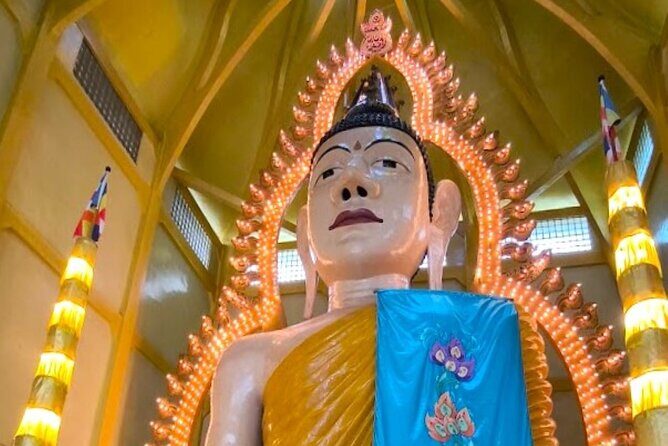
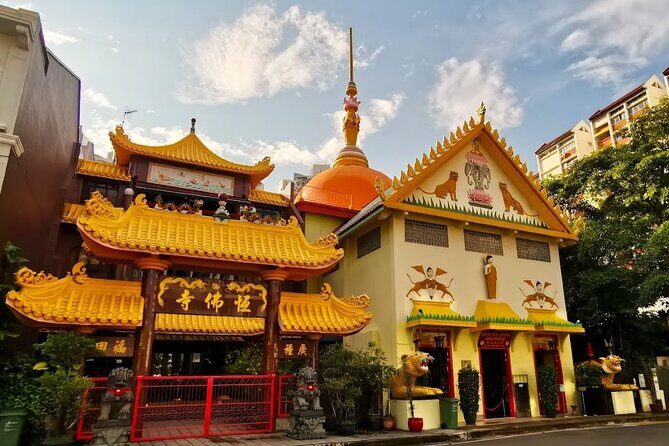
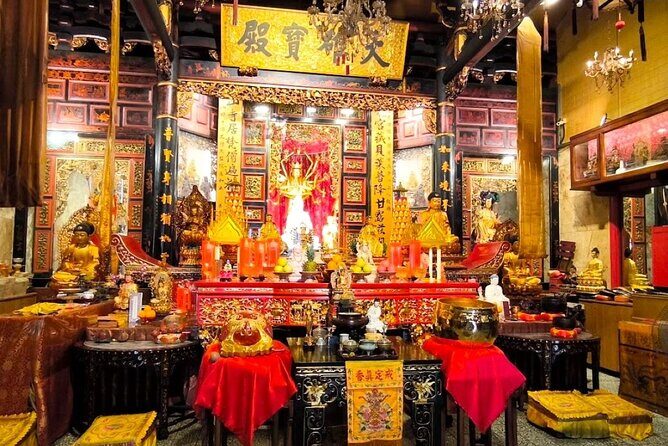
Religious buildings in Singapore can look similar from the outside, but the tour helps you spot what makes each one distinct. At Sakya Muni Buddha Gaya Temple, you step into a less obvious inner space—a chamber that houses a reclining Buddha. You’re not just looking; you’re shown the sculptures that tell part of Buddha’s life through visual storytelling.
I like stops like this because they reward attention. Even if you don’t know every religious term, you can still follow the narrative through the artwork and the layout. The tour also gives you a reason to slow down, not just look up at the architecture.
Possible drawback: if you’re expecting a long guided explanation inside, the stop is about 20 minutes. It’s enough to feel oriented and get the main points, but it won’t satisfy anyone who wants a deep, classroom-style lecture in a temple space.
Leong San See: ornate Taoism and ancestral worship
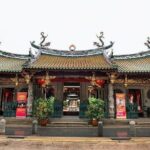
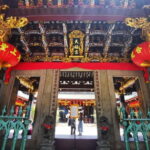
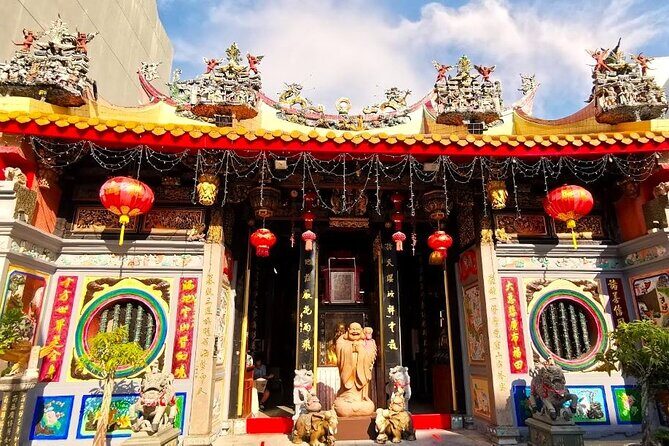
Next you get Leong San See Temple, where the big theme is ornate architecture and what it represents. The tour points out the temple’s design and connects it to Taoism and ancestral worship, which helps you understand why the visuals are the way they are.
This stop is a strong example of how a good guide makes architecture meaningful. Without context, you might just think: pretty façade, nice details. With context, you start noticing the symbolism and why the building matters to the people who use it.
Again, the timing is tight—about 20 minutes—but it’s enough to appreciate the artistry and leave with a clearer mental map of what you saw.
You can also read our reviews of more guided tours in Singapore




Sri Vadapathira Kaliamman and Balestier’s street-name story
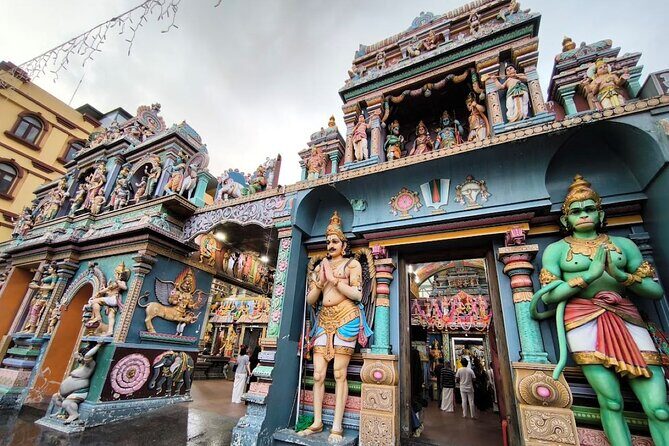
Then the walk shifts to Sri Vadapathira Kaliamman Temple, a colourful Hindu temple dating to around 1870. The guide shares stories about Hindu gods, and that added context helps the colors and carvings make emotional sense, not just aesthetic sense.
After that, you move toward Balestier, where the tour pauses for the origin of the name and its link to America. It also explains how Balestier Road became the food haven it is today. This is one of those stops that’s partly about history and partly about practical living: you learn why the area became known for certain kinds of food culture.
If you like food towns, this is a good lead-in, because it sets up the later eating break.
Serangoon coffee-shop stop: a break built around fried Hokkien prawn noodles
At Serangoon, you stop at a local coffee shop for a short break. The highlight here is a dish: fried Hokkien prawn noodles, described as one of the best in Singapore.
This is the kind of stop I appreciate because it’s not just a snack. It’s a pause where the story of the neighborhood continues through everyday eating. It also lets your legs reset before the next stretch of the walk.
Practical tip: if you have dietary needs, you’ll want to ask what’s possible when you arrive. The tour data only confirms the general kind of meal stop, not ingredients or options.
Flanders Square: an active daytime Red Light Area
One of the tour’s most reality-based segments is Flanders Square, described as an unusual Red Light Area that is active in the day and shuts at night. The guide frames it in a factual, observational way rather than sensationalizing it.
This stop can feel awkward if you’re not used to seeing how adult entertainment works in an otherwise ordinary city setting. It’s worth going in with the right attitude: you’re learning about how the neighborhood functions, not chasing shock value.
If you prefer tours that stay entirely in heritage temples and churches, this part may not be your favorite. But if you want to understand how Singapore operates as a living place—full of rules, neighborhoods, and contradictions—this is the segment that delivers.
Petain Road shophouses: Peranakan architecture you can actually see
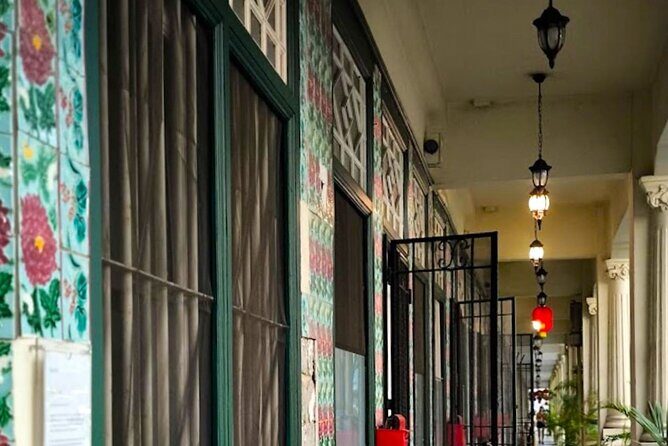
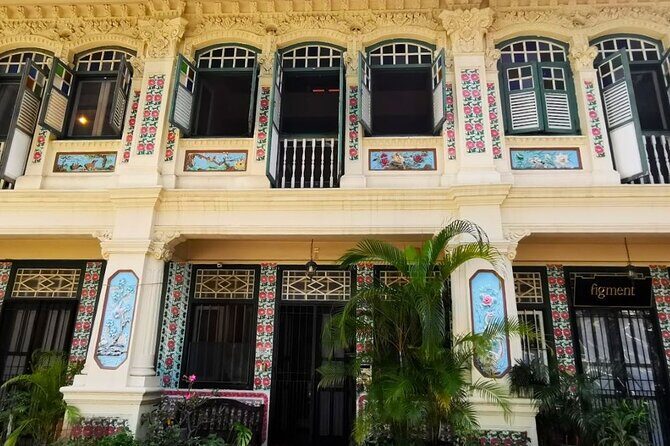
Just near the red light area, the tour pivots sharply to beauty and preservation at Petain Road. You’ll be shown what’s described as possibly Singapore’s most beautifully restored row of heritage shophouses.
The key here isn’t only the facades. The guide connects the architecture to the Peranakan story, helping you understand who the Peranakans are and why their cultural imprint shows up in the built environment.
For me, this stop is where the walk clicks emotionally. It’s one thing to hear about history. It’s another to stand in front of buildings that were restored carefully enough that you can still read the style and feel the craftsmanship.
What to consider: the stop is short (about 10 minutes), so bring your phone ready and don’t be shy about taking a second look when you spot details on doors, windows, or frontages.
Chye Seng Huat Hardware near Tyrwhitt Road: old bones, modern use
Next you visit Chye Seng Huat Hardware, a stop that connects heritage to present-day style. The tour describes it as part of the hipster joints around Tyrwhitt Road.
This is a nice reminder that preservation isn’t only about freezing buildings in time. Sometimes it’s about giving them a second life while keeping the exterior character.
If you love design and adaptive reuse, you’ll enjoy this segment. If you’re more into big historical sites, it might feel lighter—yet that contrast is part of why the overall walk works.
Holy Trinity Church: Chinese Renaissance details in an Anglican church
A quick stop at Holy Trinity Church (Anglican) rounds out the religious and architectural mix. It’s noted as one of two churches built in the Chinese Renaissance style in Singapore.
Even with a short time window (about 5 minutes), the tour helps you look for the right visual cues. The outside design gets more than a passing glance when someone explains why the style is significant.
Jalan Besar Stadium: soccer origins and WWII memory in the same place
At Jalan Besar Stadium, you learn two heavy facts that sit side by side. First: it’s described as the birthplace of Singapore soccer. Second: it was a major inspection site during Operation Sook Ching, and the tour addresses WWII in Singapore and the atrocities suffered during the Japanese Occupation.
This is the emotional weight of the walk. It’s also one of the reasons I respect this tour approach. If you only skim the cheerful, pretty parts of a city, you never really understand it.
Practical consideration: this segment can be intense. It’s brief (about 5 minutes), but it still lands. If you’re travelling with kids or you prefer less dark content, you might want to mentally prepare and decide on your comfort level.
People’s Association and the Former Victoria School grounds
Then the walk shifts to education and civic life at People’s Association, where you see the grounds of the former Victoria School. This stop is short (about 5 minutes), but the presence of a former school site in the story reminds you how institutions shape neighborhoods over decades.
It’s also a good moment to catch your breath—mostly visual, mostly about place context.
Kitchener Road: local eatery pointers and the Charlie Chaplin link
The final stretch leans into everyday life again. At Kitchener Road, the guide points out locations of locals’ favourite eateries and talks about an amusement park in the area that once entertained Charlie Chaplin.
That Charlie Chaplin connection is the kind of detail that makes you grin because it turns the area into a real-time piece of pop culture history. And because it’s paired with current food suggestions, it bridges past and present without feeling like trivia for trivia’s sake.
Stop length is about 15 minutes, so the goal is orientation and direction. If you want to follow up after the tour, this is where the guide’s local pointers can send you back out on your own.
Price and value: $31.38 for a guided walk with free entry stops
The cost is $31.38 per person for about 2.5 hours. That might sound simple, but the value shows up in the structure: you get an English-speaking licensed tourist guide, and the tour includes multiple admission-ticket-free stops.
So you’re paying mainly for interpretation, pacing, and access to context—especially at places where the story matters more than the signage. For a neighborhood like Farrer Park, that’s the difference between looking at buildings and understanding why they’re there.
Small group size helps too. With a maximum of 15 people, you’re less likely to feel like you’re trapped behind someone’s shoulder while you try to hear.
A final note: gratuities aren’t included. If you use guides often, it’s fair to plan for that.
Who this tour fits best (and who might want something else)
This guided walking tour is a strong match if you want:
- A practical way to see Farrer Park that goes beyond the obvious photo stops
- Architecture and temples with context, including Peranakan heritage on Petain Road
- A tour style that mixes faith, food, sport history, and wartime memory
- A guide you’ll feel comfortable asking questions to—especially with a guide like Ping, described as friendly and strong on the historical background
It might feel less ideal if you want a fully lighthearted stroll with zero discomfort. The Red Light Area segment and the WWII content at Jalan Besar Stadium mean the tone shifts. You can still enjoy it, but you should go in knowing it’s honest about the neighborhood’s reality.
Should you book this Farrer Park historical walking tour?
I’d book it if your goal is to understand Singapore at street level: how people worship, eat, remember, and reuse spaces. The standout for me is the guide-led storytelling, especially the combination of temple interiors, restored heritage shophouses, and place-specific history that you can’t easily piece together from a map.
If you’re short on time and you want one walking plan that covers a lot of themes without turning into a rushed photo sprint, this fits. And if you enjoy food pointers you can use right after the walk, the Serangoon and Kitchener Road moments make it feel like you left with something useful, not just photos.
FAQ
How long is the Guided Walking Tour to the Historical Attractions in Farrer Park?
It’s approximately 2 hours 30 minutes.
How much does the tour cost?
The price is $31.38 per person.
What time does the tour start?
The start time is 11:00 am.
Where is the meeting point?
You meet at lyf Farrer Park Singapore, 2 Perumal Rd, #01-01, Singapore 218773.
Is the tour in English?
Yes. It includes an English-speaking licensed tourist guide.
Does the tour include admission tickets?
The itinerary indicates admission tickets are free for the listed stops.
How large is the group?
The tour has a maximum of 15 travelers.
Do I need to bring a paper ticket?
No. The tour uses a mobile ticket.
What kind of walking should I expect?
It’s a guided walking tour of about 2.5 hours through the Farrer Park area. The duration is short, but it is still a walking route.
Is cancellation free?
Yes. Free cancellation is available. You can cancel up to 24 hours in advance for a full refund.
If you want, tell me your travel month and whether you’re comfortable with the WWII and Red Light Area portions, and I’ll suggest how to plan your day around the 11:00 am start.