REVIEW · SINGAPORE
Singapore to Batam:City Tour with Ferry Tickets & Lunch
Book on Viator →Operated by Solid Travel · Bookable on Viator
Batam in a single day is a sprint. What makes this outing fun is the combination of round-trip ferry convenience plus a bus-and-guide plan that strings together major sights fast: temples, a signature bridge, a Chinese-style mosque, and product stops for coffee, batik, and layer cake. I also like that lunch is built in, so you’re not hunting meals on a ticking clock. The trade-off is the pace: with multiple short stops and some shopping time, it can feel packed if you want a slow, linger-long kind of day.
The group stays manageable (maximum 15 people) and the ride is in an air-conditioned vehicle—good news in Batam’s heat. Small-group guidance helps you get your bearings without having to figure out routes, tickets, and timing yourself. One more consideration: you’ll need a passport copy for the ferry ticket, and the whole day depends on good weather.
If you’re the sort of traveler who says yes to temples, bridges, and factory-style shopping in one go, this tour fits well. If you hate crowds, are prone to motion sickness, or want deep time at each site, you may prefer a slower Batam plan or an independent day.
In This Review
- Key Points I’d Highlight Before You Go
- Why a Singapore-to-Batam Ferry Day Trip Works
- Getting There: HarbourFront to Batam Center, and the Timing Twist
- Welcome Monument Photos and Barelang Bridge: Your Two Big View Stops
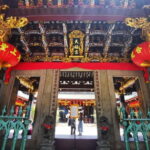
- Maha Vihara Duta Maitreya Temple: The First Cultural Anchor
- Tua Pek Kong Temple and Muhammad Cheng Ho Mosque: Two Faith Styles, Same Day
- 70 Fahrenheit Koffie, Golden Layer Cake, and Coconut Breaks
- Batam Miniature House, Batik Factory Outlet, and Shopping Time Limits
- Lunch at Nasi Padang: Comfort Food on a Moving Schedule
- Guides Matter: Names I’d Keep in Mind
- Price and Value Check: What $179 Gets You in Real Terms
- Who Should Book This Tour, and Who Should Skip It
- Should You Book This Singapore to Batam City Tour?
- FAQ
- What time does the tour depart from Singapore?
- What sights are included during the Batam city visit?
- Is lunch included?
- Are ferry tickets included?
- How many people are in the group?
- Is there an optional massage add-on?
Key Points I’d Highlight Before You Go
- Round-trip high-speed ferry included, with mobile ticket and boarding pass exchange at HarbourFront
- Max 15 travelers, so it feels more like a guided day out than a bus-load free-for-all
- Iconic Batam hits: Maha Vihara Duta Maitreya Temple, Barelang Bridge, Tua Pek Kong Temple, Muhammad Cheng Ho Mosque
- Food and local products built into the route: coconut water, onde onde, coffee stop, and golden layer cake
- Shopping with time limits at a batik factory outlet/gallery and a possible mall drop-off
- Optional massage add-on if you want to ease the end-of-day travel strain
Why a Singapore-to-Batam Ferry Day Trip Works
This is the kind of trip that makes sense when you’re short on time but still want to taste another country’s day-to-day feel. You start in Singapore’s HarbourFront area, cross on a high-speed ferry, and come back the same day—so you get a real “international mini-break” without the logistics headache of booking hotels and internal flights.
What I like about the format is that it’s built around recognizable, high-impact places. You’re not just passing time. You’re going somewhere: major temples, an iconic bridge, and a mosque with Chinese architectural influence and Arabic-letter design details. Add the product stops—coffee, batik, and layer cake—and you’re not only sightseeing, you’re learning how everyday goods get made (or at least sold with a story).
The biggest reality check is the calendar math. The full day runs about 8 to 10 hours, with many stops that are roughly an hour or less. That’s great for first-timers, but it means you’ll be moving through sites more like a guided highlight reel than a slow museum crawl.
You can also read our reviews of more tours and experiences in Singapore


Getting There: HarbourFront to Batam Center, and the Timing Twist
The day begins at HarbourFront Centre in Singapore, where you assemble and collect your ferry boarding pass. The tour includes a round-trip ferry ticket between Singapore and Batam, and you’ll need a passport copy for ticketing.
One thing worth mentally preparing: Singapore time and Batam time differ by an hour (Singapore is GMT+8, Batam is GMT+7). The schedule lists a 9:00 AM departure and a 6:20 PM return in Batam time. In practice, the day feels long because you’re on the move, but the timing is still tight rather than confusing—your guide’s job is to keep the line moving.
Once you land at Batam Center, you’ll meet the guide, hop into an air-conditioned bus, and start with a quick photo stop. This is actually helpful. It’s a gentle on-ramp that gets you oriented before the day gets more cultural and scenic.
Welcome Monument Photos and Barelang Bridge: Your Two Big View Stops
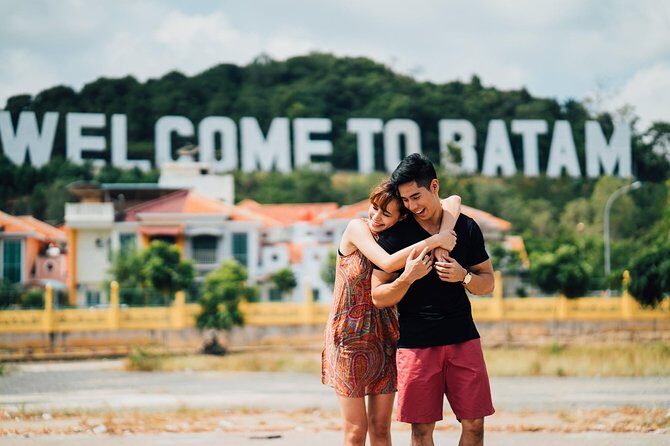
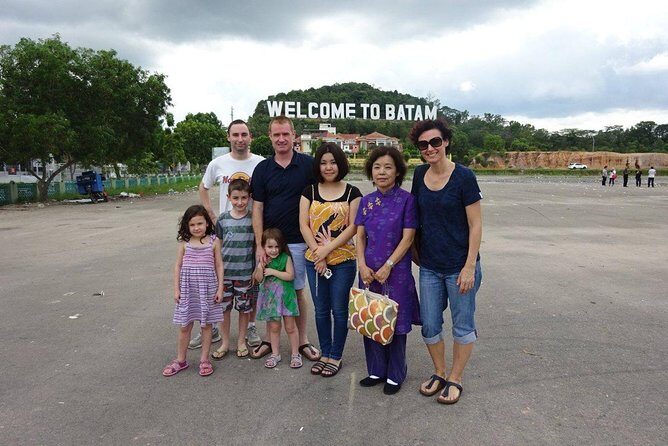
You’ll start Batam with a brief introduction at the Welcome To Batam Monument. Think: a classic first-photo moment. It’s not the deepest cultural stop on the route, but it gives your group a shared starting point and a quick win to break the travel stiffness.
Then comes Barelang Bridge—Batam’s famous chain of bridges connecting the islands of Batam, Rempang, and Galang. You get time for group photo shots with the bridge views, which is exactly what most people want from a bridge stop on a day trip: quick context, nice visuals, and a solid sense of where you are in the geography.
The potential drawback is also simple: photo time is photo time. If you want long walks, multiple angles, or a quieter moment to sit and watch the water, this tour’s style won’t fully satisfy that urge. Still, as a single-day “I saw it” checklist item, Barelang Bridge is a strong choice.
Maha Vihara Duta Maitreya Temple: The First Cultural Anchor
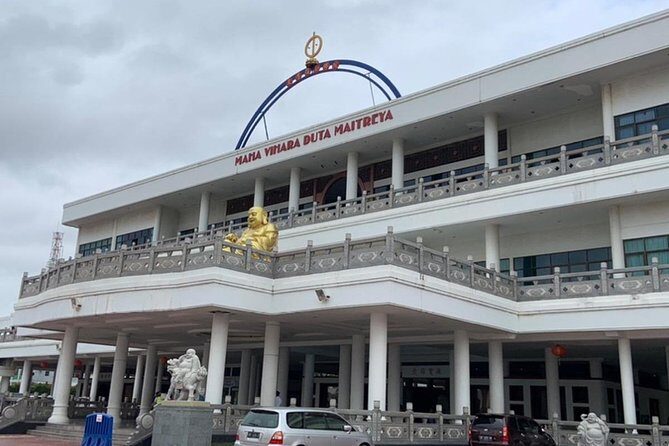
The Maha Vihara Duta Maitreya Temple stop is one of the biggest spiritual landmarks you’ll visit on this route, billed as the largest temple in Southeast Asia. Even if you’re not a temple superfan, this kind of scale matters. Large religious sites tend to give you a clear sense of local devotion and architectural ambition in one glance.
You’ll pair that temple time with a coffee-oriented stop that follows—here’s where this tour gets more interesting than a standard “temples and photos” day. The coffee segment focuses on the history of coffee and the idea of coffee benefits for health, then brings in local Indonesian coffee branding (including Signatures Coffee of Indonesia). It’s presented as a learning-and-tasting moment rather than just a caffeine break.
What I like about doing this right after the temple is rhythm. You move from stillness to stimulation. You get culture first, then a more everyday lens on Batam/Indonesia through what people drink and how it’s marketed.
Tua Pek Kong Temple and Muhammad Cheng Ho Mosque: Two Faith Styles, Same Day
You’ll visit two very different faith spaces that still feel connected through design and community identity.
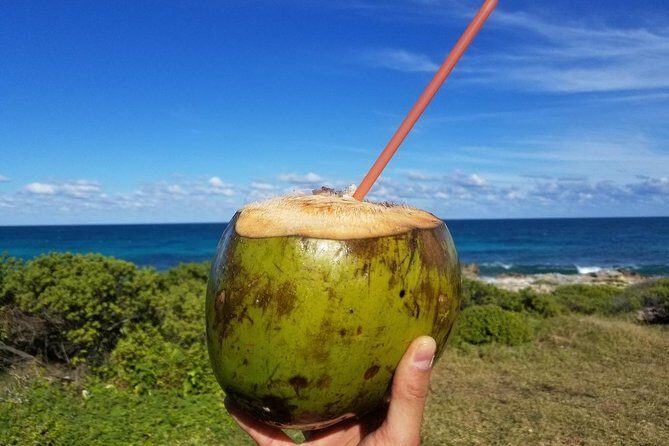
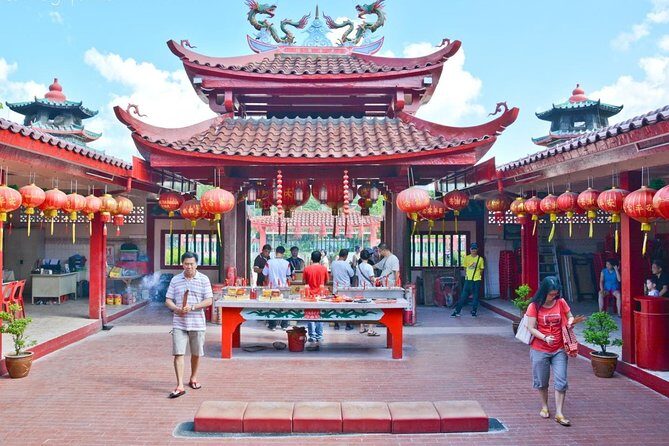
At Tua Pek Kong Temple (also known as Vihara Budhi Bhakti), you get a look at Batam’s older Chinese temple presence. This stop is also where the tour turns snack-friendly. You may be offered Indonesian street snacks like onde onde (a pastry snack) and you’ll likely get fresh coconut to drink—simple, practical refreshment that helps you keep going through the day.
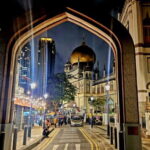
Then you move to Muhammad Cheng Ho Mosque, described as an acculturation-style mosque with Chinese architectural influence and a blend that includes Arabic letter elements. Even with short visit windows, this is the kind of stop that helps you understand Batam as a crossroads: cultural overlap isn’t just a theory here, it’s visible in buildings.
The potential downside is again time. These are meaningful places, but the schedule doesn’t pretend you’ll have hours inside each one. Dress respectfully and plan for quick viewing rather than deep, slow exploration.
You can also read our reviews of more city tours in Singapore





70 Fahrenheit Koffie, Golden Layer Cake, and Coconut Breaks
This tour doesn’t treat food as an afterthought. It builds in small, specific taste moments that fit the day’s tempo.
You’ll hit a coffee stop around the 70 Fahrenheit Koffie area, where the guide explains coffee history and highlights Indonesian coffee themes (including the Signatures Coffee mention). You’ll also get local sweet and snack moments later, including golden layer cake at a stop called Golden Layer Cake—worth it if you like Indonesian desserts and want to try something that feels local rather than just grabbing a random snack.
And don’t skip the coconut water moment if it’s offered. Fresh coconut is a practical heat reset. Combine that with onde onde and you’ve got a quick snack-and-sip strategy that keeps you from turning cranky late in the tour.
If you have strong dietary needs, the tour data doesn’t spell out detailed meal options. So bring a plan: ask your guide what’s included in each snack stop, and carry a small backup snack just in case.
Batam Miniature House, Batik Factory Outlet, and Shopping Time Limits
After the main cultural blocks, the itinerary shifts into “what locals make and how they sell it” territory.
Batam Miniature House gives you quick snapshots of traditional Indonesian house styles via miniatures. This is not a long museum visit, but it’s useful if you want an overview feel for local architectural types without spending hours studying photos and plaques.
Then the biggest retail segment arrives: Batik Factory Outlet / Batik Gallery. You’ll be looking at authentic Indonesian batik, plus local handicrafts and souvenir items like decorative masks, bags, and wallets. This is the classic day-trip trade: you’re paying for the convenience of having transport, time, and guided access to shopping that would otherwise be harder to organize quickly from Singapore.
The watch-out here is the tone of shopping time. If you love browsing, it can be a fun hour or two. If you prefer minimal shopping pressure, focus on what you actually came for: batik patterns, small craft items, and the kind of souvenirs that you can check for quality quickly (fabric feel, tight pattern alignment, and whether pieces are finished neatly).
If you have extra time, you may also get a drop-off at Mega Mall Batam Centre. That’s helpful if you want a more open-ended last chance for snacks or gifts before heading back to the ferry.
Lunch at Nasi Padang: Comfort Food on a Moving Schedule
Lunch is included, served at a nasi padang style restaurant (listed as Sederhana Restaurant in the route detail). This matters for value and sanity: you don’t have to choose a restaurant on your own with language and timing hurdles while everyone else is trying to catch the ferry.
Padang-style meals are usually a practical choice for groups because there’s variety and you can typically find something you’ll eat even with spice differences. Still, if you’re sensitive to heat, pay attention and tell your guide what you prefer before you order.
The timing is also right. Lunch comes after Barelang Bridge, when you’ve built up appetite and need energy for the temple-and-shopping run. It helps the day feel less like a nonstop sprint and more like a structured tour day.
Guides Matter: Names I’d Keep in Mind
The biggest difference between a smooth day and a frustrating one comes down to the guide’s readiness and confidence.
On this kind of tight itinerary, a prepared guide keeps the group moving, explains what you’re seeing in plain language, and manages the timing so you hit the key stops. Some guides associated with strong experiences include Hendry, Mr Din, and Mr Winner. If your booking assigns one of these names, that’s a good sign.
Here’s the practical advice I’d follow: don’t assume every day runs perfectly the same way. If you’re aiming to see every named stop, arrive ready to ask your guide early about the day’s flow, and keep your expectations realistic about what can fit into short windows.
If something feels off—like the day shifting away from planned stops—raise it calmly right away. Day-trip tours are only fun when the plan and the timing match what you paid for.
Price and Value Check: What $179 Gets You in Real Terms
At $179 per person, this is not the cheapest way to get from Singapore to Batam. But you’re not just buying ferry tickets. You’re also paying for:
- Round-trip ferry (SG–BTM–SG)
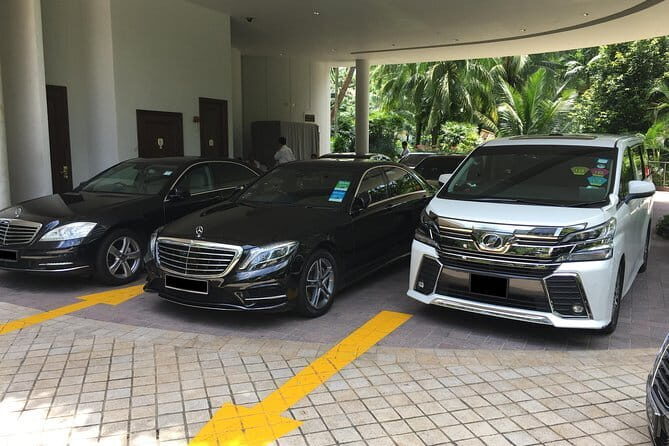
- An air-conditioned vehicle for the day
- Lunch included
- Gratuities included
- Admission tickets listed for many of the main stops
- Group size capped at 15, plus a guide
So the value logic is simple: if you’d otherwise pay for ferry + separate transport + entry fees + a guided route, the bundled price starts to make sense. It’s especially attractive if you want the structure without doing the heavy lifting yourself.
The main value risk is the same as the guide risk: if your day turns too short on named stops or explanations, the price starts to feel sharp. That’s why it’s smart to confirm what’s included when you check in, and to go into it ready for a fast, busy sightseeing day.
Who Should Book This Tour, and Who Should Skip It
This tour is a good match if you:
- Want a first taste of Batam with major sights
- Prefer guided route clarity over DIY planning
- Like cultural stops but also enjoy food and product stops (coffee, batik, layer cake)
- Are okay with group pace and short visit windows
You might skip it if you:
- Want slow travel or long museum-style time at each site
- Hate shopping components or prefer to choose where to spend your money
- Need a highly customized schedule (this one is built as a fixed-style day)
If you’re visiting Singapore with only a few extra days and you want one “big day out,” Batam is a sensible choice. You’ll also like that it’s designed for locals and visitors who just want a clear plan in a single day.
Should You Book This Singapore to Batam City Tour?
I’d book this if you want a structured, guided day that squeezes a lot into 8–10 hours and you’re comfortable with a packed itinerary. It’s built around convenience (ferry + transport), practical inclusions (lunch), and high-recognition stops (Barelang Bridge and major temples/mosque).
If you’re the type who gets cranky when plans shift, or you’re hoping for slow, thoughtful time at every site, consider a different approach. A more flexible Batam plan will suit you better.
Weather matters here, too. Since the tour depends on good conditions, have backup flexibility in your Singapore schedule.
FAQ
What time does the tour depart from Singapore?
Departure is listed as 09:00 AM from HarbourFront Centre in Singapore. You assemble at the meeting point beforehand (start time is shown as 8:00 am).
What sights are included during the Batam city visit?
You’ll visit several major stops including Welcome To Batam Monument, Maha Vihara Duta Maitreya Temple, Barelang Bridge, Tua Pek Kong Temple, Batam Miniature House, Muhammad Cheng Ho Mosque, plus batik shopping and other local food/product stops.
Is lunch included?
Yes. Lunch is included at a nasi padang restaurant (listed as Nasi Padang Restaurant / Sederhana Restaurant in the tour details).
Are ferry tickets included?
Yes. Round-trip ferry tickets between Singapore and Batam are included, and you’ll collect a ferry boarding pass at Sindo Ferry (Harbourfront Centre).
How many people are in the group?
The maximum group size is listed as 15 travelers.
Is there an optional massage add-on?
Yes. An optional massage add-on is available for extra relaxation.