REVIEW · SINGAPORE
Private Singapore Food Tour in Chinatown and Little India
Book on Viator →Operated by Culture Curious Singapore Tours · Bookable on Viator
Chinatown and Little India taste like two passports. In roughly 3 hours, this private walk pairs 9 Singapore tastings with clear explanations of what you’re eating and why it exists in the city’s mix of cultures and faiths. You’ll also stop at major landmarks, including a Tang-style Chinese temple and key Little India food spots.
What I like most is the focus on street food basics explained in plain language and the fact you’re walking with a private licensed local food guide instead of just following a map. One thing to consider: the tastings include common allergens (soy, wheat/gluten, dairy, nuts, meat), so it’s not a good fit if you’re vegan, gluten intolerant, or dealing with allergies.
Key points to know before you go
- 9 authentic tastings across Chinatown and Little India, meant to be shared
- Private, licensed local guide who connects food to Singapore history, culture, and religion
- Temple and heritage photo stops, not just restaurant-hopping
- Public transportation built in, starting at Chinatown MRT and ending near Little India MRT
- Comfort-first planning: casual clothes, comfy shoes, and bring water plus an umbrella/poncho
In This Review
- A 3-hour private walk through Chinatown and Little India with 9 tastings
- Meeting at Chinatown MRT, ending near Little India MRT
- Chinatown’s old streets: what street-food culture looks like up close
- Maxwell Food Centre: why a hawker center feels like a classroom
- Buddha Tooth Relic Temple: Tang-style architecture and calm photo moments
- Tekka Centre in Little India: where roti prata and rojak make sense
- Serangoon Road: Indian street snacks plus street-art spotting
- Temple and villa photo stops: religion and architecture without the maze
- Campbell Lane: flower garland artisans and a heritage center stop
- What the private licensed guide changes (a lot)
- Food volume, dietary limits, and planning what you can handle
- Price and logistics: why $141.04 can still feel fair
- Tips for comfort: shoes, weather gear, and eating at hawker speed
- Who this tour suits best
- Should you book this Singapore food tour?
- FAQ
- How long is the private Singapore Food Tour in Chinatown and Little India?
- Where do I meet the guide, and where does the tour end?
- Is hotel pickup included?
- How many tastings are included?
- Are there admission fees for the stops?
- Is this tour private or shared with other groups?
- Is the tour suitable for vegan or gluten-free travelers?
- What should I bring for the walk?
- What is the cancellation policy?
A 3-hour private walk through Chinatown and Little India with 9 tastings
This tour is built for people who want more than a food list. You’re not just sampling things that sound delicious; you’re getting the story behind the flavors—how different communities shaped Singapore’s street-food culture, and how religion shows up in daily life.
Expect about 3 hours of walking, with shorter stops that keep the pace lively. If you like learning by doing, this format works well: you eat, you look around, and your guide puts words to what you’re seeing—hawker traditions, spices, and the role of temples in the neighborhood.
Price is $141.04 per person, which is in the “don’t overthink it” range for a private food experience. You’re paying for a guide, the time, and a guided route that includes both food centers and worship/heritage stops—not just bites.
Meeting at Chinatown MRT, ending near Little India MRT
You start at Chinatown MRT station and finish near Little India MRT station. That end-point detail matters because you can roll into the rest of your day without backtracking across the city.
The tour includes public transportation. In practice, that means you’re not spending your mental energy figuring out which train to take while you’re hungry. One review specifically praised help navigating the subway system, which is a big plus when you’re new to Singapore.
Hotel pickup is available only for the option labeled with pickup. If you don’t see that option, plan to meet at Chinatown MRT and use your own travel to get there.
You can also read our reviews of more food & drink experiences in Singapore
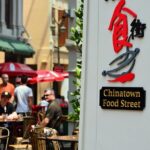
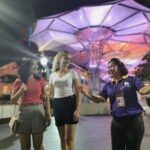
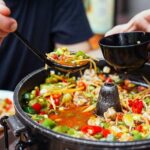
Chinatown’s old streets: what street-food culture looks like up close
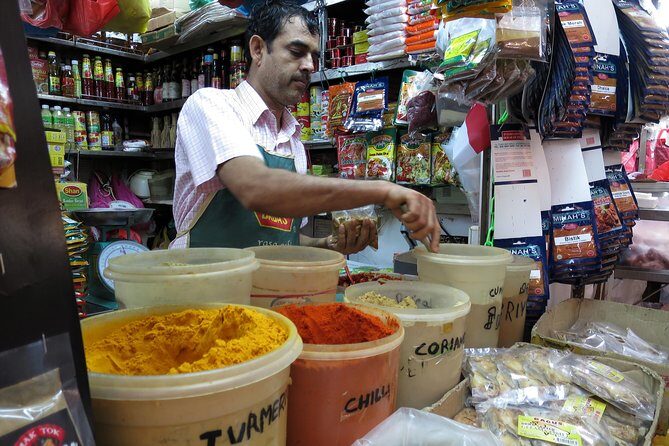
Your first main stretch is in Chinatown, where the guide introduces Singapore’s street-food heritage through the kinds of alleyways and older streets where hawkers once set up. This is where a walking tour earns its keep. You’re not just eating—you’re seeing the context.
You’ll get a quick rhythm shift from landmark sightseeing to everyday food life. Chinatown’s food scene isn’t only about restaurants; it’s about how people shop, snack, and pass down habits.
If you’re photographing, this is a good early start: you’re walking through dense street blocks, so you get chances for close-up views without needing a major detour.
Maxwell Food Centre: why a hawker center feels like a classroom
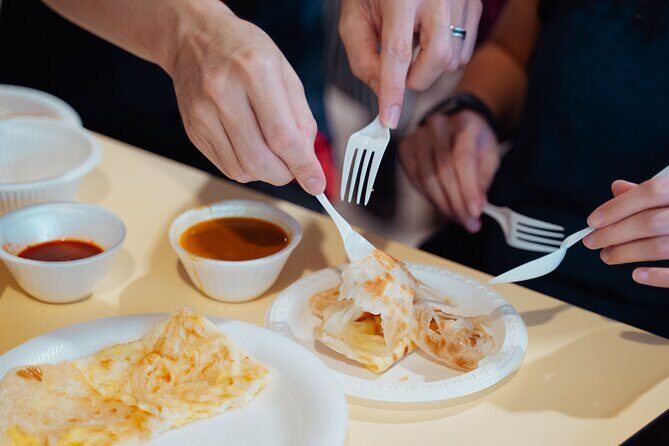
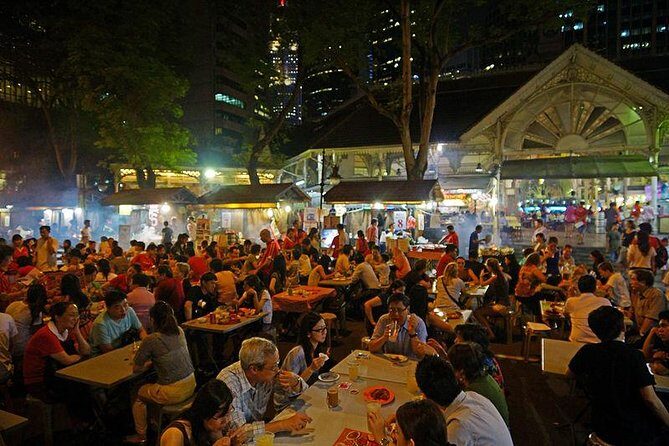
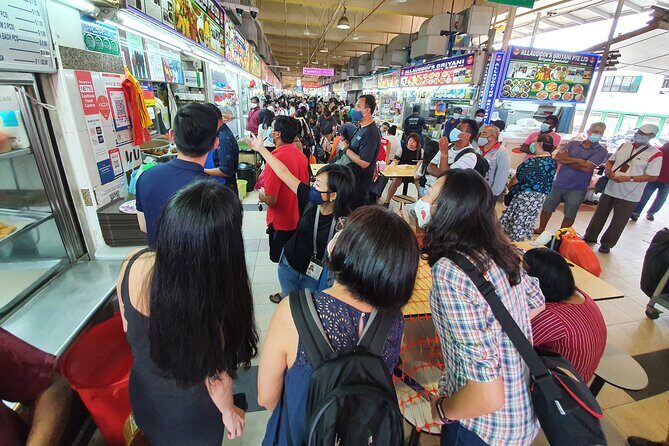
Next up is Maxwell Food Centre. The tour’s pitch is simple: Singapore treats eating like a national pastime, and hawker centers are where you feel that in real time.
Here’s what makes this stop practical: you taste 9 different street food tastings across the route, and Maxwell is one of the anchors. The tour’s structure makes it easier to sample multiple traditions without ordering a full meal at each place.
You also get cultural context while you eat. The tour includes explanations around multicultural influences and how the same city can produce different flavors, cooking styles, and food habits in the same day.
Potential drawback: hawker centers can be crowded depending on the time of day. Since this is a private group, it’s usually more controlled than a big bus tour, but you’ll still want to be comfortable standing and moving between stalls.
Buddha Tooth Relic Temple: Tang-style architecture and calm photo moments
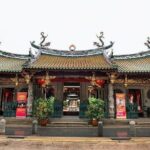
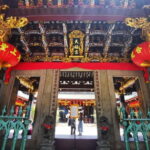
One of the more memorable stops is the Buddha Tooth Relic Temple and Museum. You’ll see a Chinese temple built in a Tang style and you’ll have time for photos of the prominent landmark in Chinatown.
This part works because it ties food to faith and community. Even if you’re not the religious type, the building is a strong visual statement. And when your guide connects religion to neighborhood life, the visit stops feeling like a random detour.
This stop is also short—about 15 minutes—so it doesn’t swallow your schedule. You get enough time to look closely and take pictures, then you’re back to food.
Tekka Centre in Little India: where roti prata and rojak make sense
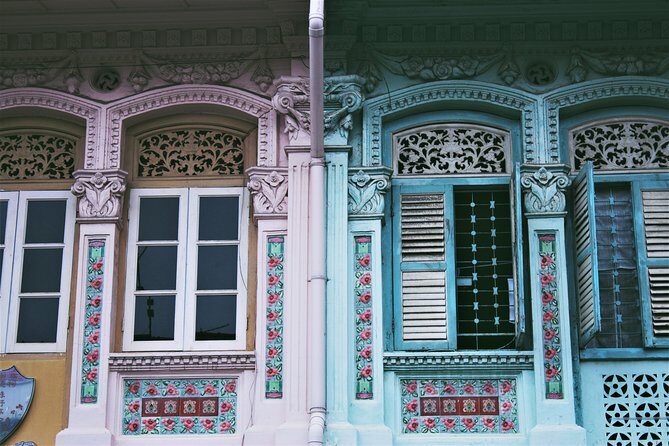
In Little India, the tour heads to Tekka Centre. This is another place where Singapore’s food culture shows its everyday side. Tekka Centre is more about local habits than “one famous dish” tourism.
You’ll taste a selection of local favorites such as roti prata (Indian flat bread) and rojak. Even if you’ve heard of these foods before, this stop is about tasting them in the Singapore context and understanding how different ingredients and techniques land on a single street-food menu.
The tour gives you about 40 minutes here, which is enough time to try items, ask questions, and still keep moving.
If you’re the type who hates making choices, this is for you. Ordering for yourself in a busy food center can be stressful, especially if you’re scanning menus in a hurry.
You can also read our reviews of more tours and experiences in Singapore
Serangoon Road: Indian street snacks plus street-art spotting
Next is Serangoon Road. This stop is shorter (about 15 minutes), but it adds variety. You taste more Indian street snacks, and you get chances to spot hidden street art and shops along the main thoroughfare of Little India.
This is a good segment if you like color and texture—signs, small storefronts, and the feeling of a neighborhood that never fully stops. It also helps break up the heaviness of sitting and eating.
Because it’s brief, it’s best to treat this as a flavor-and-photo burst rather than a full exploration. If you want extra time in Little India later, you can always come back after the tour.
Temple and villa photo stops: religion and architecture without the maze
After Serangoon Road, you’ll hit two additional heritage-style stops in Little India.
One is a historic temple that was once a place of refuge during the Japanese War Occupation. Your guide explains how the historic temple remains relevant to the Hindu community, and you’ll get photo-taking opportunities.
The other highlights architecture: you’ll see the last surviving Chinese villa in Little India. It’s described as a hybrid of Malay, Chinese, and European architectural influences, and you’ll get more photo opportunities.
Why these stops matter for a food tour: Singapore’s street food isn’t separate from the streets themselves. Religious spaces, neighborhood histories, and mixed architectural styles all shape how people live and gather. Food follows those patterns.
If you’re hoping for a nonstop parade of stalls, you might find this section a little slower than the food centers. Still, it’s short, and it gives you something solid to think about between bites.
Campbell Lane: flower garland artisans and a heritage center stop
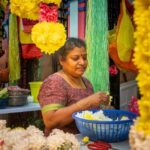
The final food-and-street-life stop is Campbell Lane (about 15 minutes). This is a “local life” slice of the area—flower garland artisans, street markets, and the nearby Little India Heritage Centre.
What I like about ending here is the contrast. You start with Chinatown’s street-food heritage, move into major food centers and temples, and then finish with smaller scenes that feel more like everyday Singapore.
It’s also a convenient ending point. The tour ends near Little India MRT station, so you can leave right away without needing to figure out how to get back across the neighborhoods.
What the private licensed guide changes (a lot)
The big difference here is the guide. This is a private tour with your own licensed local food guide, not a generic walking route.
In the reviews, the consistent praise is about history plus food intelligence—guides who connect what you’re eating to Singapore’s mix of communities and faiths. Names that came up include Rachel, Kelvin, and Corliss, and the feedback was that they were warm, personable, and helpful in the streets, not just at the tasting counter.
You’ll feel that in three ways:
- Ordering help without pressure: you try things without standing there guessing what’s safe to eat.
- Meaning while you eat: spices, food traditions, and hawker culture are explained in plain terms.
- Navigation support: at least one review highlighted subway help, which is a big stress reducer.
Private also helps if you have questions mid-walk. Instead of waiting for a group to catch up, you get to ask and keep going.
Food volume, dietary limits, and planning what you can handle
The tour is designed around sharing. The included tastings are meant to include a mix of carb-based dishes, popular snacks, and heritage foods, and you’ll have breakfast come hungry and snacks come hungry in that same tasting style.
Important: the tour data states tastings include ingredients such as soy, gluten, wheat, chicken, pork, dairy, nuts, and spices. That means it’s not suitable for travelers who are vegan, gluten intolerant, or who have allergies.
That said, one review praised a guide for ensuring food choices suited dietary restrictions for that group. So if you have a limitation, don’t assume it’s hopeless—just know the base product isn’t set up for vegan or gluten-intolerant travelers, and allergies are a serious concern.
My practical advice:
- If you have allergies, message before booking and list them clearly.
- If you’re gluten intolerant or vegan, skip this one and choose a tour explicitly built for you.
- Wear clothes you can move in. Hawker stops tend to involve standing, walking, and grabbing tastings quickly.
Price and logistics: why $141.04 can still feel fair
Let’s talk value without hand-waving.
You’re paying $141.04 per person for:
- a private licensed guide,
- 9 tastings plus breakfast/snacks in a sharing format,
- public transportation included,
- time at major sites like Buddha Tooth Relic Temple and multiple Little India heritage stops.
If you mentally divide the price by the number of tastings, it’s not a “cheap eat” deal. But it isn’t only about food. You’re also buying guided access, interpretation, and a route that saves you from hunting down places on your own.
The only real pushback from the ratings was a sense that it felt expensive for the food choices given. If you’re the type who wants maximum volume and minimum guiding, you may feel that pinch. If you want the explanation and the well-timed stops, the price starts to make more sense.
This tour also benefits from being private. You’re not competing with a large group for attention, and you’re less likely to lose the thread between tastings and sites.
Tips for comfort: shoes, weather gear, and eating at hawker speed
Singapore weather can be sneaky. Bring a poncho or umbrella and water to stay hydrated. Wear casual attire with comfortable footwear, because this is a walking tour with multiple stops close together.
Also, eat lightly before you go only if you know yourself. The tour is built to have you come hungry. You want to arrive ready to taste, not arriving already full and then wondering why you’re spending money on food you can’t enjoy.
If you’re taking photos:
- Start taking pictures at the temple early, since it’s a landmark stop.
- Keep your camera ready near the street-art and heritage villa segments.
- Expect some motion and crowds around food centers.
Who this tour suits best
This is a strong fit for you if you:
- want street food with context (history, culture, and religion),
- like walking in neighborhoods rather than sitting in a van,
- prefer a guide who helps you navigate and decide what to eat,
- enjoy tasting multiple traditions in one afternoon.
It’s less ideal if you:
- need vegan meals, gluten-free-only, or allergen-safe options,
- want a lot of food volume with no guidance,
- hate walking for about 3 hours even with short stops.
Should you book this Singapore food tour?
If you want Singapore food as a story—not just a list—this is a smart choice. You get a private guide, 9 tastings across Chinatown and Little India, and a route that includes both food centers and meaningful cultural stops. The price is not bargain-basement, but it reflects the private guidance and the time saved by having a plan.
I’d book it when you’re excited to taste and learn at the same time. Skip it if your dietary needs are strict (vegan, gluten intolerance, or allergies), because the included tastings list many common allergens.
If you’re on the fence, ask yourself one question: do I want help understanding what I’m eating, or do I just want to eat? If it’s the former, this tour is a good match.
FAQ
How long is the private Singapore Food Tour in Chinatown and Little India?
The tour lasts about 3 hours.
Where do I meet the guide, and where does the tour end?
You start at Chinatown MRT station. The tour ends near Little India MRT station, and your guide will help with directions.
Is hotel pickup included?
Hotel pickup is available if you choose the option labeled with pickup. Otherwise, the tour includes public transportation and meets at Chinatown MRT.
How many tastings are included?
The tour includes 9 authentic street-food tastings, plus breakfast and snacks in a sharing format.
Are there admission fees for the stops?
The tour lists admissions as free for the stops shown, including the temple and the food-center visits.
Is this tour private or shared with other groups?
This is a private tour/activity, so only your group participates.
Is the tour suitable for vegan or gluten-free travelers?
No. The tour data says it is not suitable for travelers who are vegan or gluten intolerant, and it also notes multiple common allergens are included in tastings.
What should I bring for the walk?
Wear casual clothes and comfortable shoes. Bring water and a poncho or umbrella.
What is the cancellation policy?
You can cancel for free up to 24 hours in advance for a full refund. If you cancel less than 24 hours before the start time, the amount paid is not refunded.