REVIEW · SINGAPORE
Singapore Street Food and Ethnic Quarters Kick Scooter Tour
Book on Viator →Operated by On-A-Roll-Tours · Bookable on Viator
Balancing on a kick scooter can be part of the fun. This 3.5-hour evening tour threads through Singapore’s ethnic neighborhoods, temples, and old town streets while you work up an appetite. I love how it mixes street-food tasting with quick cultural stops, and you can really feel the city’s different communities in one loop.
My favorite part is the food line-up: 7 types of street food or drinks that stay vegetarian-friendly, from a big dosai cone to desserts like muah chee and bubur pulut hitam. I also like that it hits real landmarks in the mix—Little India temples, Albert Mall’s hawker action, and stops around Kampong Glam.
One thing to consider: you’ll be on a kick scooter, so if your balance is shaky, give yourself a few minutes to get comfortable before you settle into the rhythm. Also, children age 7 or under can’t join, and the tour has a max group size of 15.
In This Review
- Key highlights to know before you go
- Price and what you really get for $55.43
- Scooter basics: how the ride affects the experience
- Where the tour starts and how the timing works
- Stop-by-stop: the districts you’ll taste and see
- House of Tan Teng Niah and the Little India vibe
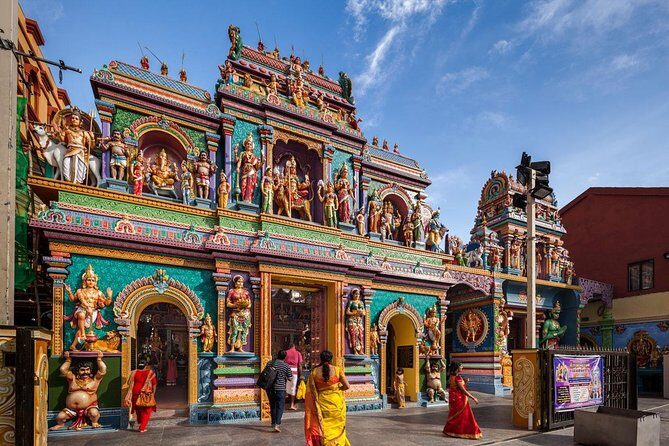
- Hindu temples in Little India: Sri Veeramakaliamman and Sri Krishnan
- Komala Vilas and the dosai cone moment
- Campbell Lane: traditional trades and street textures
- Selegie and the remnants of the Old Jewish Quarter and Little Japan
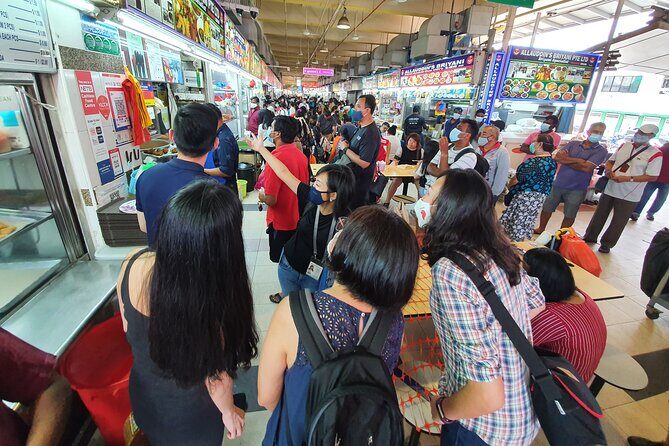
- Albert Mall and Today’s Chinatown: a vegetarian hawker centre tasting
- Bugis Street and Bugis Junction: modern shopping with older traces
- Old European Town: St Joseph’s Church and Chijmes
- Raffles Hotel Arcade and the Singapore Sling birthplace
- Haji Lane, Sultan Mosque, and Kampong Glam atmosphere
- Food-first tasting flow: how to plan your appetite
- What it feels like with a small group and a named guide
- Weather and comfort: the unglamorous but important bits
- Should you book the Singapore Street Food and Ethnic Quarters kick scooter tour?
- FAQ
- FAQ
- What’s the duration of the Singapore street food and ethnic quarters kick scooter tour?
- What time does the tour start, and where does it end?
- How much does the tour cost per person?
- How many street food/drink items do you try?
- What food items are included on the tour?
- Is this tour only for adults?
- Are there any weight restrictions?
- What happens if the weather is poor?
Key highlights to know before you go
- Seven vegetarian-friendly tastings plus a dosai cone that’s basically made to be photographed
- Kick scooter route through multiple districts in just 3 hours 30 minutes
- Temple and religious sites like Sri Veeramakaliamman and the Kuan Yin Thong Hood Cho Temple
- Old Singapore layers at places tied to the Old Jewish Quarter, Little Japan, and the Old European Town
- Albert Mall and hawker centre time to try multiple dishes in one go
- Evening timing (5:00 pm start) that fits night market energy without feeling like a full late-night mission
Price and what you really get for $55.43
At about $55.43 per person, this isn’t the cheapest way to eat your way across Singapore. But you are paying for three big things at once: a guided scooter tour, a set tasting plan with 7 food or drink items, and multiple quick landmark stops with free admission listed for most sites.
For me, the value case is simple. If you were to do this on your own, you’d spend time figuring out where to go, what to order (especially as a vegetarian-friendly plan), and how to stitch together neighborhoods efficiently. Here, the route is built to move you through Little India → Chinatown area (Albert Mall) → Old European Town → Kampong Glam area, with food baked into the schedule.
That said, this is a tasting tour, not a sit-down meal. Portions are meant for sampling, so come hungry and pace yourself so you don’t hit the desserts too late.
You can also read our reviews of more food & drink experiences in Singapore


Scooter basics: how the ride affects the experience
This tour is centered on a kick scooter. That’s a plus because scooters help you cover ground without feeling like you’re spending the night walking. The downside is also obvious: you need decent balance and comfort riding in the street environment.
The good news is the tour is short enough—about 3 hours 30 minutes—that you’re not stuck on a long ride while you figure out your legs. The reviews describe some people starting out wobbly and then getting the hang of it, and that matches what I’d expect with any scooter plan. Your best move is wearing supportive shoes and staying relaxed at the beginning.
A second practical point: the tour has rules that affect who can join. Children age 7 or below aren’t allowed, and people over 100 kg aren’t allowed. The tour also caps group size at 15 travelers, which usually makes the pace feel more manageable.
Where the tour starts and how the timing works
You start at Little India at 5:00 pm. The tour finishes at 73 Dunlop St, Singapore 209401, with the meeting point clearly tied to public transport options.
Why the timing matters: an evening start lets you hit religious sites and heritage stops in daylight-feeling conditions, then shift toward lively street life and hawker energy as the night comes on. It’s also a smarter time window for eating—Singapore can feel hot, and food tastes better when you’re not roasting for hours before dinner.
Stop-by-stop: the districts you’ll taste and see
This tour is built like a moving map of Singapore’s cultural mix. Each stop is short, but the sequence matters because it groups neighborhoods with similar vibes, then switches gears fast.
House of Tan Teng Niah and the Little India vibe
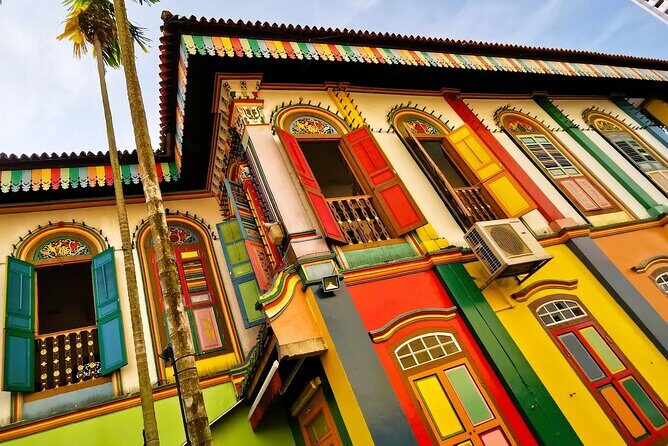
You begin at House of Tan Teng Niah, a brightly painted villa built by a Chinese merchant for his wife back in 1900. It’s described as the only Chinese villa still standing in Little India today, and that detail gives the area weight beyond just its storefront energy.
This is a quick stop, but it sets context. You’re not just riding around looking for food—you’re seeing how the city’s communities overlap in physical places.
You can also read our reviews of more tours and experiences in Singapore

Hindu temples in Little India: Sri Veeramakaliamman and Sri Krishnan
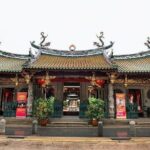
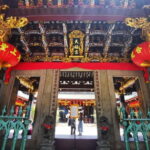
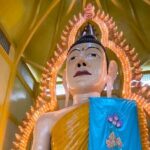
From the villa, the route moves to Sri Veeramakaliamman Temple (established in 1855), then later to Sri Krishnan Temple (built in 1870). One of the most interesting details is how followers of different faiths worship here, since this temple is mentioned as one where Buddhist and Taoist followers also worship.
Two short temple stops can feel routine on paper, but in practice they help you understand Singapore’s religious rhythm. You’ll also notice how the architecture and iconography shift between neighborhoods as the route changes.
Komala Vilas and the dosai cone moment
Then comes the food stop that people remember: Komala Vilas Restaurant, known for the world’s most instagrammable dosai cone. You get 40 minutes here, and admission is included as part of the tour.
Even if you’re not chasing photos, this is a great anchor meal because a cone format makes it easy to eat while staying mobile. It’s also described as part of a vegetarian-friendly tasting plan, so it should fit the theme even if you usually order chicken or fish in hawker spots.
If you’re worried about pace, don’t be. This is the tour’s longer food block, so you can slow down and reset before the scooter hops resume.
Campbell Lane: traditional trades and street textures
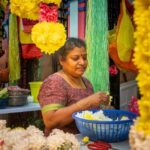
Next is Campbell Lane, a chance to see the street rhythm of traditional Indian trades—things like sweetmeat stores and flower shops are specifically called out.
This stop works as a breather. It’s not about a single landmark; it’s about getting your eyes used to how people live and shop in the lane networks that form the backbone of Little India.
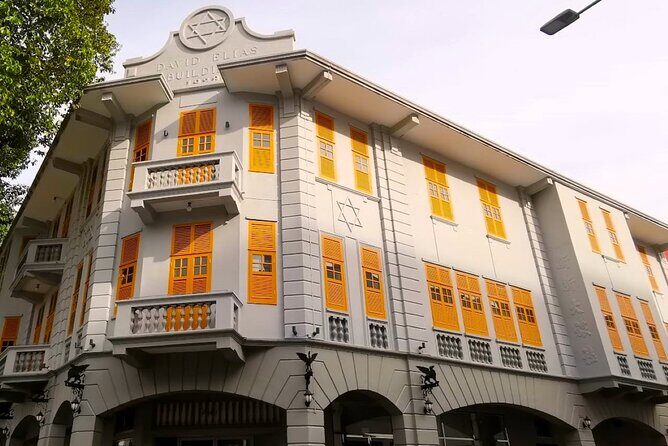
Selegie and the remnants of the Old Jewish Quarter and Little Japan
You’ll ride by scooter through Selegie to find remnants tied to the Old Jewish Quarter and Little Japan. The details are described as difficult to fully grasp, which is exactly why this stop feels meaningful.
It’s one of those moments where the city’s past isn’t just in a museum. It’s in small clues on the streets, and the tour helps you notice what you might otherwise miss—especially if your first instinct is to treat Singapore like a clean, modern postcard rather than a layered history.
Albert Mall and Today’s Chinatown: a vegetarian hawker centre tasting
Albert Mall is described as evolving into Today’s Chinatown, and you get 30 minutes here with a hawker centre meal that’s included. This is where the tour really leans into its core promise: multiple vegetarian-friendly street-food options in one organized block.
The specific items listed include:
- Chwee kway (steamed rice pudding topped with radish and sambal)
- Popiah (Chinese spring roll)
- Muah chee (glutinous rice morsels coated with nuts and sugar)
- Bubur pulut hitam (black glutinous rice with coconut cream dessert)
And the tour also notes you’ll try masala tea and a giant dosai cone as part of the broader tastings. Taken together, this section gives you savory, snacky, and sweet in a tight timeframe—useful if it’s your first time eating hawker-style food.
A practical tip: desserts like muah chee and bubur pulut hitam can be heavy. If you want to enjoy everything, start with the savory items first, then save the sugarier ones for later in your hawker visit.
Bugis Street and Bugis Junction: modern shopping with older traces
After Albert Mall, the route touches Bugis Street. It’s described as having shifted from an infamous red light district into a busy marketplace. The tour gives you just a short look, which is fine: the point here is not to linger, but to show how places can change identity over time.
Then you go to Bugis Junction in search of streets where Japanese-owned businesses once existed before World War II. The description mentions brothels and photography studios in the same breath, which sounds jarring, but it’s exactly the kind of historical contrast you get from riding through a city that keeps moving.
Old European Town: St Joseph’s Church and Chijmes
The tour continues into the Old European Town area with St Joseph’s Church, established by the Portuguese mission in 1853. It’s described as one of the stunning Catholic churches in Singapore.
After that, you visit Chijmes, which was once a Catholic girls’ school and orphanage and is now an F&B and lifestyle destination. This is a clever kind of stop: it shows how repurposing old structures can keep a place alive without erasing its origin.
Raffles Hotel Arcade and the Singapore Sling birthplace
You also get a visit to the Raffles Hotel Arcade, with mention that the hotel once hosted celebrities like Charlie Chaplin, Elizabeth Taylor, and Michael Jackson. It also credits the area as the birthplace of the Singapore Sling cocktail.
Even if you don’t drink, the main value is the storytelling. This stop gives you a view of Singapore’s colonial-era glamour layered into a modern food-and-night scene.
Haji Lane, Sultan Mosque, and Kampong Glam atmosphere
Toward the Kampong Glam side of the route, you’ll stop at:
- Haji Lane, described as one of the liveliest nightspots
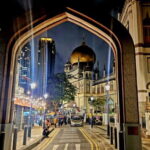
- Sultan Mosque, originally built in 1824, named after Sultan Hussein Shah, who signed a treaty with Sir Stamford Raffles on 6 February 1819
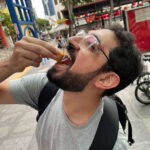
Finally, you reach the food moment for Kampong Glam: pisang goreng, Malay-style banana fritters. That’s a nice payoff because Kampong Glam is known for its Malay identity, and having a regional snack as the last stop helps you end with a taste that fits the neighborhood.
Food-first tasting flow: how to plan your appetite
The tour is built to feed you in stages, and the items listed cover multiple flavors and textures. Because everything is vegetarian-friendly, you can focus on exploring rather than constantly asking what’s safe.
Here’s the general logic of the food plan:
- Start with savory and snack-style items (like the dosai cone)
- Move into hawker-centre comfort foods (chwee kway, popiah)
- Finish or balance with desserts (muah chee, bubur pulut hitam)
- Add one Malay street snack (pisang goreng) to close out the Kampong Glam portion
If you’re sensitive to spice, you might want to take it easy with sambal-topped items. The tour includes sambal on chwee kway, so you’ll be tasting heat even with a vegetarian plan.
What it feels like with a small group and a named guide
The tour runs with a maximum of 15 travelers, which matters for two reasons. First, the scooter pace stays controlled. Second, it’s easier for the guide to adapt if someone needs a slower moment.
The reviews point out a friendly, attentive guide experience, including Ms Ping specifically being mentioned for care through the end of the tour. That kind of guidance is practical in Singapore, where you want to know where to cross, where to stop, and how not to get stuck in the wrong flow of pedestrians.
If you want a tour that feels like a plan with human supervision—not just a route—you’re in the right place.
Weather and comfort: the unglamorous but important bits
This experience requires good weather. If it’s canceled due to poor weather, you should expect a different date offer or a full refund.
For comfort, plan for an outdoor evening: wear breathable layers, bring water, and stick to closed-toe shoes for scooter stability. And keep an eye on the fact that your time includes food and short temple and street stops. It’s not all scooter gliding and Instagram photos.
Should you book the Singapore Street Food and Ethnic Quarters kick scooter tour?
Book this tour if you want:
- A structured way to try vegetarian-friendly Singapore street food
- A quick hit of multiple districts without spending your evening lost
- A guided mix of food and culture, including temples and old-town stops
- A scooter-based format that helps you cover ground efficiently
Skip it or rethink if:
- You hate scooters or feel unsafe with balance-based activities
- You’re expecting long stays at each landmark (most stops are short)
- You’re traveling with someone who fits outside the stated limits (age 7+, weight under 100 kg)
If you’re deciding soon, note that it’s commonly booked about 20 days in advance on average. That’s your hint to grab a slot rather than waiting for the last minute.
FAQ
FAQ
What’s the duration of the Singapore street food and ethnic quarters kick scooter tour?
It runs for about 3 hours 30 minutes.
What time does the tour start, and where does it end?
It starts at 5:00 pm in Little India, and it ends at 73 Dunlop St, Singapore 209401.
How much does the tour cost per person?
The price is $55.43 per person.
How many street food/drink items do you try?
You try 7 different types of street food/drink, and they’re vegetarian-friendly.
What food items are included on the tour?
The listed tastings include giant dosai cone, masala tea, popiah, chwee kway, muah chee, bubur pulut hitam, and pisang goreng.
Is this tour only for adults?
Children age 7 or below aren’t allowed.
Are there any weight restrictions?
Yes. People who weigh more than 100 kg aren’t allowed.
What happens if the weather is poor?
The experience requires good weather. If it’s canceled due to poor weather, you’ll be offered a different date or a full refund.