REVIEW · SINGAPORE
Singapore: Chinatown Hawker Market Food Tour with 7 Food Tastings
Book on Viator →Operated by Secret Food Tours · Bookable on Viator
Food first, history right after. This small-group Chinatown walk strings together 7 tastings with street-level stories you’d miss wandering alone. The main trade-off is simple: it’s a fair amount of walking, and the day mixes food with culture, so you’ll want to keep your expectations balanced.
I like that it runs about 3 hours and caps at 12 travelers, which usually means you can ask questions and actually pace your appetite. You’ll meet at Bee Cheng Hiang (69 Pagoda Street), then sample dishes like kaya toast, Hainanese chicken rice, and chendol. Guides named in past tours include Kent, Winston, Edwin, Jag, Paul, Jeanette, Ronnie, Helen, TC, YC, and Natalie—so you’re not going in blind.
In This Review
- Key highlights at a glance
- Chinatown Eats: Why This Walk Feels Like a Shortcut to Singapore
- Price and Value: What $146 Buys You in Real Terms
- The Menu Works Because It’s a Range, Not Just Favorites
- Chinatown Shophouses: The Early Settler Set-Up You Can Actually See
- Temples in the Middle of the Walk: Why Chinatown’s Food Isn’t One-Sided
- The 1827 Hindu temple
- A Tang dynasty–style temple and its rooftop calm
- The Hawker Centre Stop: Where You Learn How Singapore Eats
- Chia Ann Siang Road and the Small Details That Build a Place
- Marina Bay Detour: Red Dot Design Museum Without Losing the Plot
- Walking and Timing: How to Enjoy It Without Getting Miserable
- What Makes the Guides Matter (Even If You Don’t Care About History)
- Who Should Book This Tour (and Who Might Prefer Something Else)
- Should You Book This Chinatown Hawker Market Food Tour?
- FAQ
- How long is the Chinatown hawker market food tour?
- What does the tour cost?
- What food is included in the 7 tastings?
- Where do I meet the tour guide, and where does it end?
- Is transportation included?
- Can the menu accommodate dietary needs?
- How big is the group?
- How does cancellation work?
Key highlights at a glance
- Seven tastings that hit Singapore classics: kaya toast with coffee, chicken rice, chendol, and more
- Small group (max 12) keeps the pace friendly and questions easy
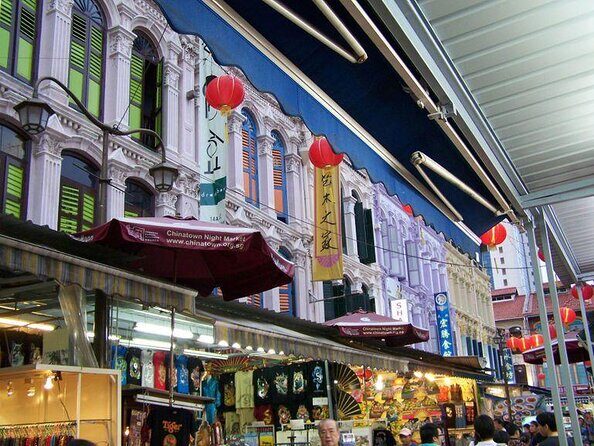
- Temples + old shophouses explain why Chinatown food tastes the way it does
- Hawker centre stop gives you a real sense of how large Singapore’s food scene runs
- Local beer and bottled water included so you’re not trying to guess what to drink
Chinatown Eats: Why This Walk Feels Like a Shortcut to Singapore
I love tours that do two things at once: feed you and teach you enough context to make future meals make sense. This one does exactly that, starting in Chinatown and using food as the thread that connects architecture, religions, and neighborhood life.
The format is built around a short, guided loop. You’re not stuck in a classroom. You’re standing in front of restored spaces and historic places, then stepping into the food world right after. And it’s practical: you get a guided answer to the question you’ll have all trip long, What should I actually order?
One thing to keep in mind: the stops include temples and a museum stop. If your idea of heaven is nonstop hawker bites with no history detours, you may feel the schedule a bit tighter. The upside is that the culture adds flavor to what you’re tasting.
You can also read our reviews of more food & drink experiences in Singapore
Price and Value: What $146 Buys You in Real Terms
At $146 per person for about 3 hours, the value math is mostly about what’s included and how you’ll use it.
You get:
- 7 food tastings
- Local beer
- Bottled water
- A guide who explains what you’re eating and why the area looks the way it does
That matters because Singapore street food is excellent but not always obvious if you’re unfamiliar with local names and ordering rhythms. Paying for guidance can save you from the classic beginner mistake: ordering one safe dish and then wasting time later trying to catch up on everything you missed.
Also, this isn’t a giant group experience. With a maximum of 12 travelers, you’re more likely to get quick answers about dishes, ingredients, and how to navigate hawker centres. That turns the tour from a snack run into a usable foundation for the rest of your trip.
The Menu Works Because It’s a Range, Not Just Favorites
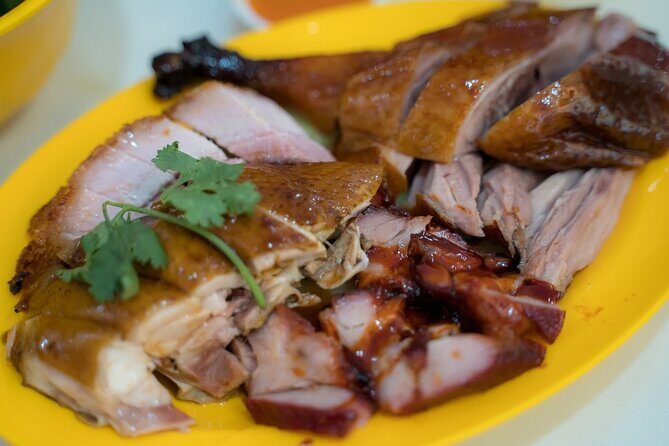
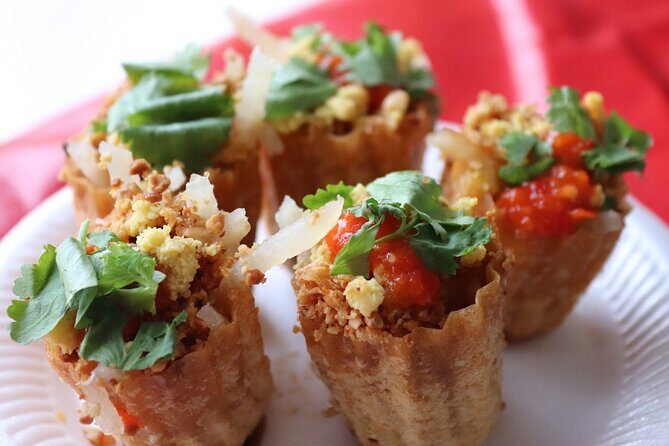
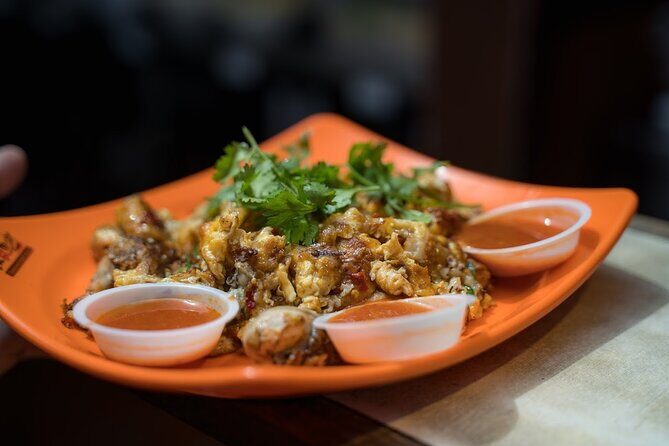
The tastings are where the tour earns its keep. The menu isn’t just random hits. It’s a spread across sweet, savory, breakfast-style, mains, and dessert—so you finish understanding what Singapore food can do.
Here’s what’s included:
- Bak Kwa: smoky, tender barbecued meat
- Nanyang coffee with kaya butter toast: that classic sweet-butter-kaya combo
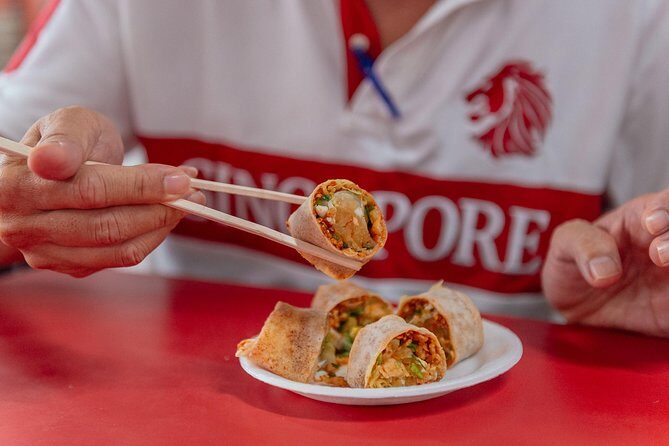
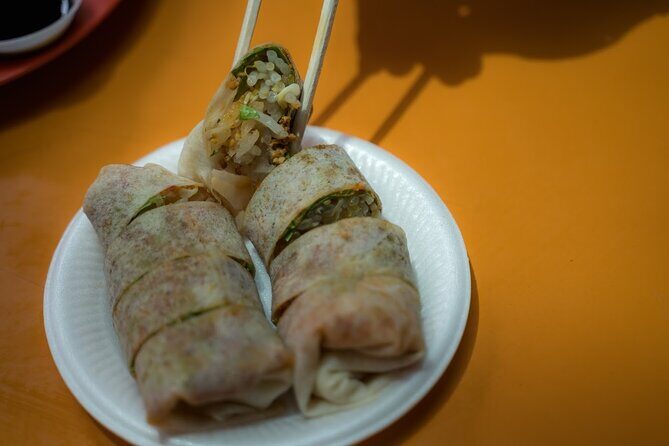
- Popiah or golden oyster cake: crisp snack energy
- Hainanese chicken rice: the icon—simple, rich, and very Singapore
- Prata or thosai: fluffy griddle breads (you’ll get one of these)
- Chendol: coconut and gula melaka on a cooling spoon
- Chwee kueh: soft cakes topped with savory radish
- Our Secret Dish: expect another locals’ choice moment
- Local beer and bottled water
Two things I love about this lineup:
- It balances comfort with contrast. Chicken rice and kaya toast are mainstream classics, but you also get textures and flavors like chwee kueh and the choice between popiah and oyster cake.
- Dessert isn’t an afterthought. You’re not racing toward sugar at the end; you get chendol as part of the pacing.
Practical tip: show up hungry. Even the positive reviews that call out big portions are consistent with the experience design here. Start slow at the first stop, then let the tour build your momentum.
Chinatown Shophouses: The Early Settler Set-Up You Can Actually See
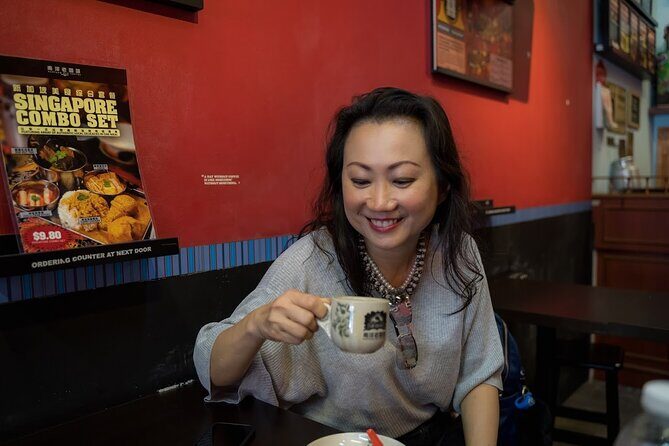
Your first culture stop is in the restored shophouse world—places that show living spaces, furnishings, and artifacts from early Chinatown settlers.
Why this matters for your food trip: hawker food doesn’t happen in a vacuum. These spaces reflect how daily life worked: families living close to shops, recipes passed down inside tight neighborhoods, and food culture shaped by what people needed and what they could trade or source nearby.
What to watch for:
- How shophouses combine work and home
- The way the spaces feel practical, not decorative
Possible drawback: if you prefer purely food-focused stops, this can feel like a palate cleanser before the real eating starts. But it’s also quick enough that you shouldn’t lose momentum.
Temples in the Middle of the Walk: Why Chinatown’s Food Isn’t One-Sided
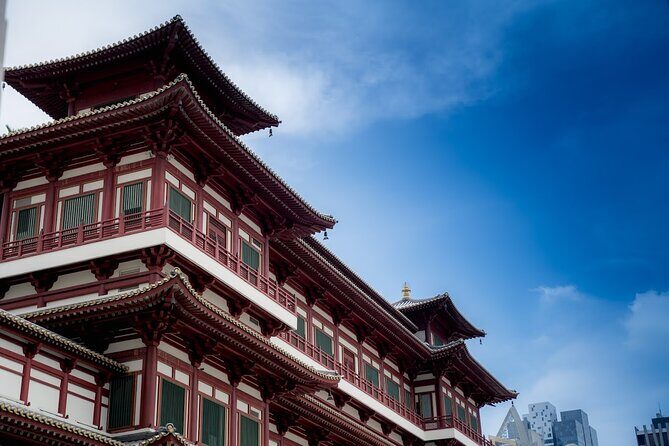
Two temple stops do a lot of heavy lifting for the tour’s meaning.
You can also read our reviews of more tours and experiences in Singapore
The 1827 Hindu temple
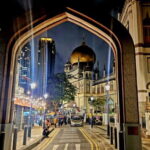
You’ll see the city’s oldest Hindu temple, built in 1827, with a tower densely ornamented with deities.
This is useful because Chinatown’s food scene reflects multiple cultures living side by side. Even if you never order from a Hindu-influenced menu specifically, the visual reminder helps you understand why the neighborhood feels layered.
A smart move here: take a few seconds before you look up at the tower. Slow your pace. You’ll get more out of the details when you’re not rushing.
A Tang dynasty–style temple and its rooftop calm
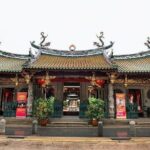
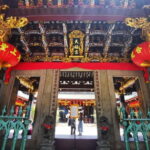
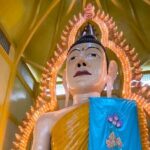
Next comes a Tang dynasty–style temple housing religious relics, with ornate rooms and a tranquil rooftop garden.
This stop is the tour’s mood shift. You go from food and street geometry into a quieter space with different materials, different light, and different rules for attention. If you’ve been feeling travel fatigue, this is where it can reset your brain before the hawker centre part.
The Hawker Centre Stop: Where You Learn How Singapore Eats
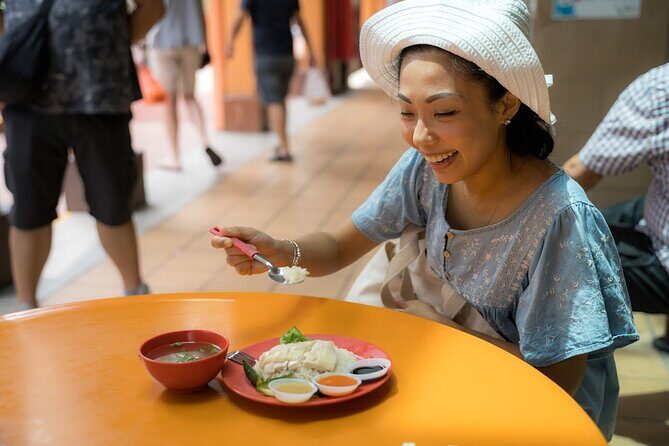
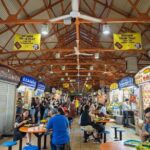
One of the biggest highlights is the stop at one of Singapore’s largest food centres.
This is where a guide earns their fee. Hawker centres are not hard to visit, but they are hard to navigate well if you don’t know what you’re looking at. You’ll see why the same city can taste different from stall to stall and how ordering feels more like choosing a well-practiced routine than making a brand-new meal from scratch.
Also, this is where your tasting strategy matters. You’ll already have had sweet and savory bites by then, so you can compare textures and flavors as the day goes on.
What to expect:
- Lots going on, lots of choices around you
- Time built in for tasting, not just standing in line
If you get motion sick easily or hate crowds, plan to breathe and slow down at this point. The guide can help you keep the flow.
Chia Ann Siang Road and the Small Details That Build a Place
A neat stop on the route is a small hill and the name of a one-way road in Chinatown. It’s named after Chia Ann Siang, a wealthy businessman.
Why I like stops like this: they connect street names to people and time. You don’t just walk past a road—you understand why it has that name and why Chinatown feels intentional.
You’ll likely be able to get quick context from your guide, too, since this tour is built around explaining what you’re seeing rather than just pointing.
Marina Bay Detour: Red Dot Design Museum Without Losing the Plot
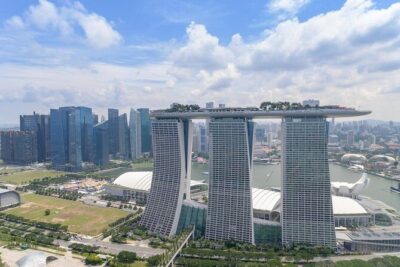
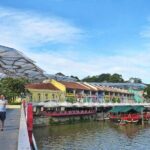
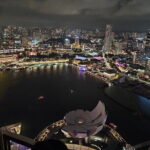
The tour doesn’t end after Chinatown. You also stop along the Waterfront Promenade at the Marina Bay area for the Red Dot Design Museum.
This is described as the physical embodiment of the international Red Dot Design Award. In other words, it’s not a random add-on. It’s a design-focused palate rinse after temples and hawker food.
Is this for everyone? Not every food-first person loves a museum stop. But it can be a good checkpoint if you want your Singapore day to include more than just eating. Even if you don’t care about design awards, you can still appreciate the idea that Singapore treats design as a daily culture, not a luxury hobby.
If you’re short on time and want pure food only, this museum stop is the part most likely to feel like a detour.
Walking and Timing: How to Enjoy It Without Getting Miserable
This tour involves a fair amount of walking, so comfortable shoes aren’t optional in practice. You’ll be moving between cultural stops and food stops, and it’s a guided pace—not a sit-and-snack rhythm.
Here’s how to make it feel easy:
- Eat at a steady pace early so you don’t hit the halfway point too full
- Sip water when you need it, especially with beer included
- Keep an eye on the menu choices (popiah vs golden oyster cake, prata vs thosai)
One other timing note: the itinerary and menu are subject to change based on location availability and weather. That’s normal for walking tours. It also means you should plan to show up ready for substitutions, not locked into one specific dish.
What Makes the Guides Matter (Even If You Don’t Care About History)
The guide isn’t a “nice-to-have” here. The tour is built on interpretation: what each place means, how it connects to food, and how to help you make sense of Singapore’s blend of cultures.
In past tours, guides by name include Kent, Winston, Edwin, Jag, Paul, Jeanette, Ronnie, Helen, TC, YC, and Natalie—and the consistent theme is that they combine food explanations with Chinatown context and keep the day moving at a human pace.
If you’re the type who likes to ask why something tastes the way it does, this is the tour where that question gets answered.
Who Should Book This Tour (and Who Might Prefer Something Else)
This fits you if:
- You’re in Singapore for the first time and want a fast orientation through Chinatown
- You want 7 tastings plus drinks, not a single meal or a short snack
- You like learning just enough context so you can order better later
You might reconsider if:
- You’re only interested in pure hawker eating with minimal culture stops
- Walking for ~3 hours is a strain for you
- You want a fully customized menu with no substitutions (the menu can change)
Should You Book This Chinatown Hawker Market Food Tour?
If you want a smart, low-stress start to Chinatown eating, I’d book it. The structure is practical: you get iconic Singapore dishes like Hainanese chicken rice, breakfast-style kaya toast with coffee, and cooling dessert chendol, all wrapped in a guided walk that explains what you’re seeing along the way.
It’s also a good deal for the right person: someone who values guidance at hawker centres, appreciates temple and shophouse stops, and wants to leave with both a full stomach and a clearer sense of how Chinatown works.
If your ideal day is less walking and more uninterrupted eating, then treat the museum and temple stops as a fair warning. But if you’re open to a culture-and-food blend, this is the kind of tour that makes the rest of your trip easier.
FAQ
How long is the Chinatown hawker market food tour?
It’s about 3 hours.
What does the tour cost?
The price is $146.00 per person.
What food is included in the 7 tastings?
Included tastings are bak kwa, Nanyang coffee with kaya butter toast, popiah or golden oyster cake, Hainanese chicken rice, prata or thosai, chendol, chwee kueh, plus a Secret Dish. Local beer and bottled water are also included.
Where do I meet the tour guide, and where does it end?
You start at Bee Cheng Hiang 美珍香, 69 Pagoda Street (69 Pagoda St, Singapore 059228). The tour ends back at the meeting point.
Is transportation included?
No. Transportation is not included.
Can the menu accommodate dietary needs?
Dietary requirements aren’t listed in detail, but the tour asks you to contact them in advance for dietary needs so they can cater as best they can.
How big is the group?
The tour has a maximum of 12 travelers.
How does cancellation work?
You can cancel for a full refund up to 24 hours before the experience starts. Canceling within 24 hours of the start time isn’t refundable.