REVIEW · SINGAPORE
Streets Alive Singapore Walking Tour (Chinatown Edition)
Book on Viator →Operated by Streets Alive Singapore · Bookable on Viator
A Chinatown walk with a tech twist. Streets Alive Singapore’s Chinatown edition mixes live performers with virtual reality so the stories feel less like facts on a sign and more like something you can hear and see. I especially like the way it pairs major landmarks with quick, guided explanations you can actually use as you wander. Another big plus: the stops with free admission tickets mean you spend your money on the show, not entry fees. One caution: there’s at least one strongly worded complaint about meeting up and getting help, so be ready with your exact meeting point info and arrive a few minutes early.
You’ll cover classic Chinatown sights at an easy walking pace in about 2 hours 30 minutes with a small group (max 15). The tour starts at Telok Ayer and finishes in the Chinatown coffee zone at Smith Street near Nanyang Old Coffee, which is handy if you want food afterward. If you’re the type who likes temples, city planning, and a bit of theater all in one outing, this one fits. If you hate surprises, plan on some costumed interactions along the way.
In This Review
- Key things to know before you go
- Temples plus VR: the Streets Alive idea in plain English
- Getting started at Telok Ayer and finishing near Nanyang Old Coffee
- Stop 1: Thian Hock Keng Temple, Singapore’s oldest Hokkien temple plus VR
- Stop 2: Singapore City Gallery and how the city changed over 50 years
- Stop 3: Sago Lane’s story and the Buddha Tooth Relic Temple and Museum
- VR and live performers: how the show changes your street-level experience
- Price and value: is $129 reasonable for this Chinatown mix?
- Who should book the Streets Alive Chinatown edition?
- Should you book? My decision checklist
- FAQ
- FAQ
- How long is the Streets Alive Singapore Walking Tour (Chinatown Edition)?
- Where does the tour start and where does it end?
- What is the price of the tour?
- Is there a mobile ticket?
- Which places are included in the tour?
- Are admission tickets included for the stops?
- How large is the group?
- Can I cancel or change my booking?
Key things to know before you go
- Live performers who interact with your group, not just stand nearby.
- VR moments that add a sight-and-sound layer to key stops like Thian Hock Keng Temple.
- Small group size (up to 15) for a more controlled, watch-your-step experience.
- Free admission tickets listed for the main stops, so you’re not doing extra paychecks at each door.
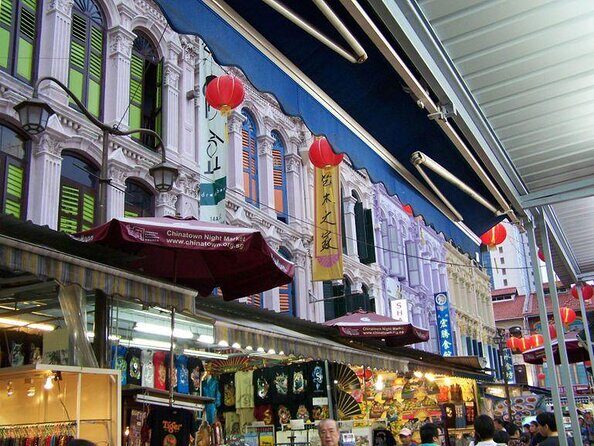
- A clear end point near Nanyang Old Coffee on Smith Street, great for continuing the Chinatown experience.
Temples plus VR: the Streets Alive idea in plain English
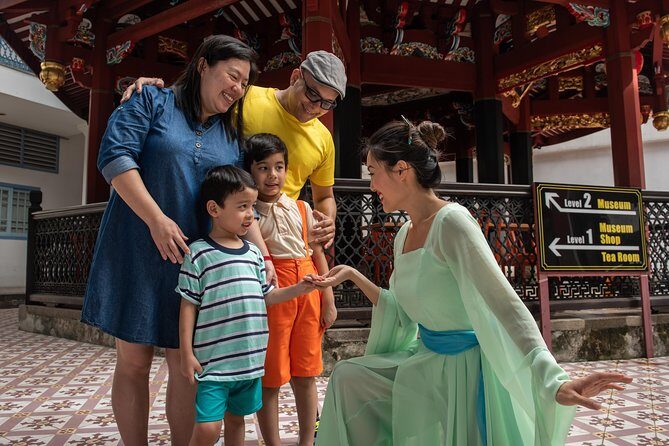
What makes this tour different is its mix of old and new. You’re in Chinatown, so the visuals are already powerful: prayer halls, museum displays, and the streets that shaped day-to-day life for generations. Then the tour adds state-of-the-art virtual reality, aiming to move you from reading about a place to experiencing a version of it.
The way it’s framed, the VR isn’t random. It’s timed to landmark moments. At Thian Hock Keng Temple, you get guided storytelling about history, architecture, and symbolic meaning, then the VR segment is designed to help you see and hear what words alone can’t do as well. At the end of that section of the experience, the tour description talks about being transported to an alternate dimension, which tells you you should expect something theatrical rather than purely documentary.
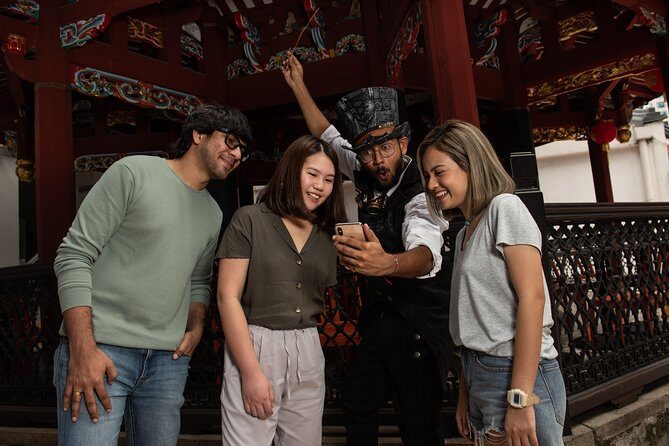
I also like that the tour isn’t only “stop, look, photo, move on.” There are whimsical characters that come alive and interact with the group. That matters because Chinatown can feel like a museum district if you go at it alone. Here, you’re guided through moments, and the guides are essentially the glue between the landmarks and the tech.
You can also read our reviews of more walking tours in Singapore


Getting started at Telok Ayer and finishing near Nanyang Old Coffee

Your starting point is Telok Ayer, and your tour ends at Smith Street, specifically at the heart of Chinatown near Nanyang Old Coffee. That ending is practical. You’re already in the food and snack zone, so you can extend the evening without fighting transit or walking an extra half-hour just to find dinner.
The tour runs about 2 hours 30 minutes, which is a good length for a neighborhood like Chinatown. Long enough to cover three major anchors and still have time for walking and the characters/VR moments. Short enough that you’re unlikely to feel drained.
A small group helps too. With a cap of 15 travelers, you’ll generally have better visibility during performer moments and less chaos when everyone clusters for VR instructions. The tour also uses a mobile ticket, so you’re not worrying about paper confirmations, lost printouts, or last-minute scribbling.
One more practical tip: because there is at least one report complaining about meeting point confusion and unanswered calls, make it easy on yourself. Save the meeting point pin, screenshot your confirmation, and show up a touch early. It’s a simple move that can save your whole night.
Stop 1: Thian Hock Keng Temple, Singapore’s oldest Hokkien temple plus VR
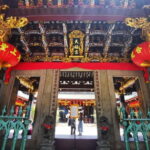
This is where the tour earns its “don’t just look—understand” reputation. Thian Hock Keng Temple is described as Singapore’s oldest Hokkien Temple, and you’ll get a guide-led focus on three things: history, architecture, and symbolic meaning. That’s the right combo for a temple visit because it helps you read what you’re actually seeing—details that would otherwise look like decorative clutter.
The architecture and symbolism angle is especially helpful in Chinatown. Places like this often carry layers: community roots, migration stories, and belief systems expressed through design. If you’re not sure what to notice, the guide’s job is to point out what matters and why it matters.
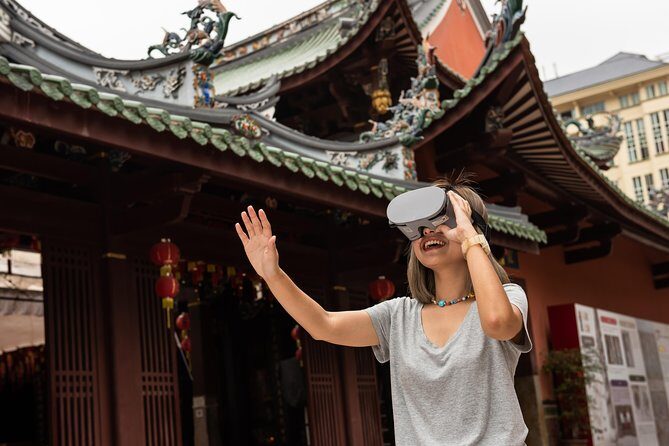
Then comes the VR portion. The tour description says you’ll use VR to see and hear a real experience tied to the temple. I’d treat this as a guided enhancement, not a replacement. You’re still in front of the real building, and the VR is timed to your tour explanation, which should make the visuals feel more connected.
Good to know: the temple stop is about 20 minutes. That’s short enough that you won’t get bored scanning every corner, but long enough to feel oriented and catch the key details.
Possible consideration: temples require a respectful pace and attention. If you know you’ll have trouble focusing during tech-based segments, it’s still doable—but set expectations that you’ll be splitting attention between the physical space and the VR instructions.
Stop 2: Singapore City Gallery and how the city changed over 50 years
Next you’ll visit Singapore City Gallery for about 15 minutes. This stop is different from the religious sites because it focuses on planning and change. The gallery showcases Singapore’s physical transformation over the last 50 years and talks about city planning, with a look at future developments.
Why this stop works on a walking tour: Chinatown didn’t appear by accident. Streets, building styles, and neighborhood shifts come from decisions. When you see that bigger planning picture briefly, you start to read Chinatown differently. Instead of only asking what each building looks like, you can also ask why it’s there and what it replaced—or influenced.
Also, this is where the tour gives your brain a break from ceremonial symbolism. After a temple, the city-planning angle feels like a mental reset. It’s not just entertainment. It helps you understand how a dense city manages growth while trying to keep cultural identity visible.
The tour description doesn’t give you a deep hour-by-hour museum script, so you should treat this as a guided highlight session. You’ll likely get the main themes and prompts that connect back to what you see outside.
Admission ticket note: the stop details list admission ticket as free. If that’s accurate in the real experience, it’s a nice value point because you’re not paying extra just to view the gallery.
Stop 3: Sago Lane’s story and the Buddha Tooth Relic Temple and Museum
This part is pure Chinatown drama—historical and human-scale. Before you reach the main site, you’ll walk along Sago Lane, which the tour description notes became more famous (or infamous) for death houses. That phrase matters because it signals the lane carries stories of hardship, not just shopping and photos.
Then you head to Buddha Tooth Relic Temple and Museum, described as iconic. The museum component suggests there’s material for you to see beyond the exterior. Even if you’re not the type who reads every label, a guided stop helps you pick up the meaning behind what’s displayed.
You’ll spend about 10 minutes at this final temple/museum segment. That’s short, so don’t expect a full independent museum visit. Instead, think of it like a guided handshake with the site: you’ll get oriented, you’ll understand what you’re looking at, and you’ll be ready to explore further on your own after the tour ends.
As a pacing choice, this is smart. If you did too much time at each place, the walking and tech components would start to feel like information overload. Here, you end with a strong landmark and a story-heavy lane that keeps your mind engaged.
Value angle: the stop details again show free admission ticket. When a tour can cover major locations and keep entrances from eating into your budget, the $129 price starts to look more rational.





VR and live performers: how the show changes your street-level experience
Let’s talk about the two big “watch this” elements: VR and the live characters.
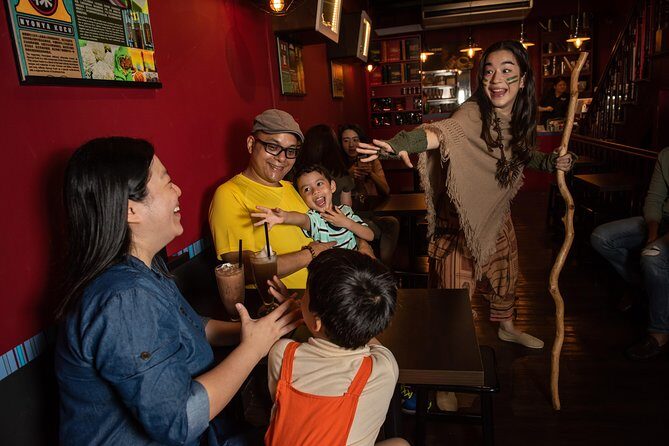
Live performers: the tour description says whimsical characters come alive to interact and take you on a journey of mystery and fun. That tells me you’re not just watching a guide talk at a distance. You’ll likely get prompts, short interactions, and maybe some moments that feel playful rather than strictly educational. Done well, that helps you feel like Chinatown is alive—not staged.
VR: the description mentions state-of-the-art virtual reality and a “transported to an alternate dimension” idea. Translation for your planning brain: you might feel like you’re stepping into a story layer while still physically inside a real landmark environment. That can be great for motivation, especially if you tend to tune out when your tour sounds like a textbook.
How to make this work for you:
- Keep your phone put away during VR instructions.
- Wear shoes that let you stand comfortably for short tech-based moments.
- Be ready for a brief shift in focus. If you’re the type who needs quiet time, take mental notes afterward while you walk.
A balanced reality check: tech experiences can be hit-or-miss depending on your personal preferences and device sensitivity (some people get distracted or motion-sensitive in VR-style moments). The good news here is that it’s only part of a broader walking tour, so you won’t be locked into VR for the entire 2h30.
Price and value: is $129 reasonable for this Chinatown mix?
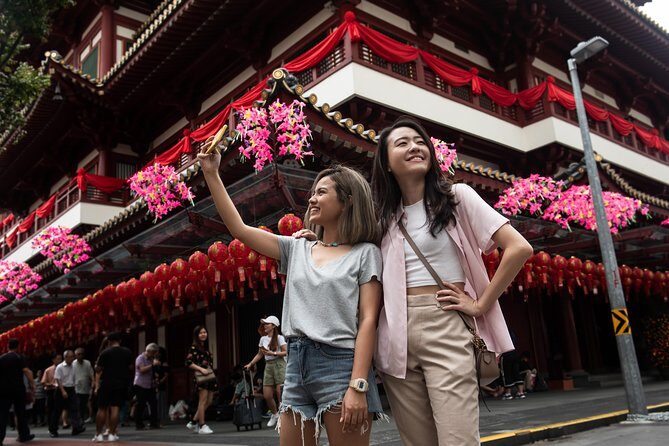
The price is $129 for an experience that runs about 2 hours 30 minutes and includes mobile ticketing plus guided stops at major landmarks.
What makes it feel like better value than a typical walking tour:
- You’re getting at least three named stops: Thian Hock Keng Temple, Singapore City Gallery, and Buddha Tooth Relic Temple and Museum.
- The stop details list admission tickets as free, which matters because admissions can quietly add up in Singapore.
- You’re paying for something more than narration: live performers and VR. That’s the heart of the concept.
What could make it feel less worth it:
- If you already know Chinatown well and don’t care about VR/characters, you may find the guided time a bit short per stop.
- If you strongly prefer independent visits where you control the pace, a structured 2h30 may feel limiting.
My practical take: this is best treated as an experience, not just a sightseeing walk. You’re buying a format—costumed character moments plus a tech layer—wrapped around three anchor locations. If you’re curious about that combo, the price starts to make sense quickly.
Who should book the Streets Alive Chinatown edition?
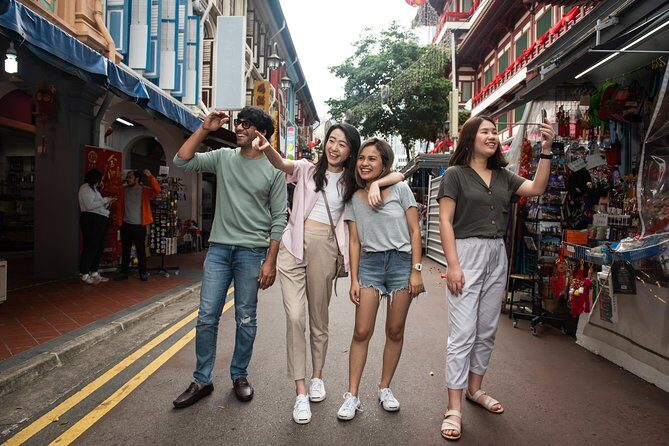
This tour is a strong fit if you:
- Like Chinatown landmarks but want guided context that tells you what to notice.
- Enjoy playful elements like live performers and want something more lively than a standard tour.
- Are curious about VR and don’t mind short tech segments in between walking.
It’s less ideal if you:
- Want a long, slow temple and museum day.
- Don’t like VR-style storytelling or you find it distracting.
- Are arriving late or plan to wing meeting details. The one complaint on record points to meeting confusion, so punctuality and preparation help.
Group size matters too. With a maximum of 15 travelers, it’s usually easier to manage than a large bus-style crowd.
Should you book? My decision checklist
If you want Chinatown in a format that’s part guided walk, part street theater, and part tech experience, I’d seriously consider booking. The structure (three major locations), the small group size, and the indication of free admission tickets for the stops all help the value side.
Before you book, do two simple things:
- Save your start point at Telok Ayer and plan to arrive early.
- Make sure you can access your mobile ticket without stress.
If those check out, this is a fun way to see Chinatown with enough guidance to help you understand what you’re looking at—plus a VR and performance layer that keeps it from turning into a boring march from one landmark to the next.
FAQ
FAQ
How long is the Streets Alive Singapore Walking Tour (Chinatown Edition)?
The tour lasts about 2 hours 30 minutes.
Where does the tour start and where does it end?
The tour starts at Telok Ayer and ends at Smith Street, near Nanyang Old Coffee.
What is the price of the tour?
The price is $129.
Is there a mobile ticket?
Yes, the tour uses a mobile ticket.
Which places are included in the tour?
The tour includes Thian Hock Keng Temple, Singapore City Gallery, and Buddha Tooth Relic Temple and Museum (with a walk along Sago Lane on the way).
Are admission tickets included for the stops?
The stop details list Admission Ticket Free for each included location.
How large is the group?
The tour has a maximum of 15 travelers.
Can I cancel or change my booking?
This experience is non-refundable and cannot be changed for any reason.