REVIEW · SINGAPORE
Kampong Glam and Little India Join-in Walking Tour
Book on Viator →Operated by Haloo Tours · Bookable on Viator
Two neighborhoods, one guided walk. This is a smart way to connect Kampong Glam’s Muslim-Arab roots to Little India’s temple life, shop streets, and markets. I really liked Haji Lane’s street art and indie shops, and I also loved the way guide Charles kept the story straight, clear, and practical as we moved from place to place.
The second big win for me was Charles himself: he answered questions, added extra context about Singapore, and kept the pace comfortable for the whole group. One thing to consider is the “walking tour” part: it’s about 3.5 hours, so you’ll want decent walking shoes and a bit of stamina.
If you want a cultural day that mixes sightseeing with everyday street-level Singapore, this Kampong Glam and Little India route is an easy yes.
In This Review
- Key highlights worth planning for
- Kampong Glam to Little India: what this 3.5-hour route is really for
- Starting near Bugis: getting your bearings before the first photos
- Haji Lane: street art, small shops, and a pilgrim past
- Arab Street and Bussorah Street: the Sultan Mosque neighborhood on foot
- Sultan Mosque: one landmark, two ways to experience it
- Gedung Kuning and Istana Kampong Glam: heritage buildings you can still learn from
- The MRT hop to Little India: why the route feels efficient
- Tekka Centre: what a wet market and hawker centre add to your understanding
- Former House of Tan Teng Niah: a painted villa in the middle of it all
- Sri Veeramakaliamman Temple: one of the oldest Hindu temples in Singapore
- Little India Arcade and Campbell Lane: shopping streets with conserved bones
- Price and logistics: is $84.75 good value?
- Who should book this tour (and who might prefer something else)?
- Should you book the Kampong Glam and Little India Join-in Walking Tour?
- FAQ
- How long is the Kampong Glam and Little India walking tour?
- What time does the tour start?
- Where do I meet and where does the tour end?
- What does the $84.75 per person price include?
- Is the guide English speaking?
- Do I need a printed ticket?
- Can I cancel for a full refund?
Key highlights worth planning for
- Haji Lane street art + small boutiques give you instant Kampong Glam flavor fast
- Sultan Mosque and nearby shophouse streets connect landmark photos with neighborhood context
- Free entry stops at places like Sultan Mosque, Sri Veeramakaliamman Temple, and Tekka Centre help you keep costs down
- A quick MRT hop between districts keeps the walk efficient instead of dragging time
- Little India Arcade and Campbell Lane add shopping streets with conserved architecture and local color
Kampong Glam to Little India: what this 3.5-hour route is really for
This tour is built for one goal: help you understand Singapore by walking through two different cultural quarters on the same morning. You start in the Kampong Glam area, then you head toward Little India, with a short MRT connection planned along the way. That structure matters. It means you’re not stuck doing long, repetitive transfers, and you get the sense of how neighborhoods shift from one community’s daily life to another.
At $84.75 per person for about 3 hours 30 minutes, you’re paying mostly for the guide and the flow. Some stops are free, and other buildings may require tickets if you want to go inside. In other words, the value is best when you’re the type of person who likes learning while you look, not just collecting photos.
The group size is capped at 15, and that usually helps. You’re more likely to get your questions answered, and the guide can adjust the pace when people fall behind or want extra time at a landmark.
You can also read our reviews of more walking tours in Singapore

Starting near Bugis: getting your bearings before the first photos
The tour meets at Bugis and starts at 9:00 am, then ends in Little India. That early start is helpful in Singapore because walking gets much easier before the heat fully ramps up.
I also like that the tour uses a mobile ticket. It keeps things simple: you show your ticket on your phone, and you move on with the day.
Once you’re with the group, you’ll get an easy orientation to Kampong Glam—where to look, what you’ll see, and what details actually matter. That sets you up for the next couple of streets, where the differences between modern shop signs and older religious and trade roots are the whole point.
Haji Lane: street art, small shops, and a pilgrim past
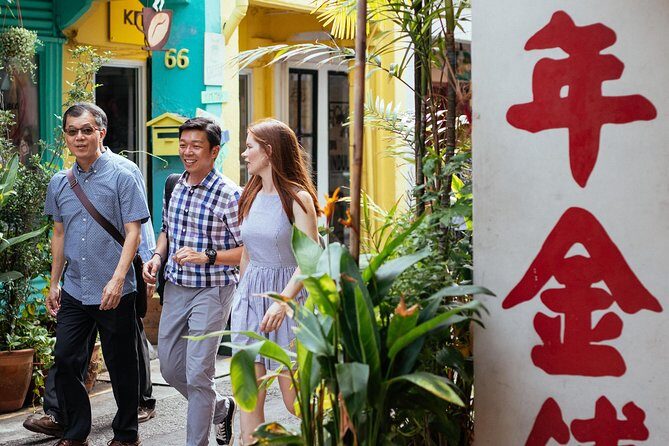
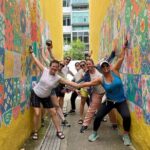
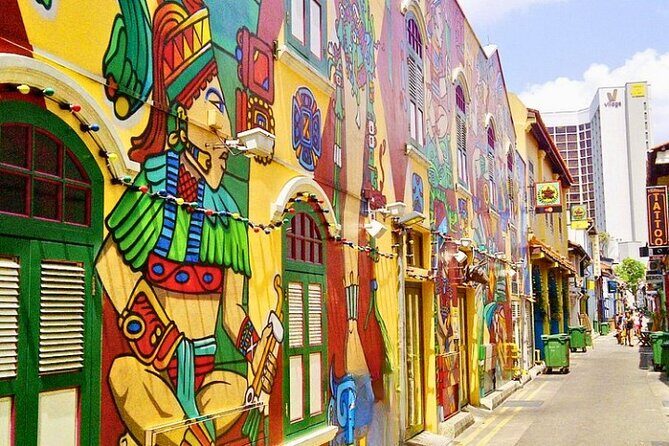
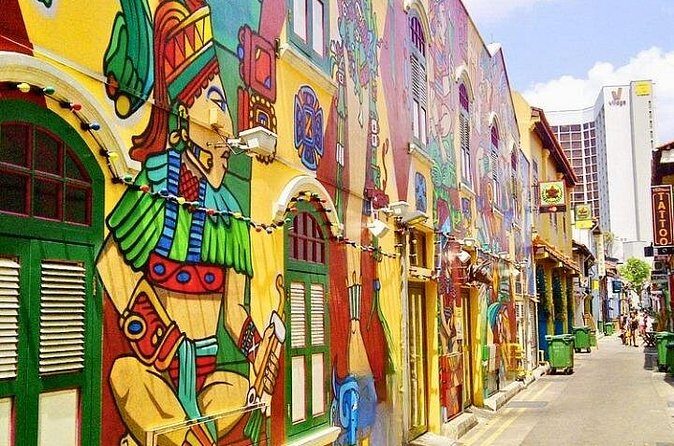
You begin with Haji Lane, a lane known for colorful street art, indie boutiques, and hip cafes. But here’s what I found more interesting than the storefronts: the area also has a past connected to Muslim pilgrims traveling toward Mecca. That contrast gives the lane a layered feel—today it’s trendy and stylish, and long ago it was part of the lodging route for travelers on a serious journey.
For your visit, this is a great first stop because it’s easy to understand at a glance. You don’t need a lecture to enjoy it. You get the visuals right away, then the guide adds the context so it starts to mean something.
Practical tip: this is a place where you’ll likely slow down for photos and just to read signage. Wear shoes you don’t mind standing in.
Arab Street and Bussorah Street: the Sultan Mosque neighborhood on foot
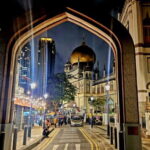
After Haji Lane, you move into Arab Street, centered around the Sultan Mosque. Arab Street is known for Islamic heritage, textile shops, and Middle Eastern eateries. The location matters here: it’s not a random shopping street. It’s the kind of street that grew because of religious, trade, and community needs.
Then you head to Bussorah Street, a pedestrian stretch lined with heritage shophouses right in front of Sultan Mosque. You’ll see the neighborhood’s mix of everyday life—snack stops, souvenir shopping, and the shophouse architecture that Singapore protects and repurposes.
If you’re the sort of traveler who enjoys noticing the “in-between details” (shopfront shapes, street layout, how people flow near major sites), these two streets deliver quickly. They’re close enough that you can feel the change in mood without getting lost.
Sultan Mosque: one landmark, two ways to experience it
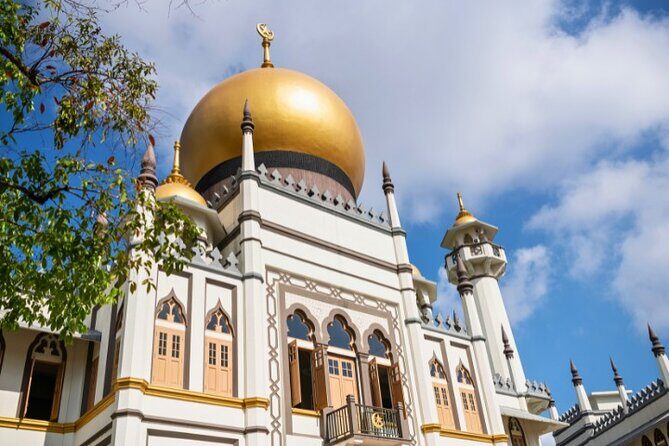
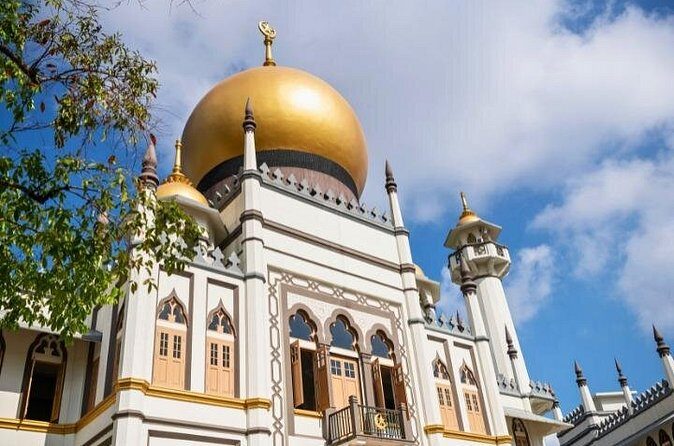
Sultan Mosque (Masjid Sultan) is a major stop, and it’s a free entry experience. It was built in 1824 for Sultan Hussein Shah, the first sultan of Singapore. Even without going deep into the design, that timeline anchors you: this isn’t just a pretty mosque for sightseeing. It’s a built piece of the city’s early leadership and community story.
For me, Sultan Mosque worked on two levels:
- First, it’s a clear “see it once” landmark.
- Second, it’s a good anchor for understanding why Kampong Glam looks the way it does around it.
The guide’s role here is what makes it click. Instead of just describing the building, Charles connects the mosque to the streets around it—so you understand why the shops and streets developed nearby.
Note: religious sites are often active spaces. Plan to act respectfully and keep your phone ready but your volume lower than you would on a normal shopping street.



Gedung Kuning and Istana Kampong Glam: heritage buildings you can still learn from
You’ll also pass by Gedung Kuning, the Yellow Mansion. It dates to the 1850s and was once the royal residence of Malay nobility. Today, it’s used for modern purposes (the listing indicates it houses a restaurant and related use), but the name and structure are the clue that this was historically important.
Another key stop is Istana Kampong Glam. Built in the 1840s as the royal residence of Sultan Hussein Shah and descendants, it now houses the Malay Heritage Centre. The important part for you: these are heritage sites where you’ll likely get the story and the significance from the guide, even if you don’t pay additional entry tickets to go inside.
Both Gedung Kuning and Istana have admission not included, so treat them as “learn and view from the outside” unless you decide on extra tickets for the interiors.
This is still a valuable part of the tour. A lot of Singapore walking tours stop at photos. Here, you get a sense of how power, residence, and community life shaped the district before it became today’s mix of shopping and culture.
The MRT hop to Little India: why the route feels efficient
Once Kampong Glam is done, you’ll head toward Little India. In my view, this is where the tour gets smart: the guide plans the route and includes an MRT connection so you’re not spending the whole morning walking between distant points.
That quick transit keeps the day balanced. You still get the “walking tour” vibe, but you avoid the fatigue of long transfers that would dilute the experience.
It also helps you psychologically. Instead of thinking in terms of separate attractions, you start thinking in terms of a single cultural day—Kampong Glam first, then the Indian community quarter after.
Tekka Centre: what a wet market and hawker centre add to your understanding
In Little India, you stop at Tekka Centre (Tekka Market). This is one of the most practical places on the route because it reflects daily life, not just tourism.
Tekka Centre is a multi-use complex with a wet market and a hawker centre, and it was originally built in 1915, then reconstructed at the current site in 1982. Entry is listed as free.
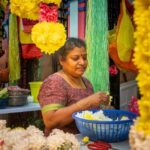
What I like about Tekka Centre is that it shows how “culture” often looks like food and errands. The wet market vibe is about produce and daily buying. The hawker centre vibe is about affordable meals and fast lines. Together, they explain why Little India doesn’t feel like a museum district.
Even if you don’t eat there on the tour, you’ll understand the logic of the area. You’ll see the kinds of shops, the movement of people, and how the neighborhood supports routine life for residents and visitors.
Practical tip: if you’re sensitive to smells (spices and fresh goods are part of the experience), give yourself a moment to adjust. Tekka Centre is part of what makes the stop worthwhile.
Former House of Tan Teng Niah: a painted villa in the middle of it all
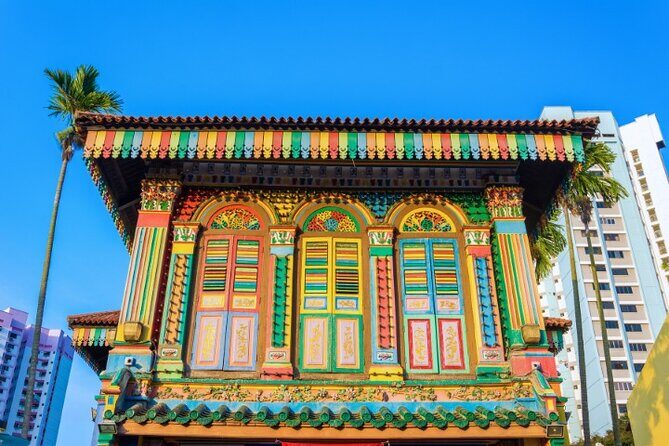
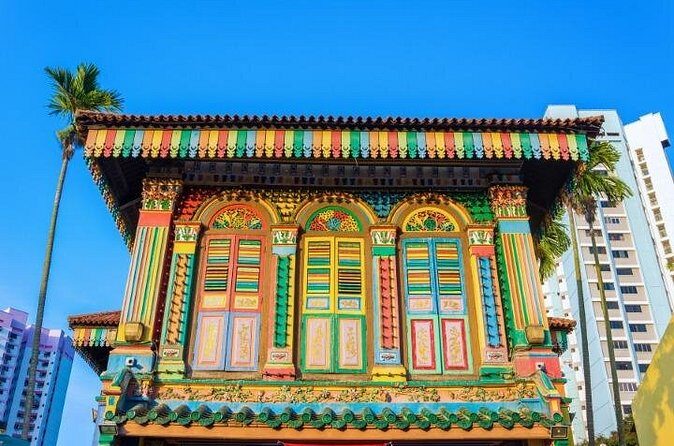
Next is the Former House of Tan Teng Niah, a Chinese villa built in 1900 by the confectionery tycoon Tan Teng Niah. It’s unusual because it stands in the heart of Little India as the neighborhood’s last surviving example of that type of Chinese residential building.
This stop is short, but it’s meaningful. Singapore’s neighborhoods often blend histories. You can look at Little India and think only of one community—but houses like this remind you that multiple groups shaped the area over time.
Also, it’s a good pause between food-and-market energy and the next stop, the temple.
Sri Veeramakaliamman Temple: one of the oldest Hindu temples in Singapore
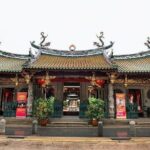
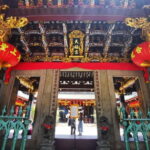
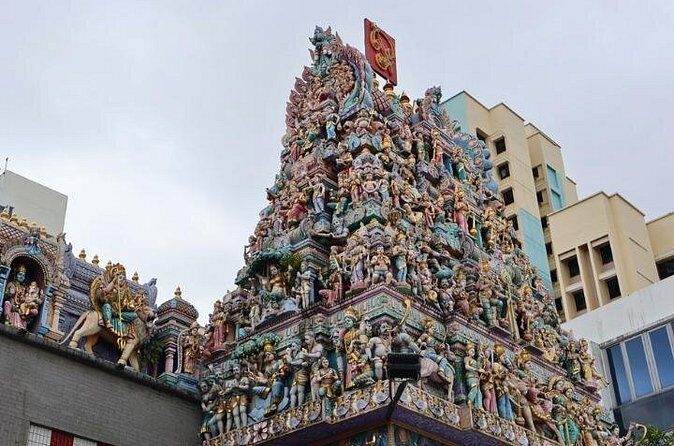
You then visit Sri Veeramakaliamman Temple, described as one of the oldest Hindu temples in Singapore. It was established as a shrine in 1855, and later rebuilt in 1881 by Indian pioneers on Serangoon Road in Little India. The stop is listed as free admission.
The listing notes the temple is dedicated to a fierce form of the divine, and that matters because it shapes why the site has the mood it does and why worshipers come. The guide helps connect the building to the community’s traditions and contributions to Singapore’s multicultural identity.
For your visit, this stop works best if you slow down. Take a moment to observe the flow of people and the focus of attention around the temple area. Don’t rush it for photos. Let it read as a place of worship, not a backdrop.
Little India Arcade and Campbell Lane: shopping streets with conserved bones
You’ll then see Little India Arcade, set in a cluster of conserved neoclassical shophouses built in 1913 and officially opened in 1995. The area was developed by the Hindu Endowments Board (as listed), which is another clue that this part of Little India is supported by institutions tied to the community.
After that, you walk toward Campbell Lane, a pedestrian street known for cultural heritage and a busy mix of stalls and trade. The route typically ends in this area, in Little India.
What I like about these final stops is that you’re not only looking at one kind of attraction. You’re seeing:
- older architecture protected and repurposed,
- local commerce in action,
- and the everyday texture that makes the district feel lived-in.
If you want a clean end point for the morning, this ending works well. You finish in the neighborhood where you can keep going on your own—shopping, snacks, or another temple stop—without needing to retrace steps.
Price and logistics: is $84.75 good value?
Let’s talk value in plain terms.
For $84.75 per person, you get a licensed English-speaking tourist guide, a 3.5-hour walk, and structured stops across two districts. Some sites on the route are listed as free entry (including Sultan Mosque, Tekka Centre, and Sri Veeramakaliamman Temple, plus the street stops). Other heritage buildings have admission not included, so if you want to go inside specific venues, you’ll likely pay additional fees separately.
So the cost is worth it if you want:
- direction on what to notice,
- context while you walk,
- and a guide who can answer questions instead of leaving you to guess.
This is also a smart way to book if you’re planning ahead. The tour is typically booked about 36 days in advance, and the group limit is 15, so popular time slots can fill.
Who should book this tour (and who might prefer something else)?
This tour is a strong fit for:
- first-time visitors who want the city’s multicultural neighborhoods explained through real streets,
- people who like walking but don’t want a long, exhausting route,
- anyone who wants a guide to help connect the dots between religion, trade, architecture, and daily life.
It might be less ideal if you:
- hate walking for 3.5 hours,
- want a tour focused only on museum interiors (because parts of the heritage stops are view-and-story, not necessarily ticketed entry),
- or plan to spend most of the day shopping and skipping cultural stops. The tour is structured, so you’ll likely need to follow the order.
Should you book the Kampong Glam and Little India Join-in Walking Tour?
I’d book this if you want a guided cultural morning that balances landmarks with street life. The biggest reason is simple: the guide experience is the heart of the tour. Charles comes through as a person who keeps things organized, answers questions, and adds useful background that makes the sights easier to understand.
Also, the combination is hard to beat: Kampong Glam first (Haji Lane, Arab Street, Sultan Mosque area), then Little India (Tekka Centre, Tan Teng Niah house, Sri Veeramakaliamman Temple, and the shopping streets). That flow gives you a full sense of two neighborhoods without needing a car or a complicated plan.
If you like keeping your options flexible, you also have free cancellation up to 24 hours before the start time, which helps if your schedule is still shifting.
FAQ
How long is the Kampong Glam and Little India walking tour?
The tour runs for about 3 hours 30 minutes.
What time does the tour start?
The start time is 9:00 am.
Where do I meet and where does the tour end?
You start at Bugis and the tour ends in Little India, Singapore.
What does the $84.75 per person price include?
The price includes the 3.5-hour walking tour and an English-speaking licensed tourist guide. Admission fees are not included where applicable.
Is the guide English speaking?
Yes. The tour includes an English speaking licensed tourist guide.
Do I need a printed ticket?
No. The tour uses a mobile ticket.
Can I cancel for a full refund?
Yes. There is free cancellation, and you can cancel up to 24 hours in advance for a full refund.