REVIEW · SINGAPORE
eSIM 4G/5G Data for Asia 8 Areas Singapore Thailand MY VN HK TW
Book on Viator →Operated by TraveleSIM · Bookable on Viator
One QR code, eight places connected. This eSIM-style data plan is interesting because it’s built for multi-country hops in Asia, so you can keep your phone number and skip SIM-swapping. You’ll also get fast 4G internet service and mobile hotspot sharing in the covered areas.
I like two things a lot. First, hotspot sharing is included, which is rare at this price point and genuinely useful for maps, messaging, and splitting costs. Second, the speed story is straightforward: fast 4G/5G (by option) first, then unlimited 3G after your 4G quota is used up.
One drawback to consider: setup depends on your device and timing. If your phone doesn’t support eSIM, or if you don’t activate before the window closes, you could lose flexibility and won’t be able to change the plan once it expires.
In This Review
- Key highlights you’ll actually use
- eSIM in Singapore: QR activation that avoids SIM hassles
- Coverage across 8 Asia areas: what it means for your routing
- 4G/5G speed behavior: the quota and the “after” plan
- Hotspot sharing: when one phone becomes Wi‑Fi
- Reliability and troubleshooting: what to do if signal drops
- Where this plan fits best: solo travelers, families, and short hops
- Price and value: is $3.94 worth it?
- “Tour” stages to think about: from activation to last day
- Stage 1: After purchase—when your QR code arrives
- Stage 2: Activation—install, set default line, enable roaming
- Stage 3: Daily use—navigation, messaging, and roaming handoffs
- Stage 4: When speed changes—4G quota used up
- Stage 5: End of validity—what you can and can’t fix later
- Who should book this eSIM data plan
- Should you book it?
- FAQ
- How do I get the QR activation code?
- When can I activate the eSIM?
- How long does the eSIM data plan last?
- Does it include hotspot sharing?
- What networks and speeds does it use?
- Which countries are covered?
- Are calls and SMS included?
- What if I have trouble after activation?
Key highlights you’ll actually use

- Covers 8 areas: Singapore, Malaysia, Thailand, Vietnam, Hong Kong, Macao, and Taiwan
- Hotspot sharing included so you can turn your phone into Wi‑Fi for others
- QR code activation delivered after purchase so you don’t post or pick up anything
- Fast 4G/5G, then unlimited 3G after the 4G quota is met
- Local operator partnerships listed for each region (so you’re not guessing)
eSIM in Singapore: QR activation that avoids SIM hassles
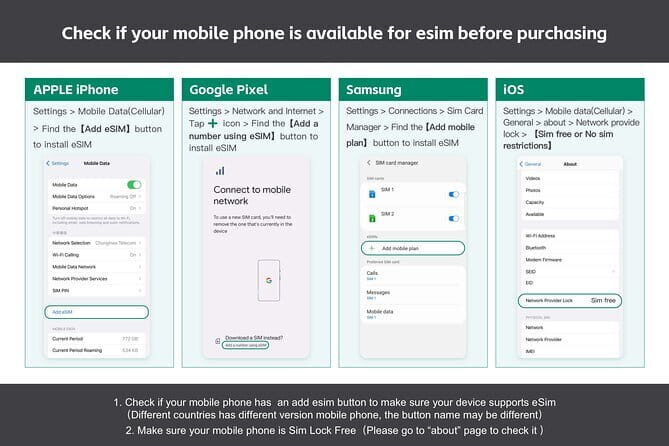
This is a mobile-data experience, not a guided day of sights. Your “starting point” is Singapore, but what happens first is all digital: after purchase, you get a QR activation code sent to your email within 1 working day. Then you scan it to complete your data setup.
That matters because the biggest friction for data in Asia is usually physical logistics. With this, you’re not hunting for a shop, waiting in line, or managing a tiny SIM you can lose. If you’re arriving, checking into places, and trying to get online fast, QR activation can save real time.
Here’s the practical flow you should expect:
- Scan the QR code when it arrives.
- Install and activate it successfully on your phone.
- Turn on mobile data for the eSIM as your default line.
- Turn on data roaming (the plan is designed to work across those covered territories).
If you only do step 1 and forget the later settings, you can end up with the frustrating “I scanned it, so why isn’t it working?” moment. This plan is set up so it’s quick—but only if you follow the phone steps right away.
You can also read our reviews of more tours and experiences in Singapore.



Coverage across 8 Asia areas: what it means for your routing
The plan is designed for these specific territories: Singapore (Singtel), Malaysia (Maxis), Thailand (AIS), Vietnam (Mobifone), Indonesia (Telkomsel), Hong Kong (HKT), Macao (CTM), and Taiwan (CHT).
The practical value: you can build an itinerary where you bounce between countries (or even add a detour) without re-buying data each time you cross a border. That’s a big deal if your travel pattern is flexible—when dates shift, airlines delay, or you tack on an extra stop.
The also-important catch: the description is very clear that the eSIM works in supported areas and on supported networks. It even notes that you can switch networks when you’re in different areas, which is exactly what you want for roaming—but it only helps inside the listed coverage.
If your plan includes places outside those 8 territories, double-check first. Your best move is to confirm your exact route against the listed countries and operators before you land.
4G/5G speed behavior: the quota and the “after” plan
Let’s talk speed in plain terms. You’re getting support for local 5G/4G/3G networks, with speedy service on the fast tier (4G/5G depending on the selected option). After you use up the high-speed data quota, you don’t get cut off—your service shifts to unlimited 3G.
In real travel terms, this usually works like this:
- Early trip days: fast enough for Google Maps, ride-hailing, WhatsApp, and uploading what you actually need.
- Later trip days or heavy browsing: you may feel the speed drop once 3G kicks in.
- You still stay connected, which is what matters most for navigation and messaging.
One extra detail to know: the network will be stopped if data usage exceeds the high-speed data limitation. That means you should treat the “fast” tier like your prime-time window. If you plan to binge-stream or upload huge videos, the plan can stop sooner than you expect once you trigger the limit.
Hotspot sharing: when one phone becomes Wi‑Fi
Hotspot sharing is included, and that’s genuinely useful. Not everyone travels solo. Even if you are solo, hotspot can save you when:
- your hotel Wi‑Fi is weak or asks for extra steps,
- a companion’s phone doesn’t have service yet,
- you need a quick connection for maps while someone charges their device.
Do keep your expectations realistic. Hotspot sharing turns your phone into a mini router, which can drain battery faster and makes the phone work harder. So if you rely on it, plan on charging daily (or more often).
Also, hotspot sharing only helps if your eSIM connection is healthy. If you get signal issues after activation, hotspot will likely be the first thing that feels unreliable—because it amplifies the problem to everyone connected.
Reliability and troubleshooting: what to do if signal drops

One practical downside is hinted at by feedback: sometimes the experience can start glitchy right after loading the SIM on the phone. The issue described is losing data signal and needing to tweak things to fix it.
If that happens to you, here’s your best, data-friendly troubleshooting approach based on the setup rules this plan provides:
- Confirm the eSIM is set as your default mobile data line.
- Make sure data roaming is turned on.
- Toggle mobile data off and back on.
- Restart the phone if the network behavior seems stuck.
And if you’re still stuck, there’s clear support guidance: you can contact the provider via WhatsApp for technical support.
That support detail matters because eSIM problems are often not “mysterious telecom magic.” They’re usually phone settings. Having a way to ask for help quickly reduces the odds that you’ll lose your first day of navigation.




Where this plan fits best: solo travelers, families, and short hops

This is a good match if you want the simplest path to staying connected across multiple Asian countries. I’d point you to it if:
- you hate swapping physical SIMs while traveling,
- you rely on WhatsApp and Google Maps for getting around,
- you want an option that can last 3 to 30 days (so you can match it to your trip length),
- you may want hotspot sharing for a second device or a travel partner.
It’s also a smart “emergency connectivity” plan for people who mostly rely on Wi‑Fi but still need coverage for ride-hailing, updates, and backup messages.
Where it’s less ideal: if your itinerary is mostly outside the covered countries, you’ll need a different solution for those legs. And if your travel style is heavy on streaming and uploads, you’ll want to manage your data habits so you don’t hit fast-tier limits quickly.
Price and value: is $3.94 worth it?
The listed price is $3.94 per person, and for that, you’re essentially paying for convenience plus multi-country flexibility.
Here’s how to judge the value honestly:
- If you only stay in one country and you’ll buy a local SIM anyway, the savings come from time saved—not necessarily from price.
- If you’re crossing borders (or you might), the value increases because you’re not buying new data at each stop.
- If you’ll use hotspot sharing, the plan can spread its value over more than one person or device.
Also, you don’t have to pick up or post anything. The QR code delivery is part of the value. That’s especially helpful if you’re arriving late, tired, or juggling check-in lines.
One more reason this price can feel fair: you get a “fast first, then slower unlimited” structure. That keeps you online even when you’ve used more than you planned.
“Tour” stages to think about: from activation to last day

Because this isn’t a city sightseeing route, I break it into the real stages you’ll live through.
Stage 1: After purchase—when your QR code arrives
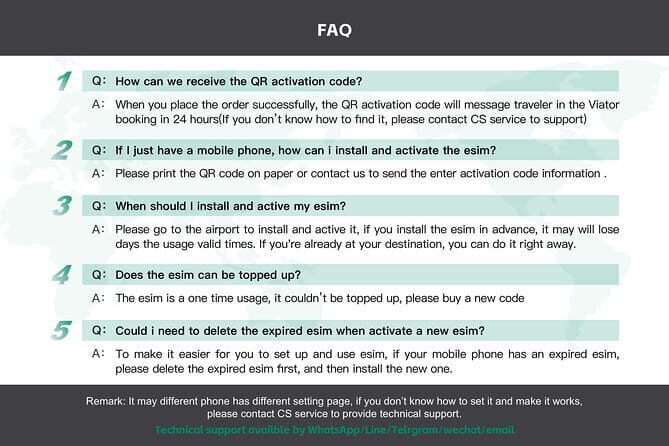
You’re told to expect the QR code in your email within 1 working day after purchase. That’s the clock to watch. If you buy last minute, you could end up waiting for activation when you’re already at the airport.
My advice: check your email settings and spam folder right away. Then save the activation info so you can find it when you’re ready.
Stage 2: Activation—install, set default line, enable roaming
Once you scan the QR code, you install and activate. Then you turn on mobile data and data roaming.
This stage is where most avoidable “it doesn’t work” problems start. Take 3 minutes at home or in your hotel before you head out for the day. You’ll thank yourself.
Stage 3: Daily use—navigation, messaging, and roaming handoffs
When it’s working, you’ll use it like normal mobile data across the supported regions. You should expect to connect using local operator networks listed for each area.
This is where the eSIM roaming handoff is the point. You’re not manually changing SIMs. You’re just moving.
Stage 4: When speed changes—4G quota used up
After you hit the fast-tier quota, you move to unlimited 3G. That keeps your phone useful for the basics even if it’s not blazing.
If your trip includes long travel days or you plan to rely heavily on maps, you’ll feel the difference between fast and slowed data. Still, you won’t be cut off in the way many bargain data options do.
Stage 5: End of validity—what you can and can’t fix later
The plan says validity is for 3 to 30 days, and activation must happen within 30 days after purchase. If it expires, cancellation, refund, or changes aren’t allowed.
So don’t treat it like a “someday” purchase. Treat it like a tool with a start-by deadline.
Who should book this eSIM data plan
You’ll probably be happy with this if:
- you want one setup that handles several Asia stops,
- you use apps that depend on internet all the time,
- you want to share data via hotspot,
- you’re comfortable doing a QR-based install on your phone.
You might skip it if:
- your route includes countries not listed in the supported areas,
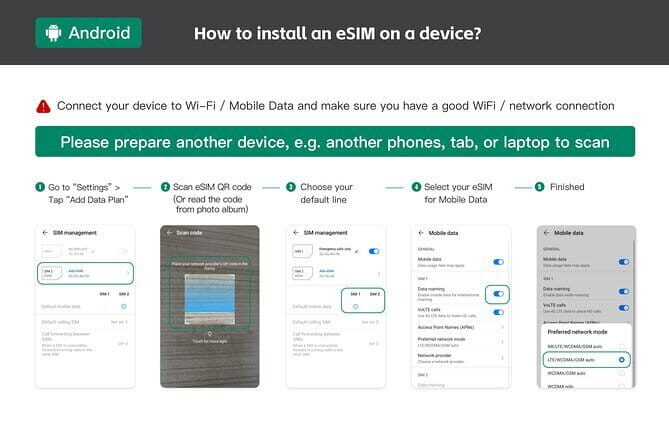
- your phone doesn’t support eSIM,
- you need calls or SMS (this plan doesn’t include those services),
- you need speed guarantees for high-bandwidth tasks throughout the entire trip.
Should you book it?
If your trip fits the covered countries and you want the easiest path to phone data, I’d book it. The combination of hotspot sharing, clear 4G-to-3G behavior, and QR-based setup is exactly what makes it feel like good travel value.
But if your itinerary is outside the listed areas or you’re buying too close to departure, choose carefully. The plan is most reliable when you can scan the QR code soon after purchase and activate before your window closes.
FAQ
How do I get the QR activation code?
After purchase, you’ll receive the QR code by email within 1 working day. It’s also said to be messaged in your Viator booking.
When can I activate the eSIM?
The plan says the eSIM must be activated before it expires, and the plan is valid within 30 days after purchase.
How long does the eSIM data plan last?
It’s valid for 3 to 30 days, depending on the option you select.
Does it include hotspot sharing?
Yes. Hotspot sharing is supported and included.
What networks and speeds does it use?
It supports local 5G/4G/3G networks. You get fast 4G internet service (depending on option) and unlimited 3G after the 4G quota is met.
Which countries are covered?
Singapore, Malaysia, Thailand, Vietnam, Indonesia, Hong Kong, Macao, and Taiwan.
Are calls and SMS included?
No. The plan includes data access but does not include international/local calls or SMS services.
What if I have trouble after activation?
If you have issues after loading the SIM, you can contact the provider via WhatsApp for technical support.