REVIEW · SINGAPORE
CityWalk With A Local
Book on Viator →Operated by Jimmy Loh · Bookable on Viator
Singapore clicks into place on foot. This small-group city walk follows Singapore’s story from street level to the skyline, with a licensed tourist guide who explains what you’re actually looking at. You’ll get facts, untold context, and plenty of chances to ask questions as you move.
I love that the route is built around everyday places, not postcard stops. Chinatown’s street market and food-centre area is explained through buildings then-and-now, local livelihoods, and the mix of cultural and religious practices you can still see in the streets. I also like the way the walk connects urban design to daily life, from the Singapore River’s transformation to downtown’s planning rules like height limits and greenery requirements.
One consideration: this is a weather-dependent walking tour, and it runs about 3 hours. If you prefer a slower pace, or you’re traveling with mobility limits, bring a plan for breaks and comfortable shoes.
In This Review
- Key things to know before you go
- A 3-Hour City Walk That Puts Singapore’s Layers in Order
- Meet Jimmy Loh: The Host Who Keeps Answers Practical
- Chinatown Street Market: Street-Food Life and Buildings That Tell Time
- Thian Hock Keng Temple Mural and Temple Etiquette
- Downtown Core: Height Limits, Greenery Rules, and Modern Business Shapes
- Singapore River: From Early Livelihoods to a Cleaned-Up Transformation
- Colonial and Civic District: Temasek to Singapura to Singapore
- Marina Bay Finale to Merlion Park: Land Reclamation and Skyline Growth
- Price and Value: Is $48.42 Worth It?
- When This Tour Fits Best (and When It Might Not)
- Should You Book CityWalk With A Local?
- FAQ
- FAQ
- How long is the CityWalk With A Local tour?
- What time does the tour start?
- Where do I meet the guide, and where does the tour end?
- What’s the group size limit?
- What’s included in the price?
- Are there any admission fees at the stops?
- Do I need a printed ticket?
- Is bottled water provided during the walk?
- What happens if the weather is bad?
Key things to know before you go
- Licensed guide Jimmy Loh, small group cap (max 10) means you get close attention and real question time
- Chinatown to Marina Bay on foot gives you a clear timeline of how Singapore changed
- Food centre culture + street art get explained in plain language, not just photographed
- Thian Hock Keng temple mural stop includes architecture and temple do’s and don’ts
- Urban planning talk covers height limits, greenery requirements, and land reclamation
- Bottled water is included, and the walk ends right at Merlion Park
A 3-Hour City Walk That Puts Singapore’s Layers in Order
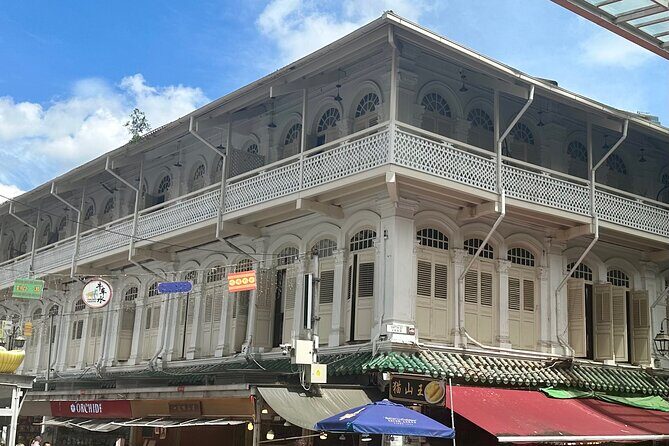
There’s a reason walking tours work in Singapore. The city is too compact to understand from inside a taxi window. On foot, patterns show up fast: where people eat, where faith lives side by side, and how the shoreline and skyline keep changing.
This experience is designed as a focused introduction to Singapore’s major districts, with story-driven stops instead of a checklist of landmarks. You’ll start in Chinatown’s street-level world and finish at Marina Bay by Merlion Park, which is a smart pairing if you want to keep sightseeing afterward without hauling luggage around. The length is long enough to feel like a proper orientation, but short enough that you still have your day intact.
And since the group is capped at 10, the guide can adjust on the fly. That matters when you’re curious. One minute you’re looking at a mural, and the next you’re asking how a neighborhood’s religious practices shaped daily life.
You can also read our reviews of more tours and experiences in Singapore.

Meet Jimmy Loh: The Host Who Keeps Answers Practical
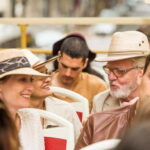
Jimmy Loh is the kind of guide who makes the history feel usable. In the walk’s style, he doesn’t just recite dates. He connects what’s in front of you to what Singapore had to solve at each stage.
That also shows in how he handles questions. If you like to interrupt and ask why something is shaped the way it is, you’ll be able to. People also highlight that he keeps answers clear and not scripted, which is exactly what you want on a city where every block seems to have a backstory.
The licensed-guide angle isn’t just paperwork comfort. It usually means you’ll hear structured explanations and learn the basics of what you should notice—especially in places where there are rules, like temples. You’ll also get tips for the rest of your stay, which can save you time later.
Chinatown Street Market: Street-Food Life and Buildings That Tell Time
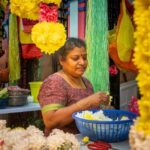
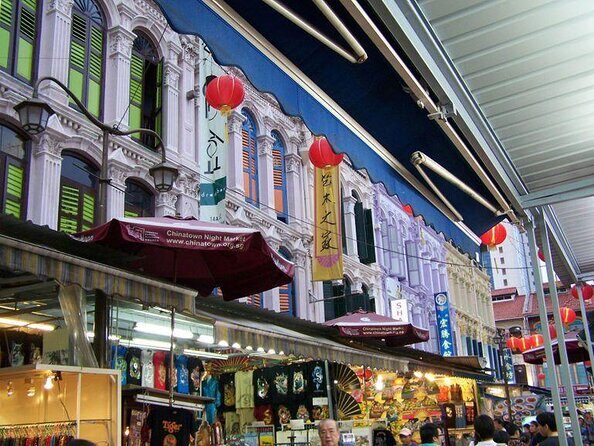
You kick off in Chinatown Street Market and the nearby market-and-food-centre area. This is where Singapore’s everyday culture hits you first: where people still come for daily meals, and where commerce and community sit close together.
What I’d watch for here is the guide’s approach. Instead of treating Chinatown like an outdoor museum, you’re shown how buildings have been used, then and now. You learn how these spaces shaped early livelihoods—how people worked, where they gathered, and why the street pattern and business mix make sense.
You’ll also get explanations of cultural and religious practices you can see in the streets. That’s useful because Singapore’s story often isn’t about one group doing one thing. It’s about different communities sharing space, adapting, and living with each other over time.
A fun part: the walk brings attention to wall murals and street arts. They’re not just decoration. They often reflect community identity, passing eras, and the neighborhood’s changing mood. If you’re the type who likes to understand what you’re photographing, this stop delivers.
Potential drawback to keep in mind: Chinatown can be active, and you’ll be walking in an outdoor, street-level environment. Wear good shoes. If you have a sensitive nose, you might want to pace yourself near food-centre areas, especially on a warm day.
Thian Hock Keng Temple Mural and Temple Etiquette
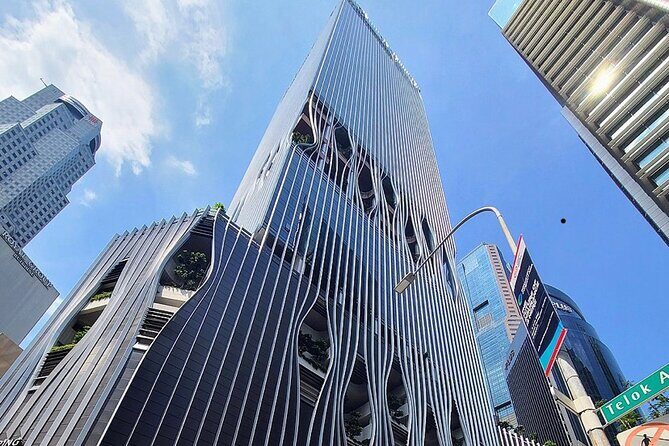
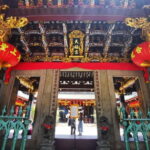
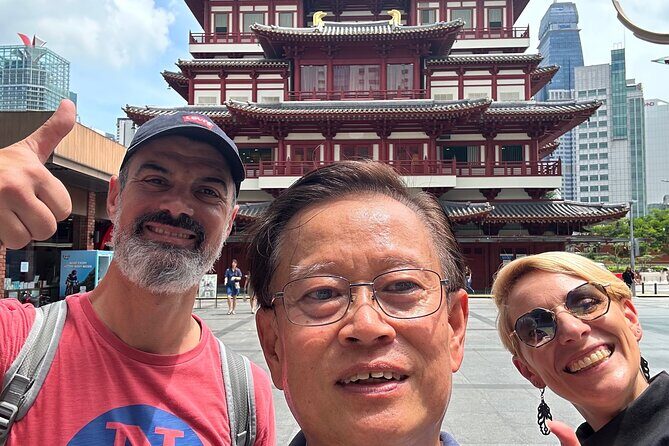
Next comes a stop tied to Thian Hock Keng, with a focus on a temple mural area and the temple itself. This is a great pivot from street-market energy into a calmer, more reflective setting.
You’ll learn how the architecture supports the site’s purpose and how this area reflects multi-religious space. The guide also points out special features of the temple experience—things you might miss if you just walk past.
A key value here is the practical guidance on temple do’s and don’ts. Temple etiquette can feel mysterious if you’re unsure what’s expected. Having the rules explained before you enter means you can focus on looking and learning instead of worrying whether you’re doing something wrong.
There’s also a temple walk element. It’s not just a quick photo stop. You’ll move through with context, which makes the architecture and religious setting click into place.
Tip: plan a moment of quiet for yourself. Even if you’re not religious, the atmosphere helps you understand Singapore’s character—respect, coexistence, and the way faith becomes part of daily geography.
Downtown Core: Height Limits, Greenery Rules, and Modern Business Shapes
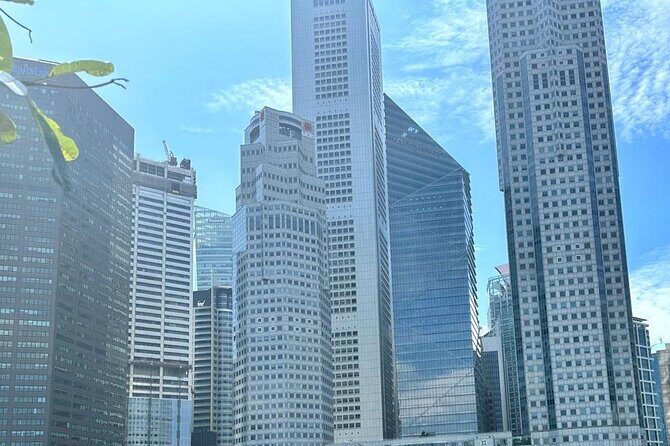
After Chinatown, you head into the Downtown Core area. This is where the walk shifts from community life to the systems that shape Singapore’s look and feel.
One of the most useful parts here is the focus on how buildings are constrained and planned. You’ll hear about architecture shapes and height limits, and you’ll learn why that matters for how a city functions. You also get the greenery requirements angle—Singapore doesn’t treat nature as an afterthought. The way green space is planned affects comfort, views, and how the city feels day to day.
The guide also talks through business types. That’s more than name-dropping. You’ll understand how different kinds of commerce cluster and what that says about the city’s priorities.
And yes, you’ll be shown some lesser-known corners—places that don’t demand your attention like a major monument, but teach you how the city is actually put together. If you’ve ever thought Singapore looks too planned, this stop gives you the reason behind the planning.
One consideration: this is still an urban walk, so you may be in brighter areas with more wind exposure depending on the route. Light layer weather usually helps.

Singapore River: From Early Livelihoods to a Cleaned-Up Transformation
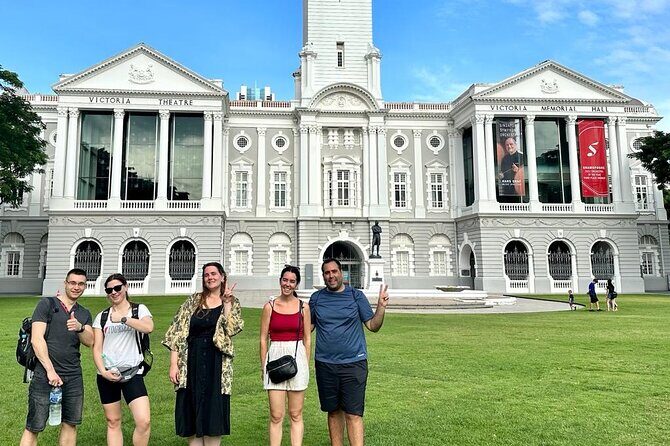
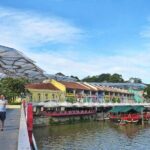
Now you move to the Singapore River and riverside area. This part of the tour helps you understand why the river matters. In Singapore, water isn’t background. It’s part of how the city grew.
The guide covers the river’s importance and early livelihoods tied to the waterfront—how people lived and worked around the conditions of earlier eras. You’ll hear about the big cleanup effort, which is an essential piece of Singapore’s self-reinvention story.
Then you get the transformation angle: how the river turned into a business and public-facing corridor. That’s where the walking becomes more than sightseeing. You start to see Singapore as an active planner, fixing problems and reshaping space as needs change.
Practical payoff: once you understand the river story, you’ll interpret the skyline differently. Bridges, waterfront edges, and redevelopment zones feel like logical steps instead of random changes.
If you’re hoping for a lot of dramatic views here, you’ll still get them, but the main win is context. This stop helps you read the city’s evolution like a timeline.
Colonial and Civic District: Temasek to Singapura to Singapore
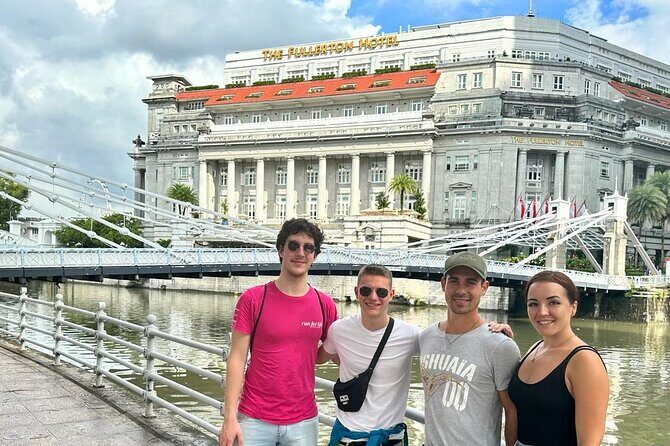
From the river, you step into the Colonial District and Civic District area, where the story turns historical in a very structured way.
The walk connects names across time: Temasek to Singapura to Singapore. That naming arc isn’t trivia. It gives you a framework for how identity shifts while places keep reinventing themselves.
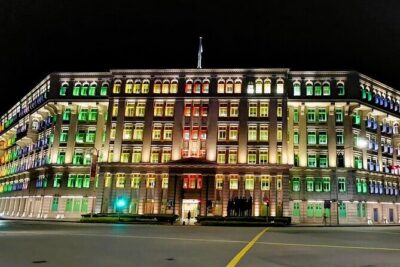
You’ll also see colonial buildings and get explanations of then-and-now contrasts. The point isn’t to judge the past. It’s to show how the city’s physical layout and governance influenced what came next, including the path to independence.
Then the tour brings it into the modern era: how the district transformed into a first-world style of infrastructure and civic life. Even if you’ve read Singapore history before, hearing it applied to what you’re standing near helps the facts stick.
A small but important detail: this stop encourages you to look at architecture as evidence. If you pay attention here, you’ll notice how different periods leave visible signatures—materials, forms, street patterns, and the overall feel of space.
Marina Bay Finale to Merlion Park: Land Reclamation and Skyline Growth
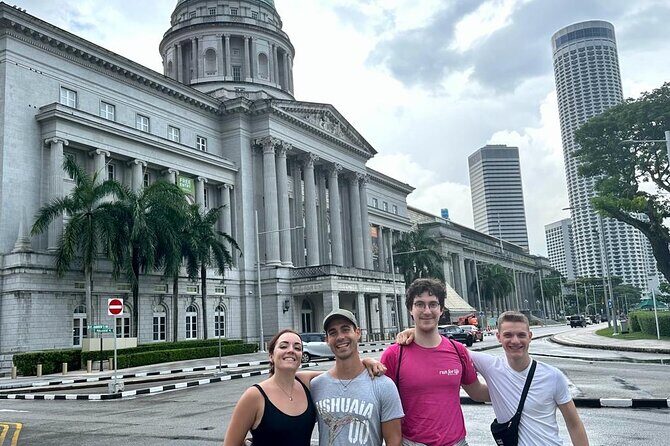
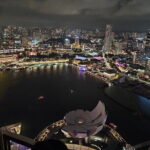
The last stretch lands at Marina Bay, where the city’s biggest physical changes come to the surface.
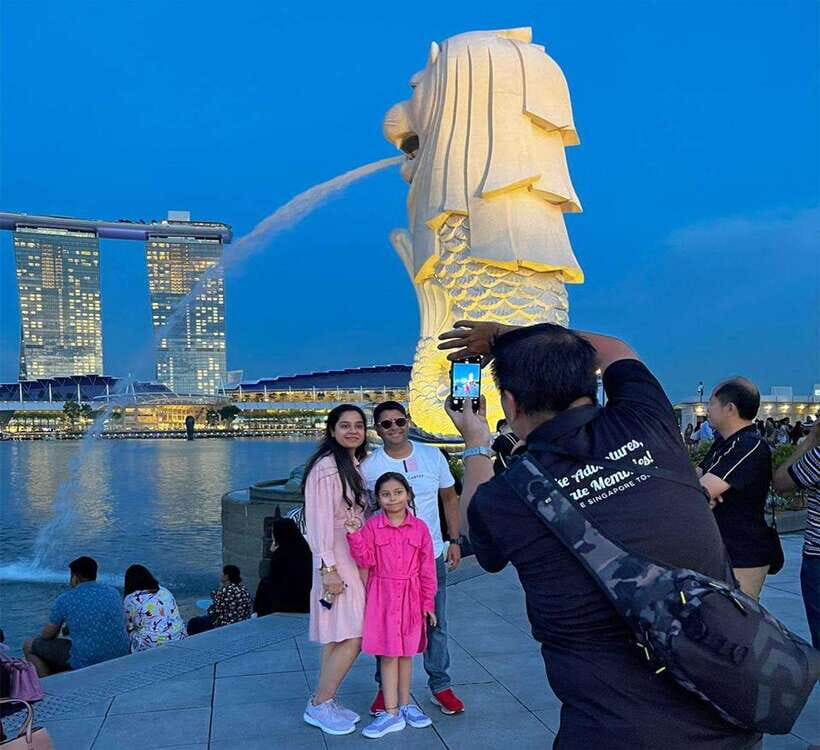
You’ll learn about land reclamation and how Marina Bay formed—how the shoreline and water edges changed as Singapore grew. That’s a mind-bending concept if you’re used to cities expanding outward with mountains or coastlines fixed in place. Singapore changed the geography, and you’ll feel that idea as you look out toward the skyline.
The guide also explains phases of growth, which helps you understand that Marina Bay isn’t one project. It’s a series of steps. Each phase adds something new, and knowing the sequence makes it easier to recognize what you’re seeing.
You’ll also hear about the Marina Bay area’s highlights, including the Merlion. Since the walk ends at Merlion Park near the Merlion sculpture, you’ll finish at a natural staging area for photos and onward plans.
Practical note: this area can be exposed. If it’s bright or windy, you’ll be happy you brought a hat or sunglasses.
Price and Value: Is $48.42 Worth It?
At $48.42 per person for about 3 hours, this walk sits in the sweet spot between cheap and premium. You’re paying for a licensed guide, a small-group cap (max 10), and guided context you won’t reliably get from casual wandering.
The included bottled water is a small touch, but it matters on a city walk. Also, several stops are marked as free admission, so you’re not paying extra entry fees to get the learning value.
Where the price really makes sense is in the format. A small group means better pace control and more back-and-forth. If you’re the kind of traveler who asks questions (and you should be), the guided explanations convert from entertainment into understanding.
If you’re traveling with friends and want one activity that genuinely sets your bearings, this is a solid way to spend the morning. You still have time later to choose what to revisit on your own.
When This Tour Fits Best (and When It Might Not)
This tour fits best if you want a smart overview without feeling like you’re rushing through landmarks. It’s also a great choice if you like urban history that connects to today’s city planning—height limits, greenery rules, and the river cleanup transformation.
You’ll likely enjoy it if:
- you want street-level context in Chinatown
- you’re curious about temple etiquette and how religious sites operate in a multi-community city
- you want to understand Marina Bay’s growth rather than just see the final skyline
It might be less ideal if:
- you dislike walking for around 3 hours
- you need a fully indoor experience
- you want a tour made only of big, obvious monuments with minimal explanation
As always, if weather is iffy, plan for a rain-friendly mindset. This tour requires good weather, and you’ll be offered another date or a full refund if it’s canceled due to poor conditions.
Should You Book CityWalk With A Local?
If you’re new to Singapore and want the city to make sense fast, I’d book this. The biggest strength is how it links what you see—food-centre life, temple space, downtown design, river change, and Marina Bay formation—into one clear arc. Ending at Merlion Park is a convenient finish line.
Choose it with confidence if you value a licensed guide, a small group, and lots of room to ask questions. You’ll walk away with a framework for reading Singapore on your own, not just a stack of photos.
FAQ
FAQ
How long is the CityWalk With A Local tour?
It runs for about 3 hours.
What time does the tour start?
The start time is 9:30 am.
Where do I meet the guide, and where does the tour end?
You meet at Nanyang Old Coffee, 268 South Bridge Rd, Singapore 058817. The walk ends at Merlion Park, 1 Fullerton Rd, Singapore 049213, at the Merlion Sculpture.
What’s the group size limit?
The tour has a maximum of 10 travelers.
What’s included in the price?
Bottled water is included.
Are there any admission fees at the stops?
The information provided indicates that admissions for the listed stops are ticket-free.
Do I need a printed ticket?
No. The tour uses a mobile ticket.
Is bottled water provided during the walk?
Yes, bottled water is included.
What happens if the weather is bad?
The tour requires good weather. If it’s canceled due to poor weather, you’ll be offered a different date or a full refund.